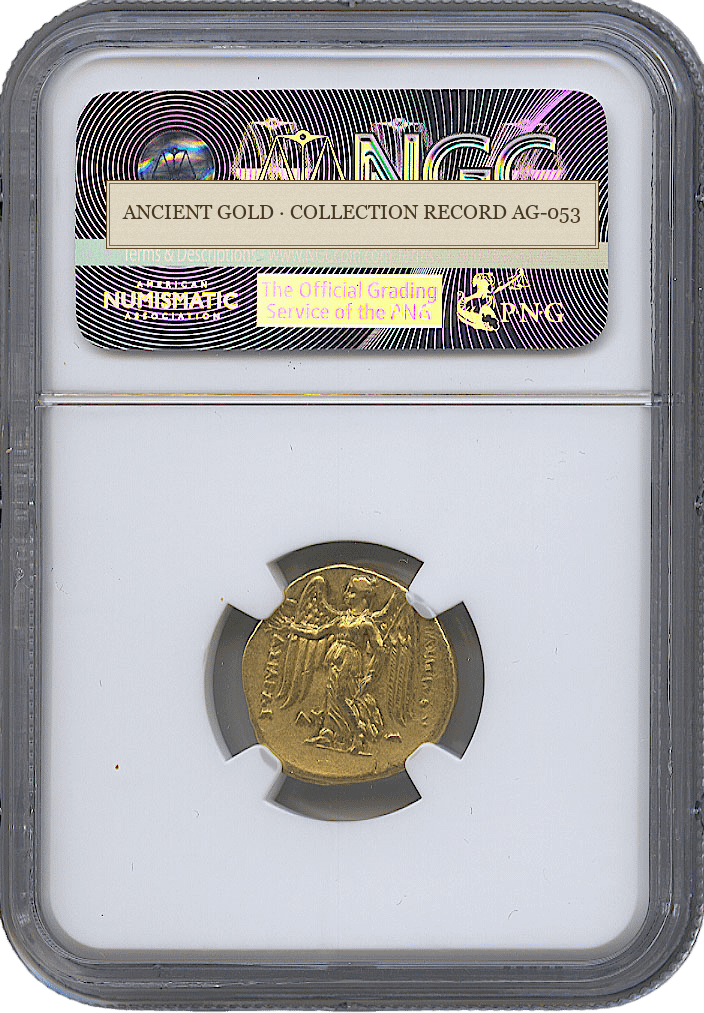
An ancient gold coin is a document made by striking metal between engraved dies. Read it in layers: establish the object, separate observation from attribution, then connect its images and words to a dated type.
Begin with the physical record
Record denomination, metal, weight, diameter and die axis when those measurements are available. A historical standard is not the same thing as the measured weight of a surviving coin. Wear, clipping, deposits and an irregular flan may alter what remains. The collection therefore reports an individual measurement as an observation and a conventional standard as historical context.
Obverse, reverse and legend
The obverse normally carries the principal authority: a ruler, deity or sacred figure. The reverse develops the message through Victory, a cross, a city personification or a dynastic group. Read circular legends from a secure starting point and preserve uncertain letters. A transcription reproduces letters; a translation explains language; an attribution identifies the type. Those are three different claims.
Field, exergue and mint formula
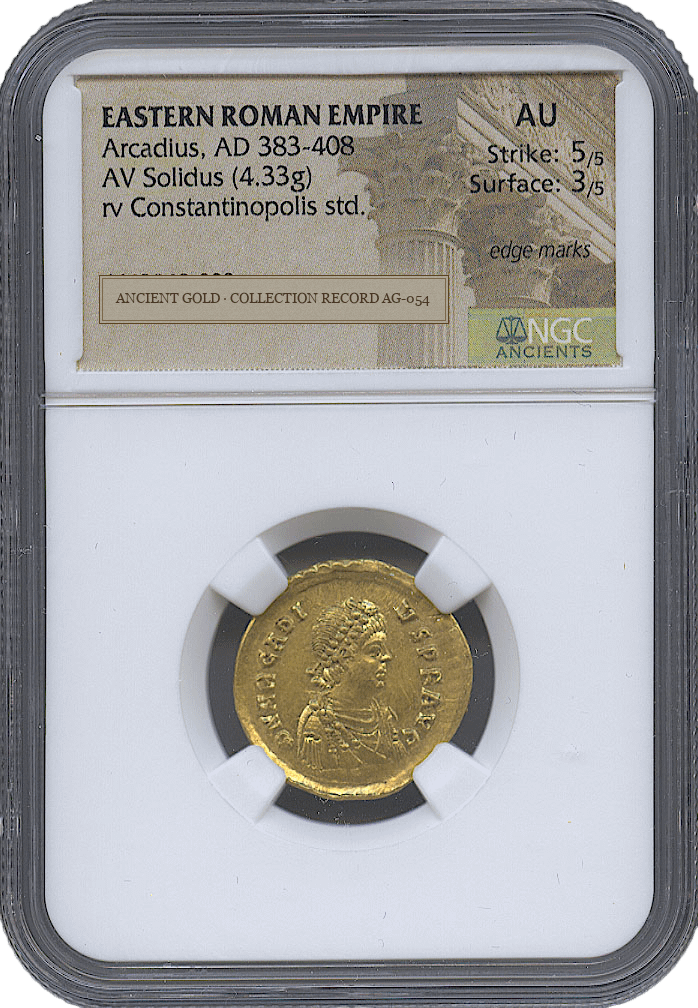
The field is the space around the main design. Small letters there can identify an officina or issue. The exergue is the zone below the principal reverse design, often separated visually by a ground line. On late Roman and Byzantine solidi it may contain a mint formula such as CONOB. AG-054 shows why placement matters: portrait and legend identify Arcadius, while the reverse shield, prow and exergual formula refine the attribution.
Compare before interpreting
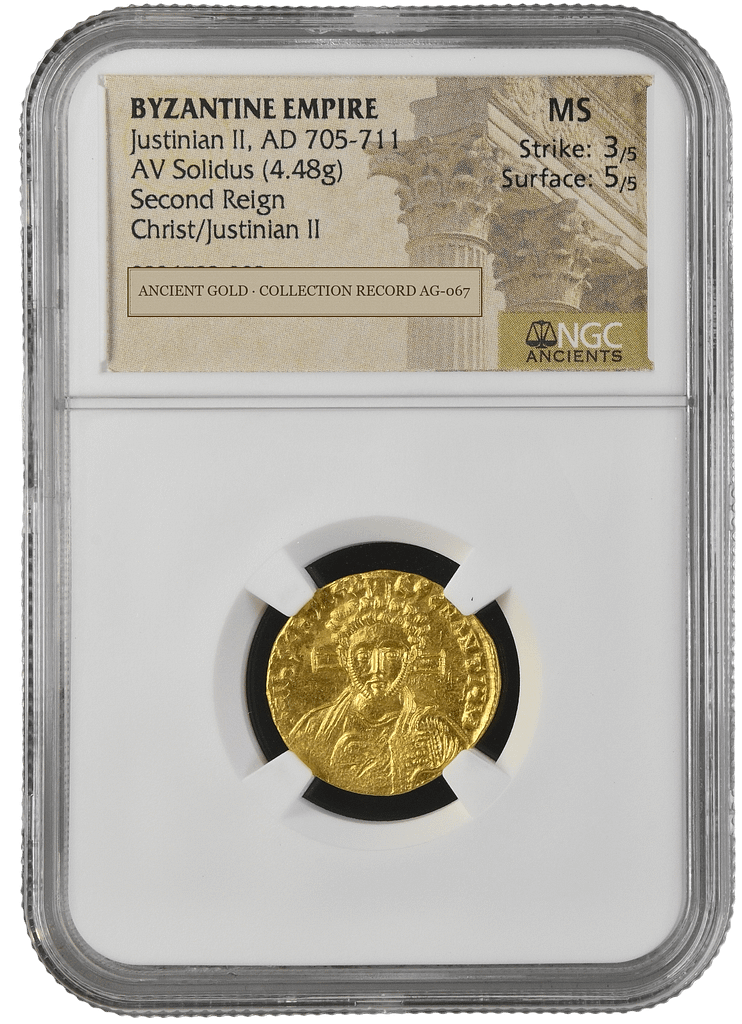
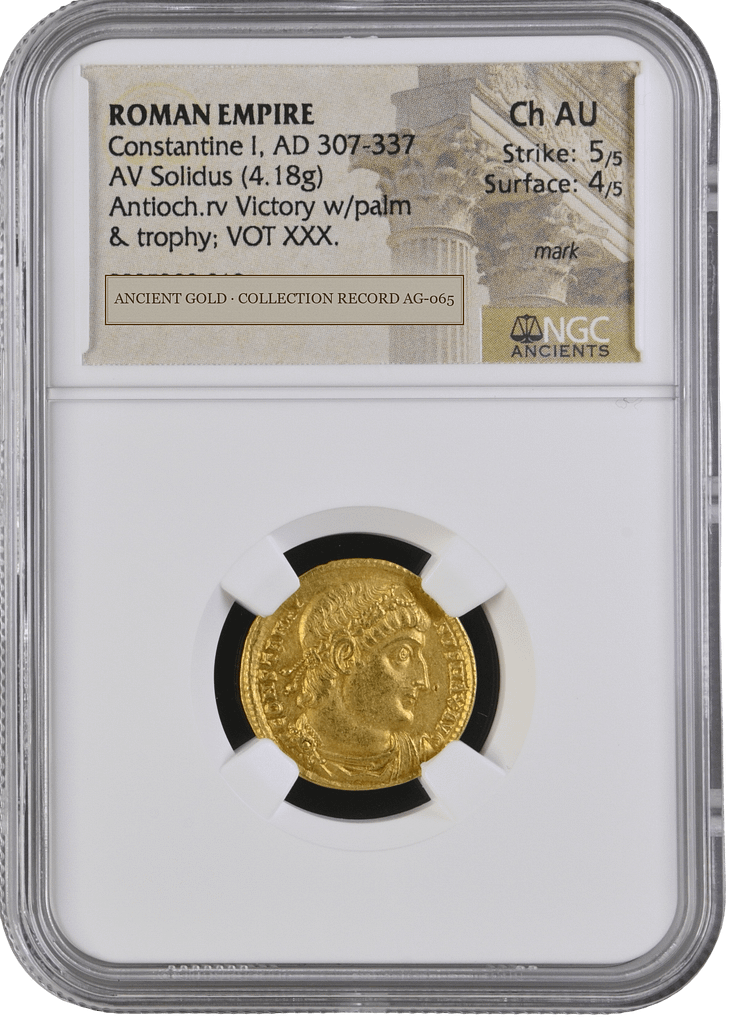
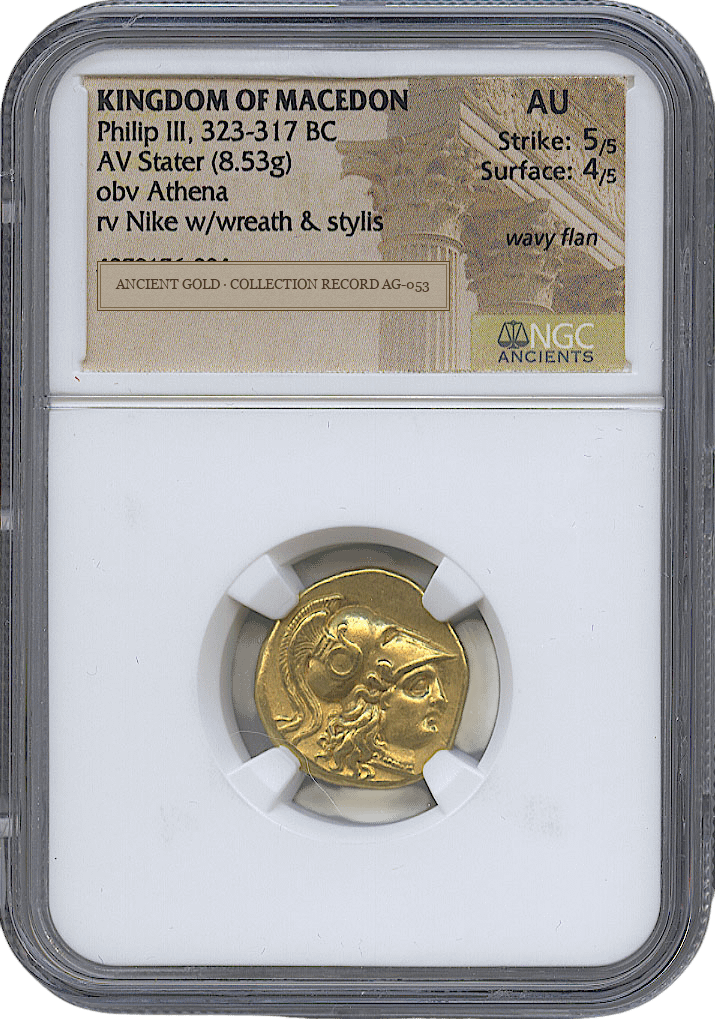
Use an authoritative corpus or museum record to compare design, legend, mint and date. AG-053 pairs Athena with Nike; AG-065 joins Constantine’s portrait to VOT XXX; AG-067 gives Christ precedence over the restored emperor. Interpretation becomes stronger when each statement can be traced to a visible feature.
Questions readers ask
Which side is the obverse?
Usually the side bearing the issuing authority or principal portrait, though early and exceptional coinages require type-specific judgment.
Can a photograph establish authenticity?
No. Images support visual study, but authentication also depends on fabric, surfaces, weight, die study and expert examination of the object.
What should remain unknown?
Anything not supported by the object file or a defensible published attribution—including unrecorded provenance, die axis and officina.