Greek
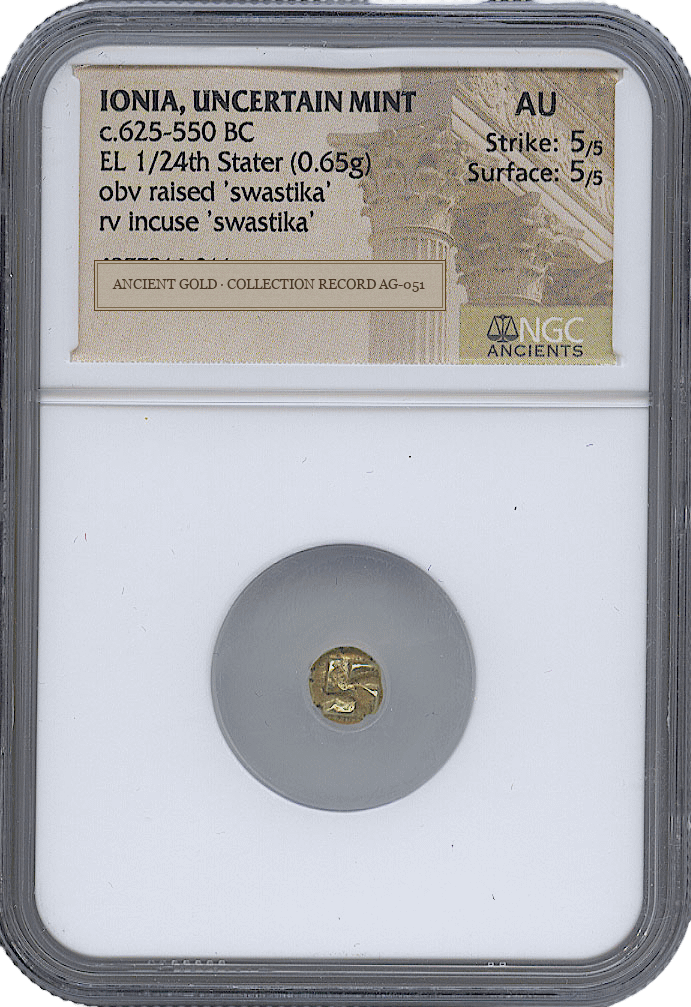
Ionia Electrum Twenty-Fourth Stater
c. 625–550 BC
One of the collection’s earliest objects, this minute Ionian electrum fraction preserves the abstract geometry from which struck coinage emerged.
View Object RecordThe Ancient Gold Collection
A scholarly catalogue of ancient gold coinage, presented as individual historical records.
Collection Discovery
Approach the collection through civilisation, ruler, period or dynasty. Each path preserves the relationship between an object and its historical setting.
Move between the cultural worlds represented by the surviving objects.
Study coinage through the authority named or portrayed on each issue.
Follow changes in weight, imagery and political language through time.
Trace succession and shared visual programmes across ruling houses.
Catalogue tools
Search the evidence record or narrow the catalogue by historical and numismatic context.
Showing the current catalogue selection
Open public research data (JSON)Greek
c. 625–550 BC
One of the collection’s earliest objects, this minute Ionian electrum fraction preserves the abstract geometry from which struck coinage emerged.
View Object Record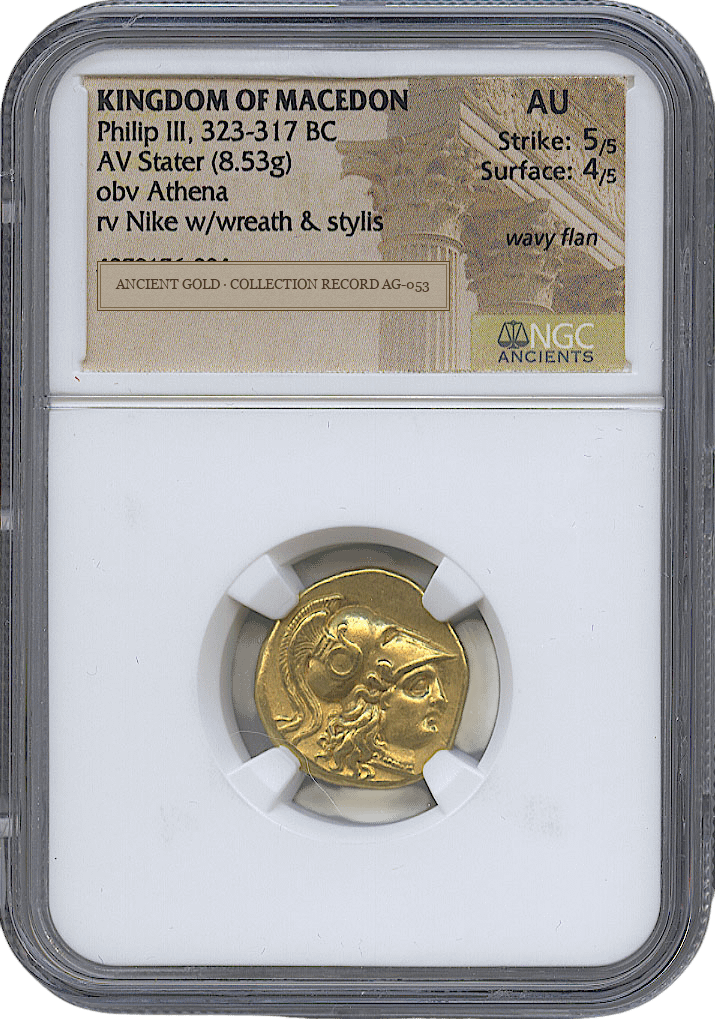
Greek
323–317 BC
Struck after Alexander the Great, this stater preserves Macedonian authority through Athena’s disciplined profile and Nike’s promise of victory.
View Object Record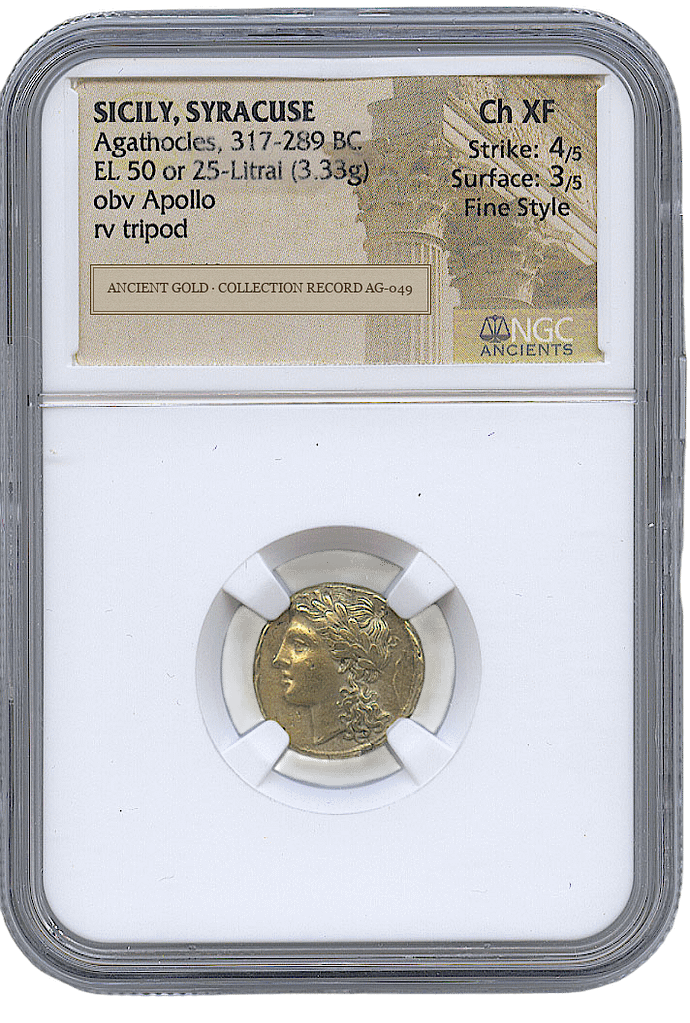
Greek
317–289 BC
Apollo and his sacred tripod give this small electrum coin the cultural confidence of Syracuse under its ambitious soldier-ruler Agathokles.
View Object Record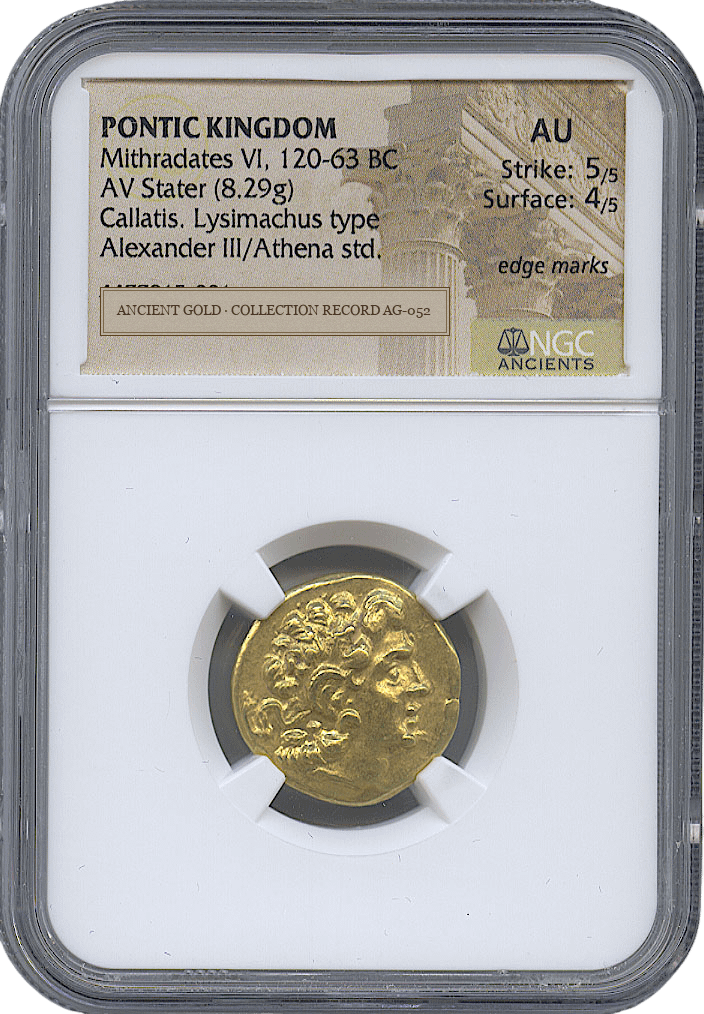
Greek
120–63 BC
Mithradates VI adopts the idealised image of Alexander while Athena enthroned turns inherited Hellenistic imagery into a claim of Pontic kingship.
View Object Record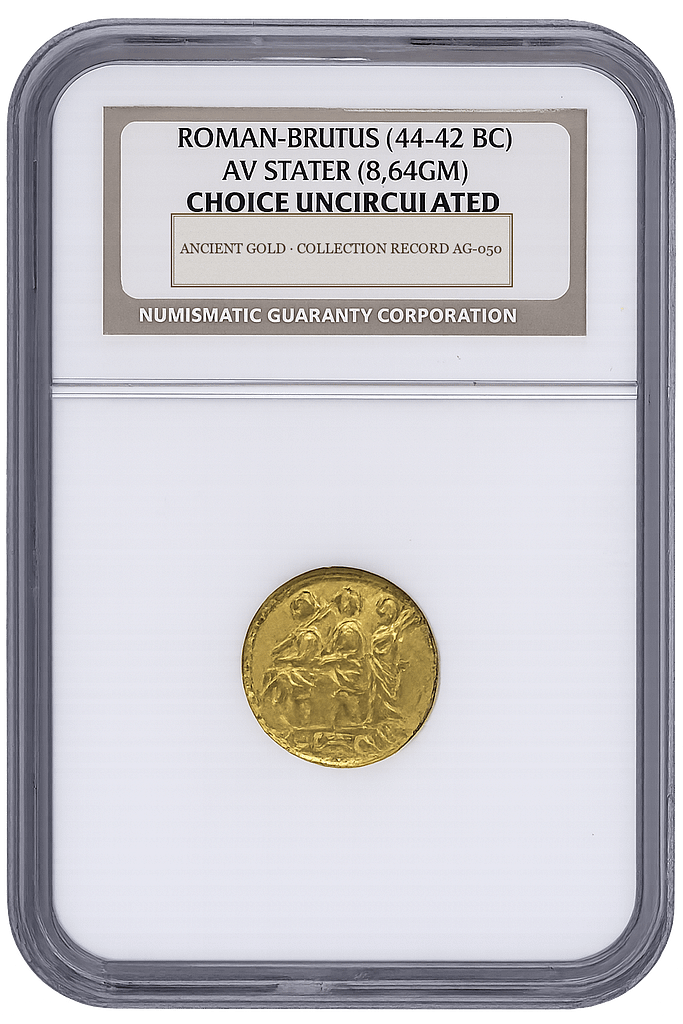
Greek
44–42 BC
Issued amid the Roman Republic’s final civil wars, this enigmatic Balkan gold coin turns ancestral virtue and the eagle of power into political imagery.
View Object Record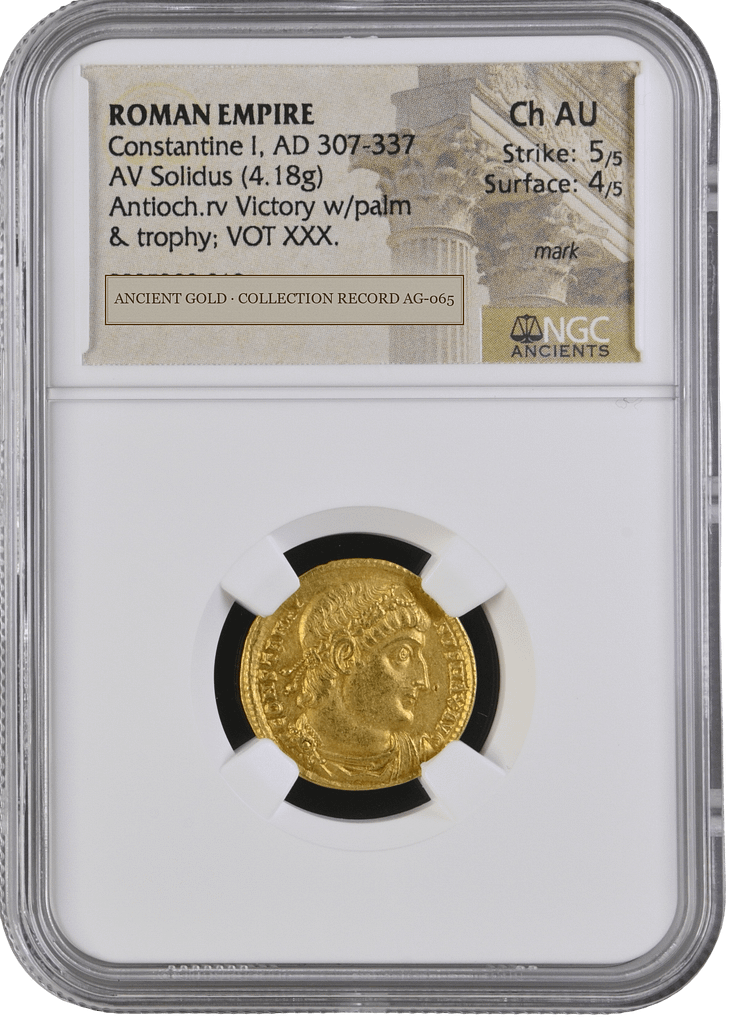
Roman
AD 335–336
Issued for Constantine’s thirtieth regnal anniversary, this rare Antioch solidus joins the emperor’s jeweled diadem to Victory, trophy and the vows of three decades.
View Object Record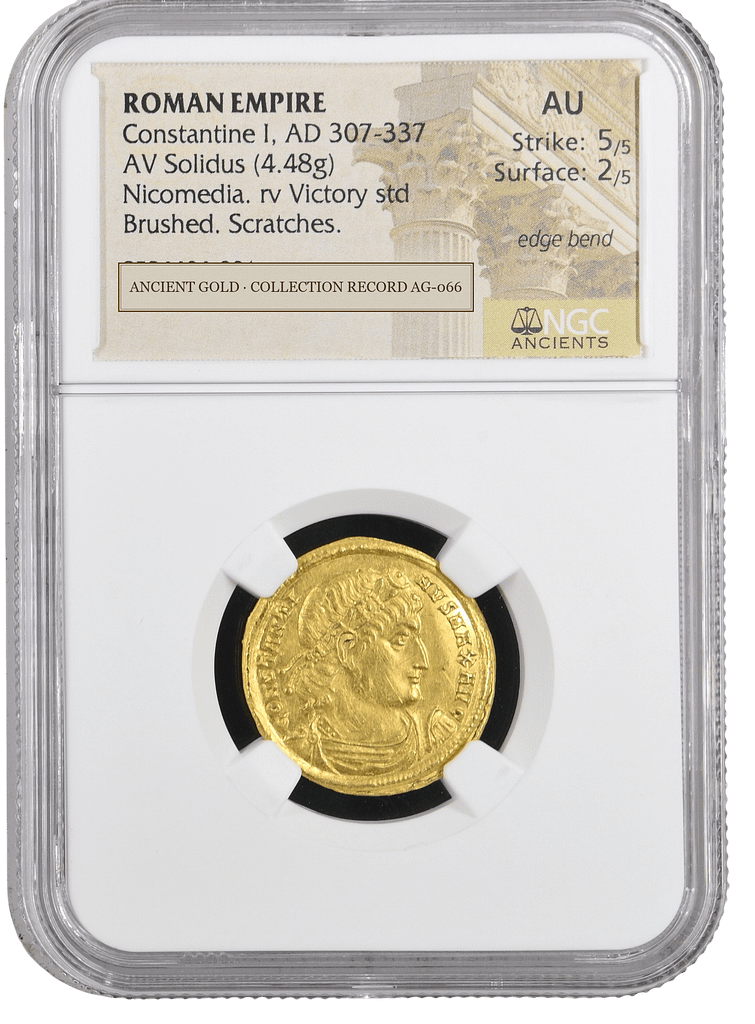
Roman
AD 335
A tricennial solidus from Nicomedia presents Constantine in the new jeweled diadem while Victory inscribes the vows of thirty years under the gaze of Genius.
View Object Record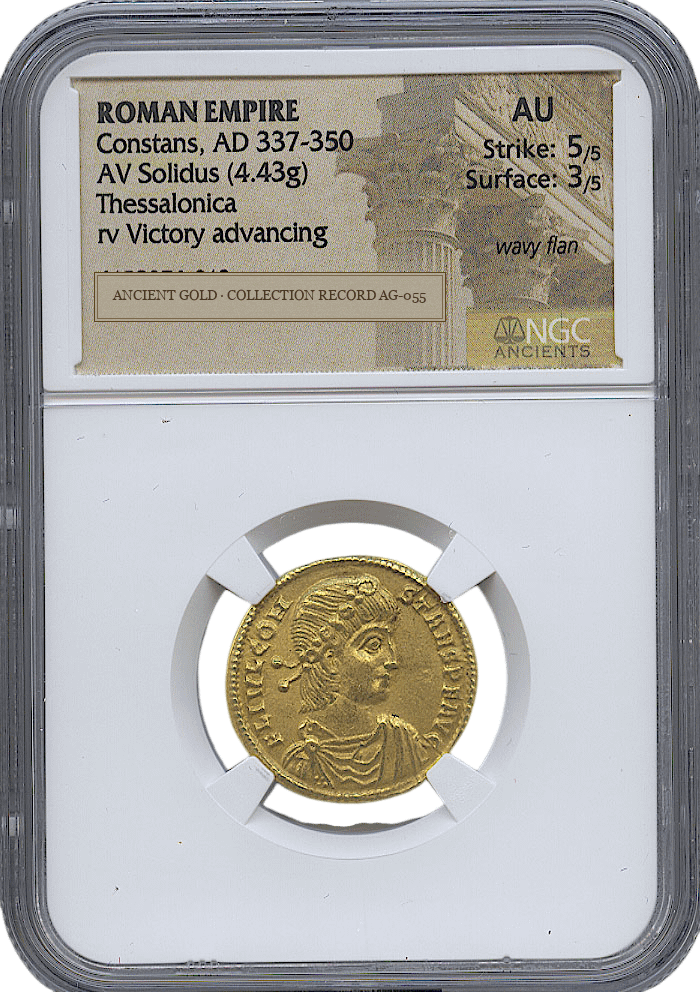
Roman
AD 337–350
The youthful portrait of Constans and an advancing Victory present continuity and triumph during the divided inheritance of Constantine the Great.
View Object Record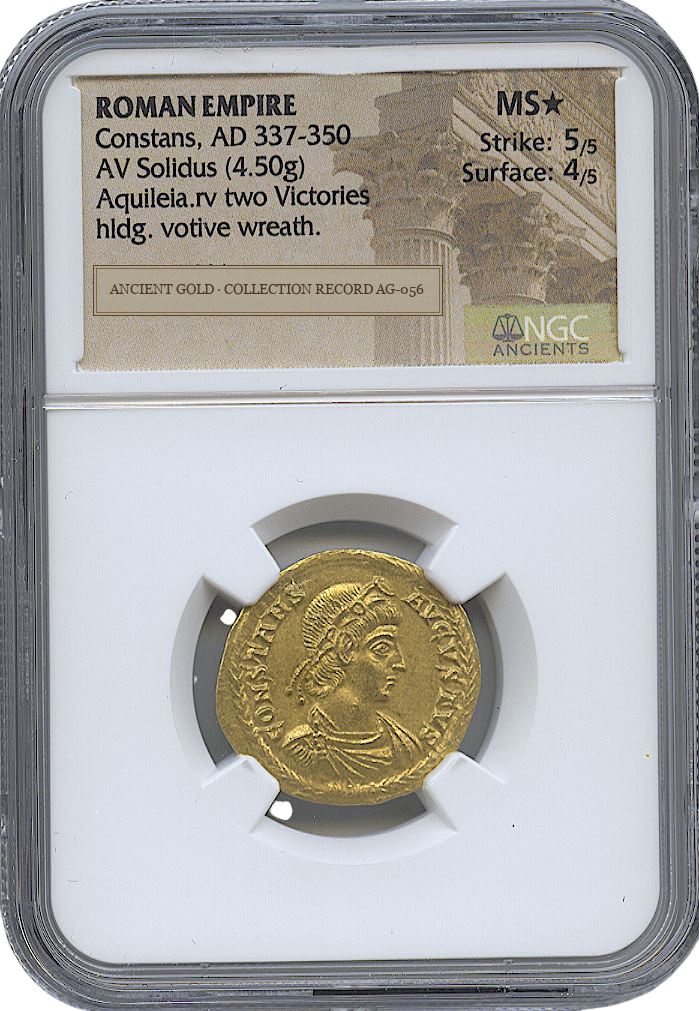
Roman
AD 337–350
Two Victories hold a votive wreath beneath the portrait of Constans, making anniversaries, consensus and successful rule visible in gold.
View Object Record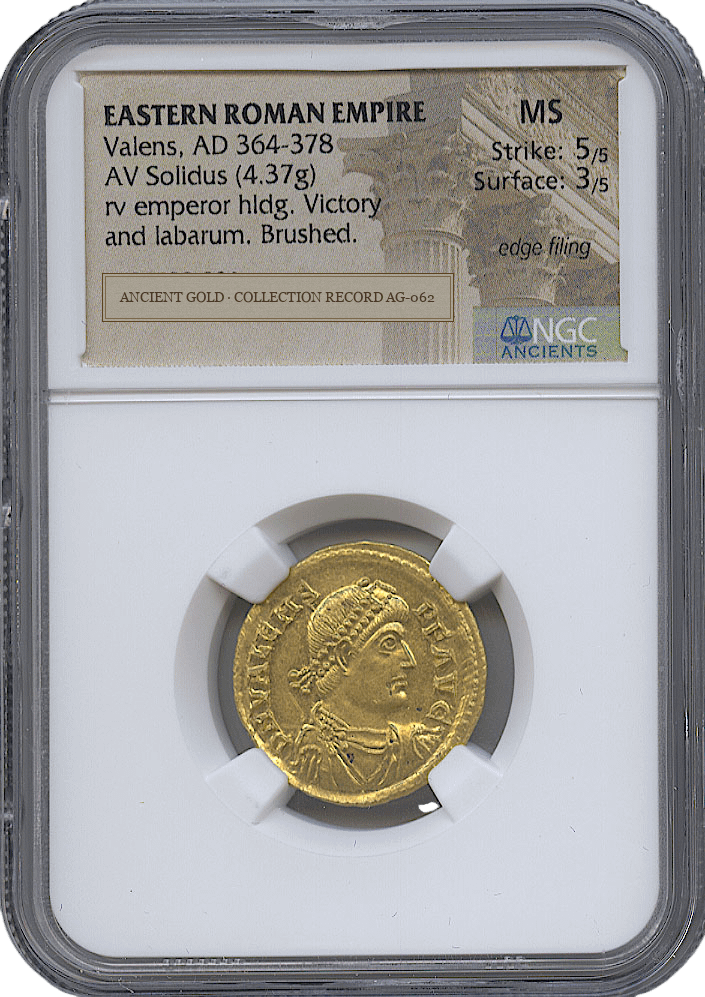
Roman
AD 364–378
Valens faces an emperor holding Victory and the labarum, combining personal command with the military and Christian emblems of late Roman sovereignty.
View Object Record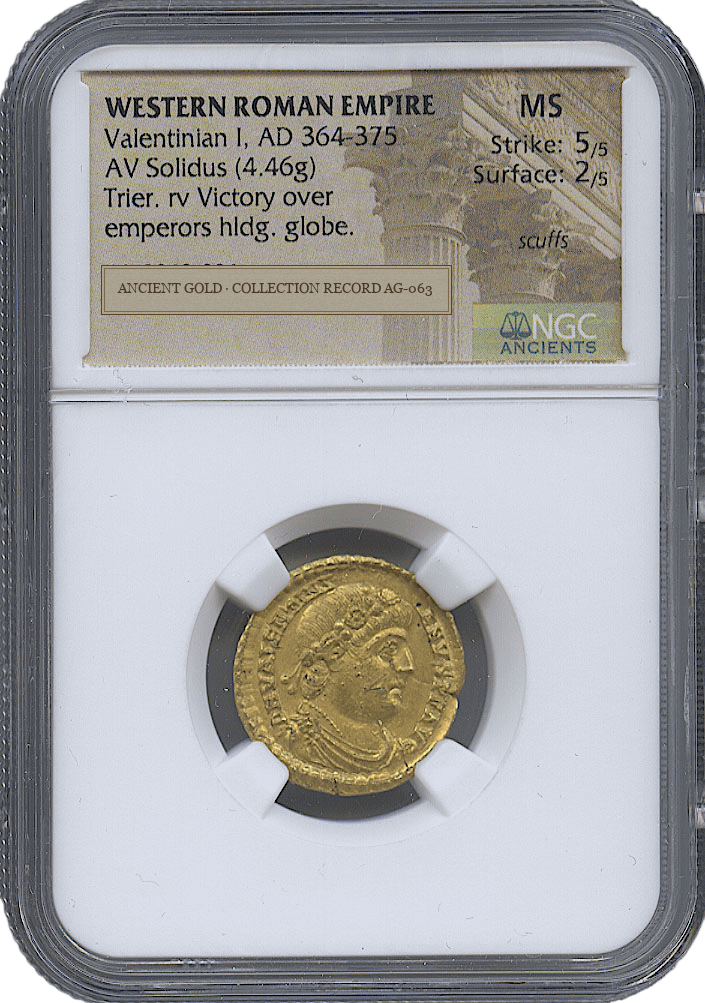
Roman
AD 364–375
Struck at Trier, this solidus pairs Valentinian I with a victorious imperial scene that makes partnership and universal rule visible in gold.
View Object Record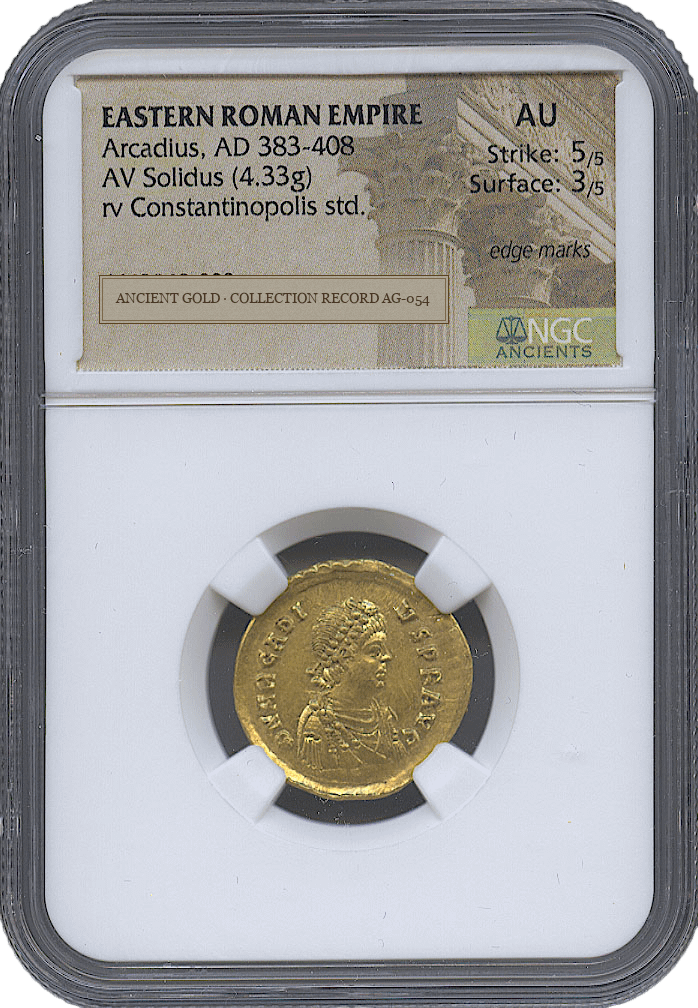
Roman
AD 383–408
Arcadius faces the imperial capital across the coin, pairing a youthful ruler with Constantinopolis as the stable centre of eastern Roman authority.
View Object Record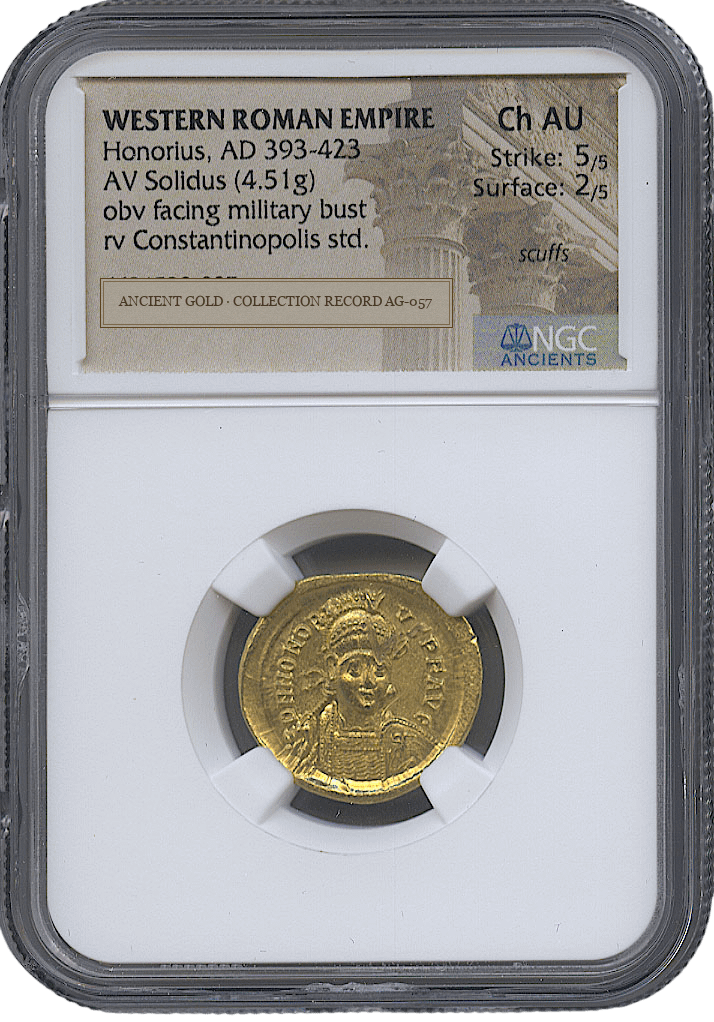
Roman
AD 393–423
Honorius appears in confronting military dress while Constantinopolis stands for the Roman order the western court struggled to preserve.
View Object Record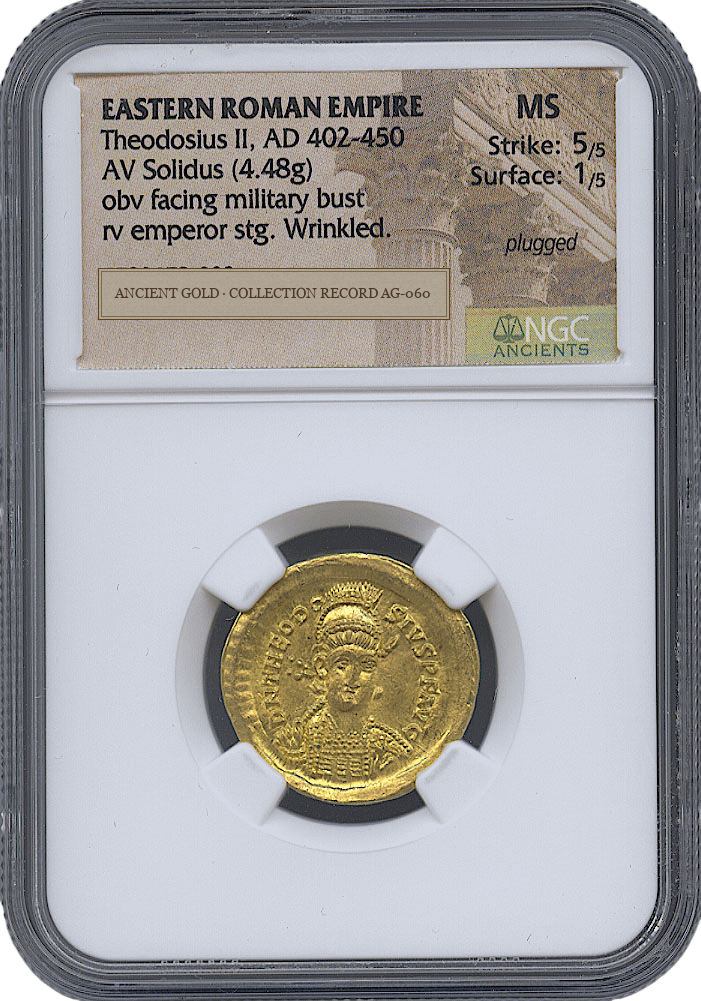
Roman
AD 402–450
A frontal military portrait and a victorious imperial reverse transform the long reign of Theodosius II into an image of order, defence and sacred rule.
View Object Record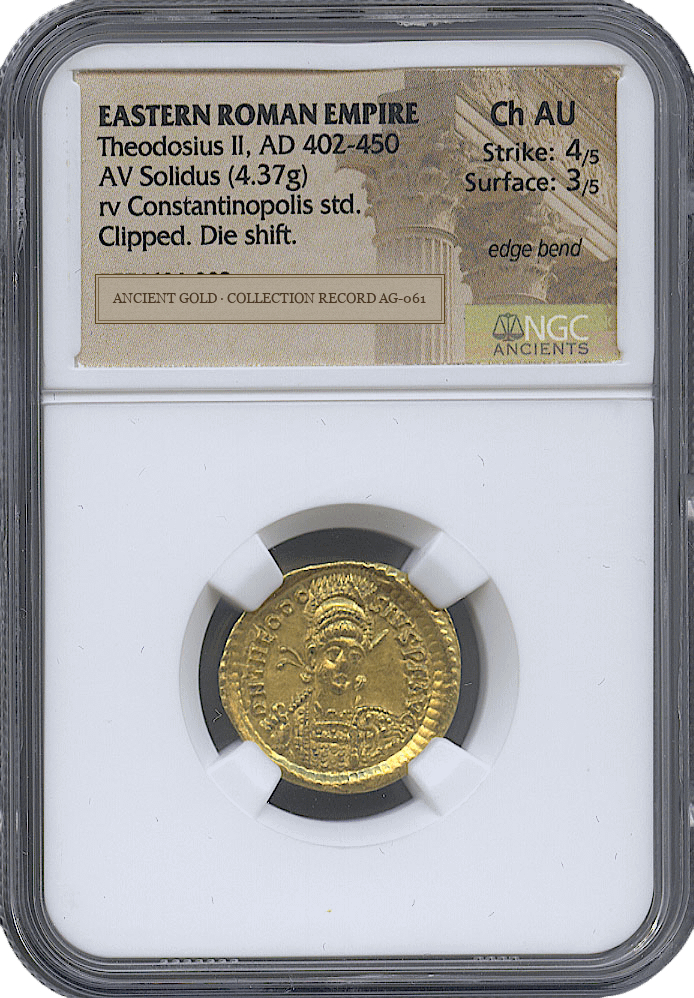
Roman
AD 402–450
Theodosius II faces Constantinopolis, binding the ceremonial emperor to the fortified capital that defined the security of his long reign.
View Object Record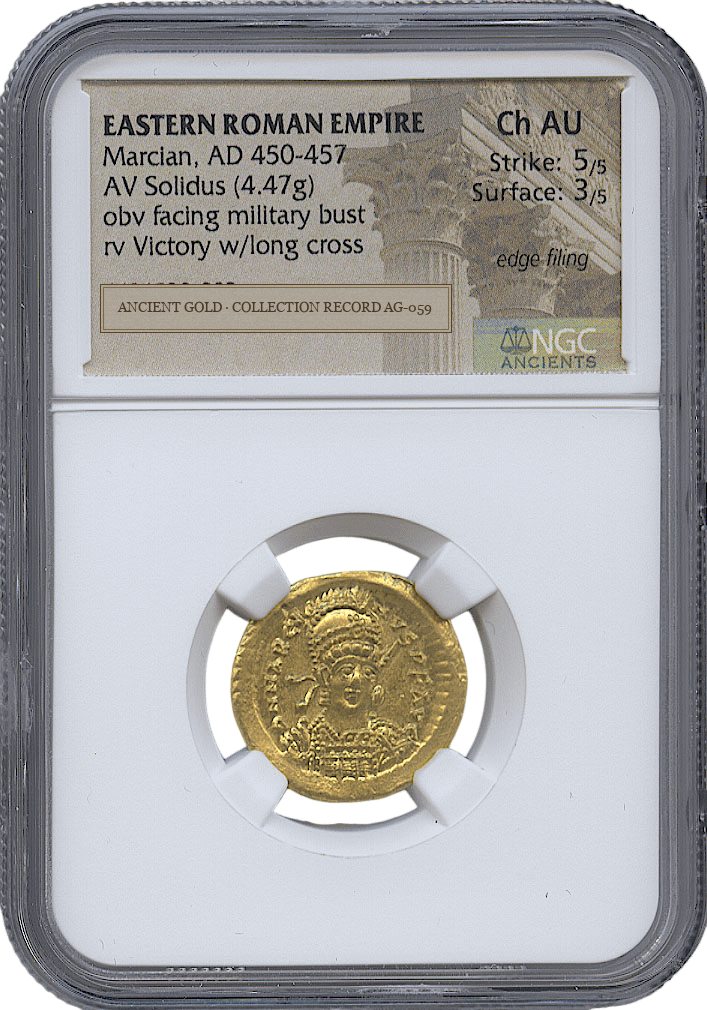
Roman
AD 450–457
Marcian’s armoured portrait faces Victory and the long cross, presenting a short but stable reign as guarded by military command and sacred triumph.
View Object Record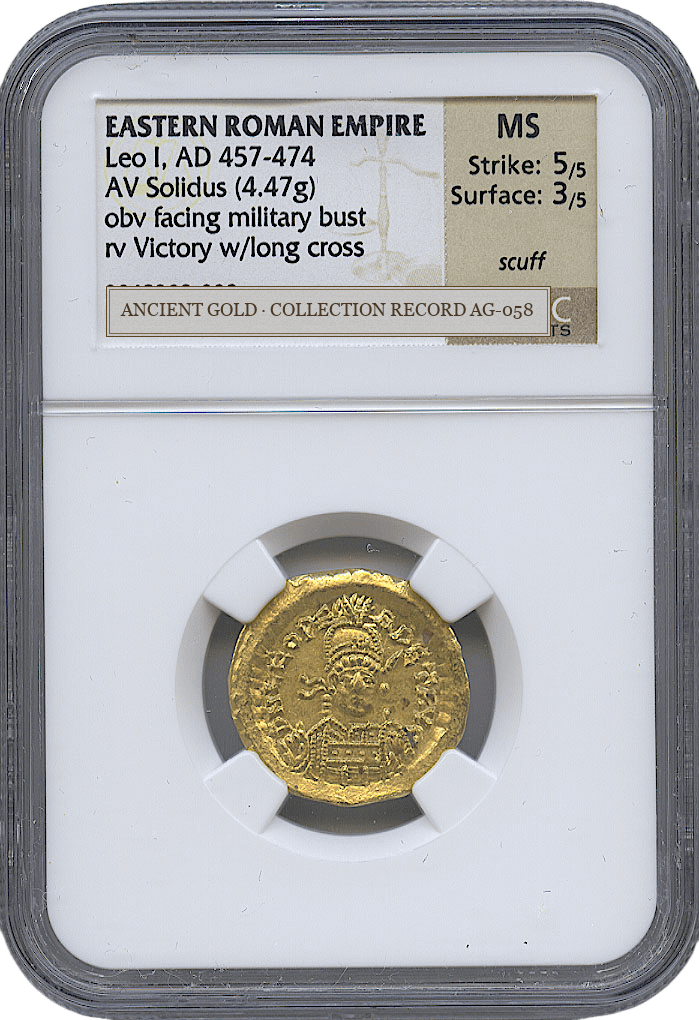
Roman
AD 457–474
A frontal military portrait and Victory with the long cross place Leo I between Roman command and a fully Christian language of triumph.
View Object Record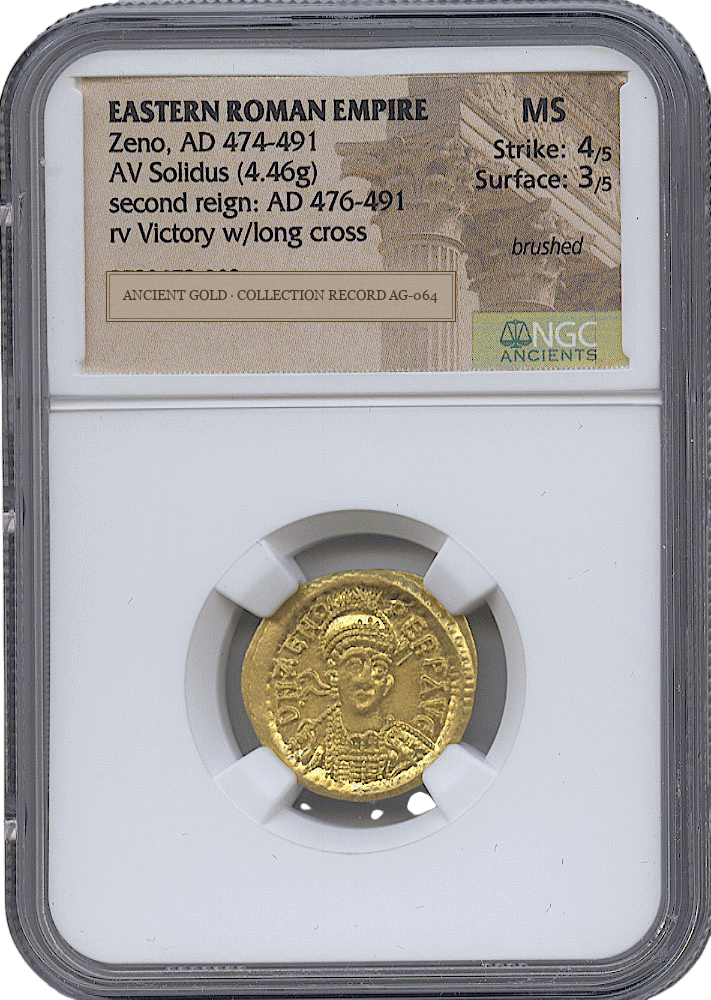
Roman
AD 476–491
Struck as western imperial rule disappeared, Zeno’s solidus asserts that Roman authority survived in the East through armour, Victory and the cross.
View Object Record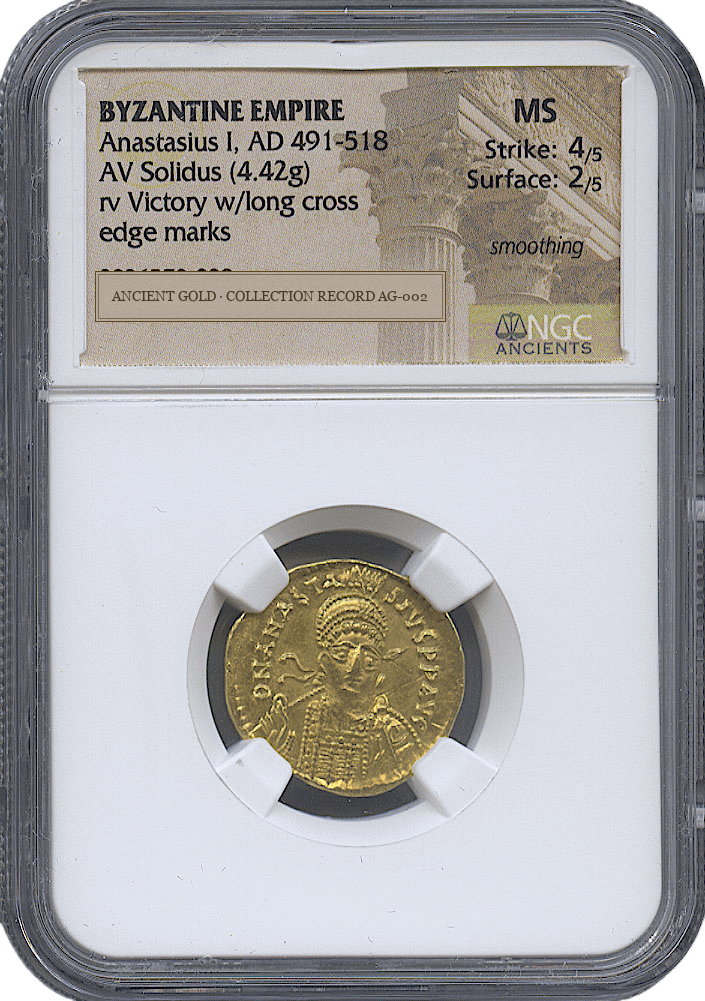
Byzantine
AD 491–518
Anastasius inherited the late Roman solidus and made it the stable gold voice of a newly confident eastern empire. Victory and the long cross unite classical triumph with…
View Object Record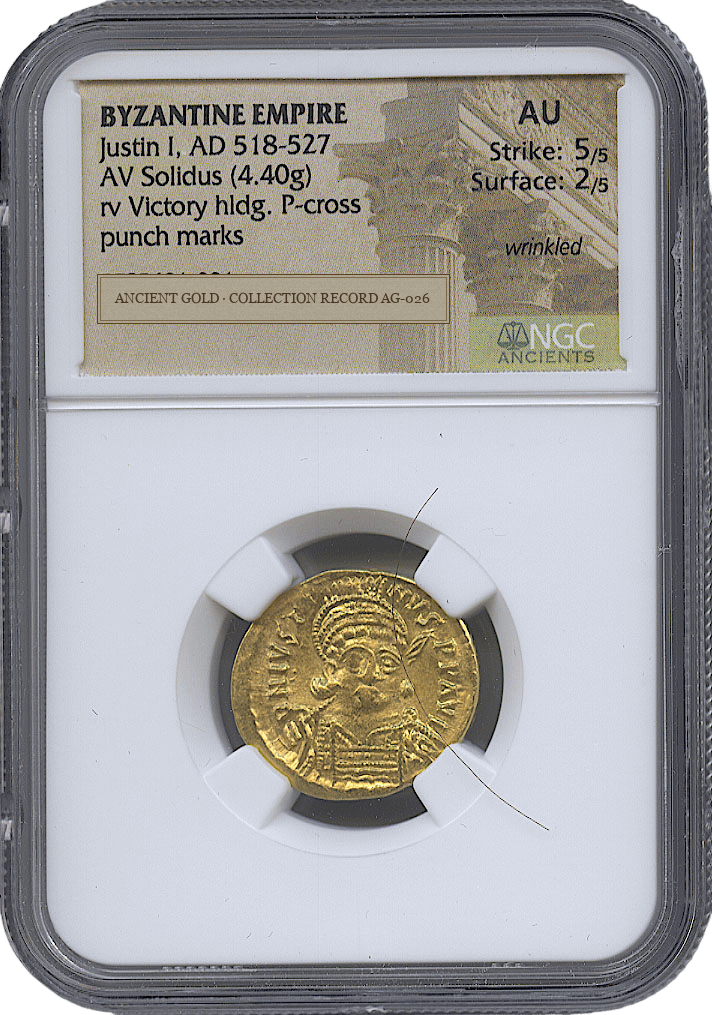
Byzantine
AD 518–527
Justin I’s solidus preserves the last strength of the late Roman portrait tradition: an armoured emperor answered by Victory and the patriarchal cross.
View Object Record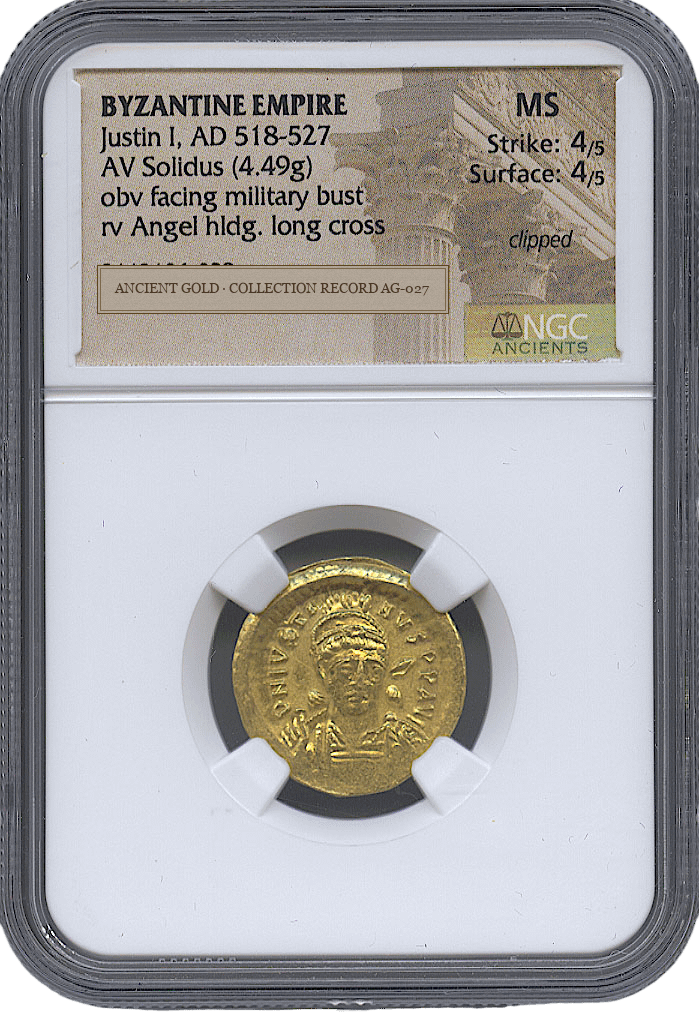
Byzantine
AD 518–527
A facing military portrait and an angel with the long cross place Justin I between Roman command and the emerging sacred court of Byzantium.
View Object Record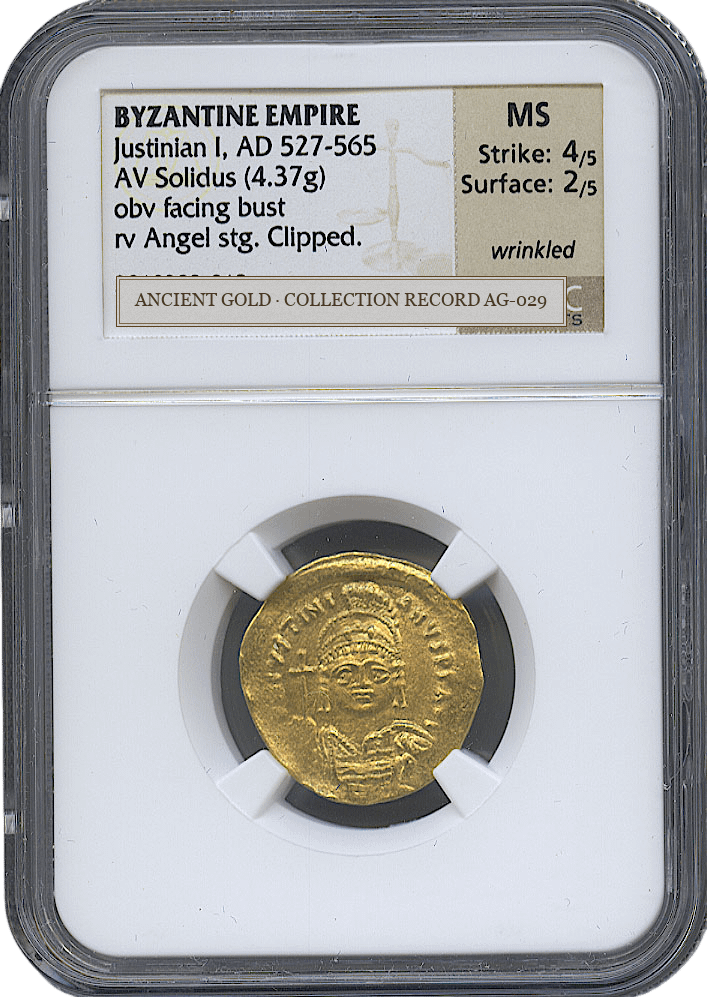
Byzantine
AD 527–565
Justinian’s frontal portrait confronts the viewer; the angel behind it announces that imperial restoration was imagined under divine protection.
View Object Record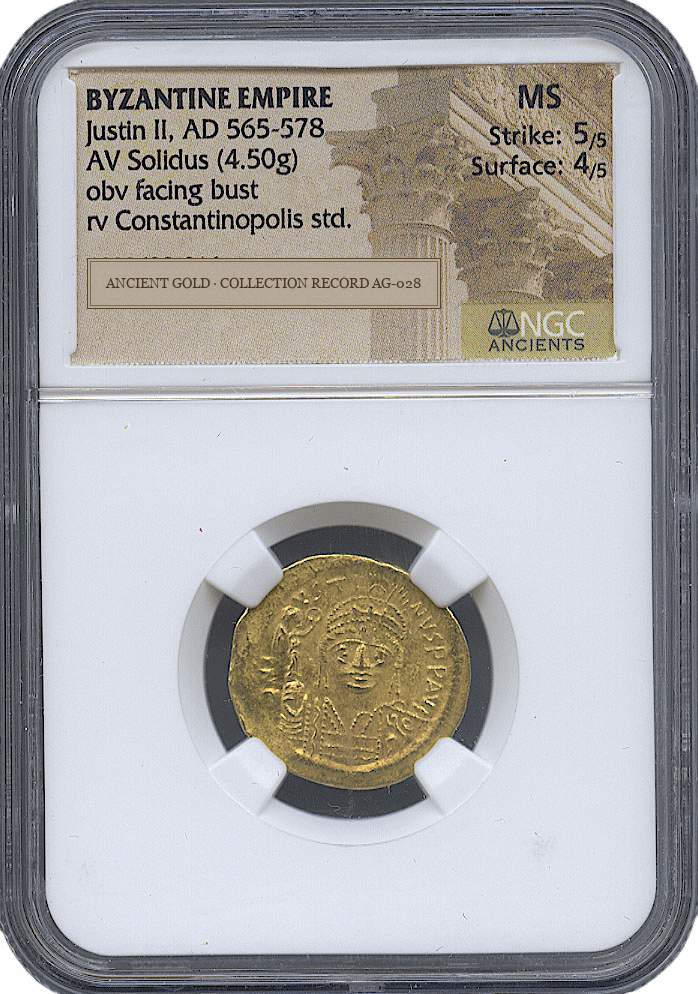
Byzantine
AD 565–578
Justin II faces the viewer as emperor while Constantinopolis personifies the capital whose authority his gold travelled far beyond the city walls.
View Object Record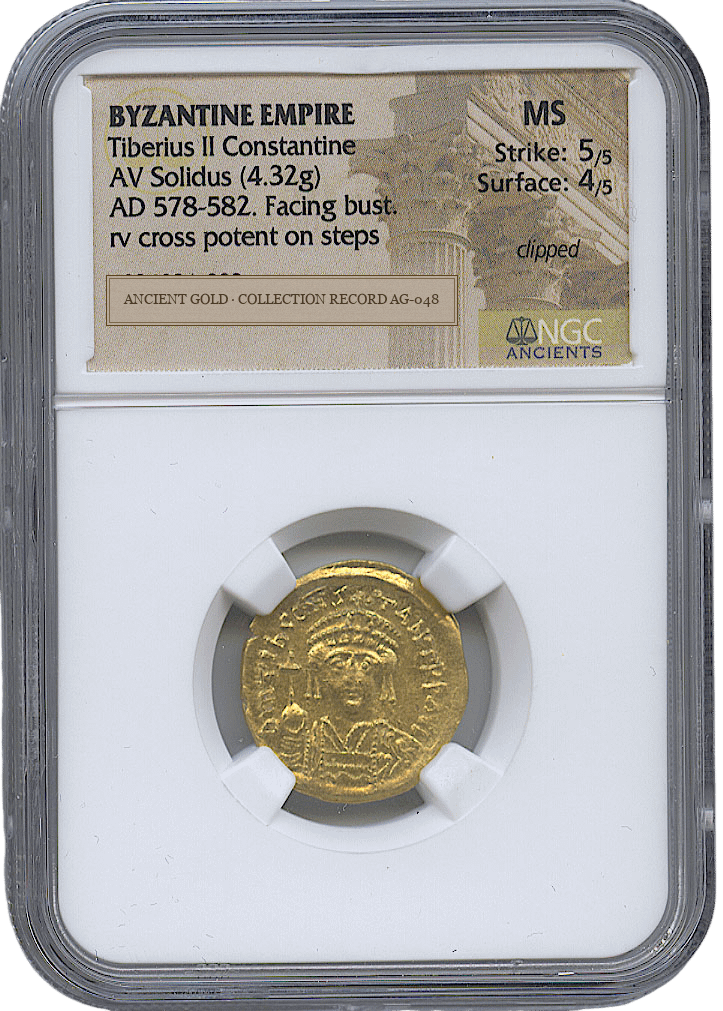
Byzantine
AD 578–582
Tiberius II’s solidus sets a frontal emperor against the cross potent, reducing imperial ideology to two enduring signs: ruler and faith.
View Object Record