Coin
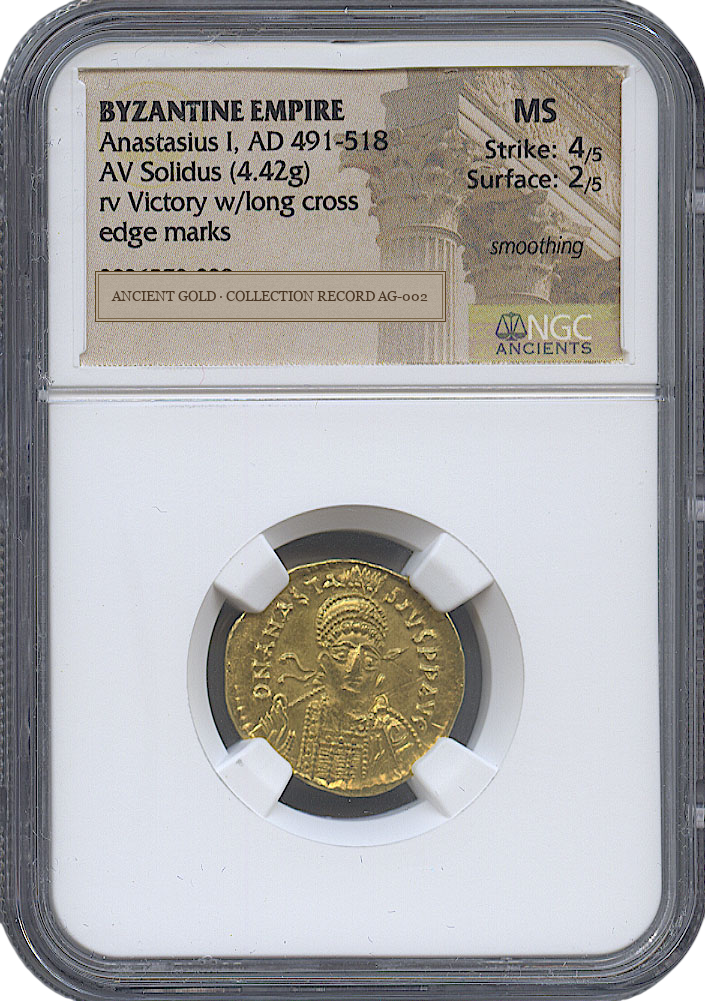
Anastasius I Gold Solidus
Anastasius inherited the late Roman solidus and made it the stable gold voice of a newly confident eastern empire. Victory and the long cross unite classical…
View Object RecordCivilisation
Ancient Gold coin records associated with Byzantine, with documented attribution, date, condition and provenance.
49 published recordsDocumented Objects & Essays
Coin
Anastasius inherited the late Roman solidus and made it the stable gold voice of a newly confident eastern empire. Victory and the long cross unite classical…
View Object Record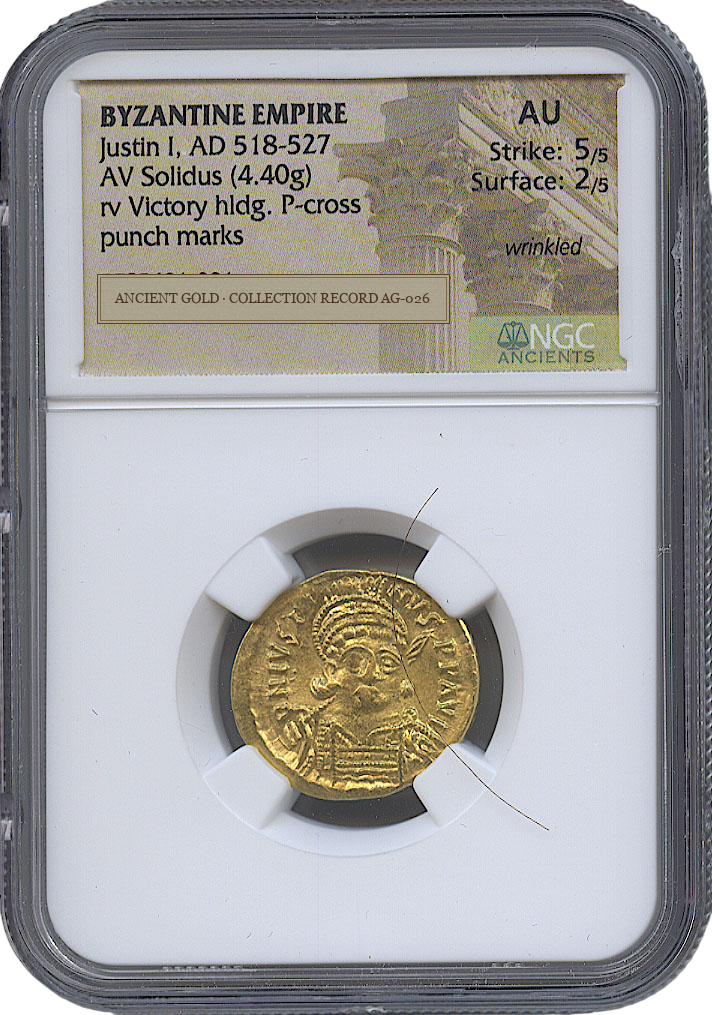
Coin
Justin I’s solidus preserves the last strength of the late Roman portrait tradition: an armoured emperor answered by Victory and the patriarchal cross.
View Object Record
Coin
A facing military portrait and an angel with the long cross place Justin I between Roman command and the emerging sacred court of Byzantium.
View Object Record
Coin
Justinian’s frontal portrait confronts the viewer; the angel behind it announces that imperial restoration was imagined under divine protection.
View Object Record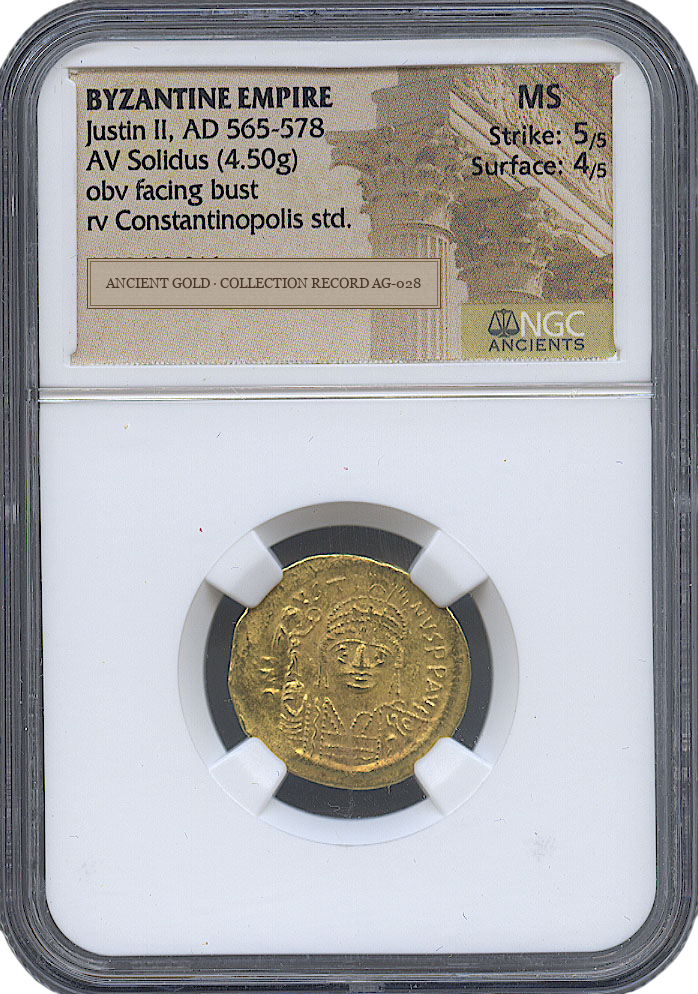
Coin
Justin II faces the viewer as emperor while Constantinopolis personifies the capital whose authority his gold travelled far beyond the city walls.
View Object Record
Coin
Tiberius II’s solidus sets a frontal emperor against the cross potent, reducing imperial ideology to two enduring signs: ruler and faith.
View Object Record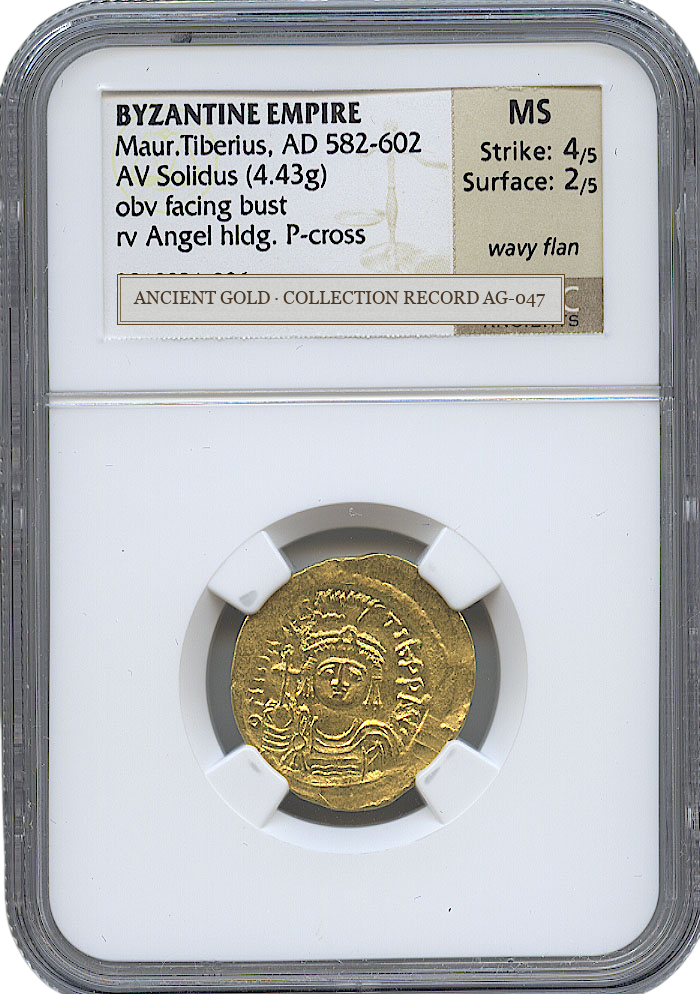
Coin
Maurice Tiberius appears as a military ruler while an angel carries the patriarchal cross, an image of victory poised before the empire’s seventh-century crisis.
View Object Record
Coin
Phocas’s unmistakable bearded portrait faces an angel of victory, preserving official confidence during one of Byzantium’s most violent changes of regime.
View Object Record
Coin
Heraclius’s facing bust belongs to a reign that recovered the True Cross and then watched the old eastern order transform beyond recognition.
View Object Record
Coin
Heraclius and his son appear together before a cross on steps, turning succession into a public promise during decades of war and religious change.
View Object Record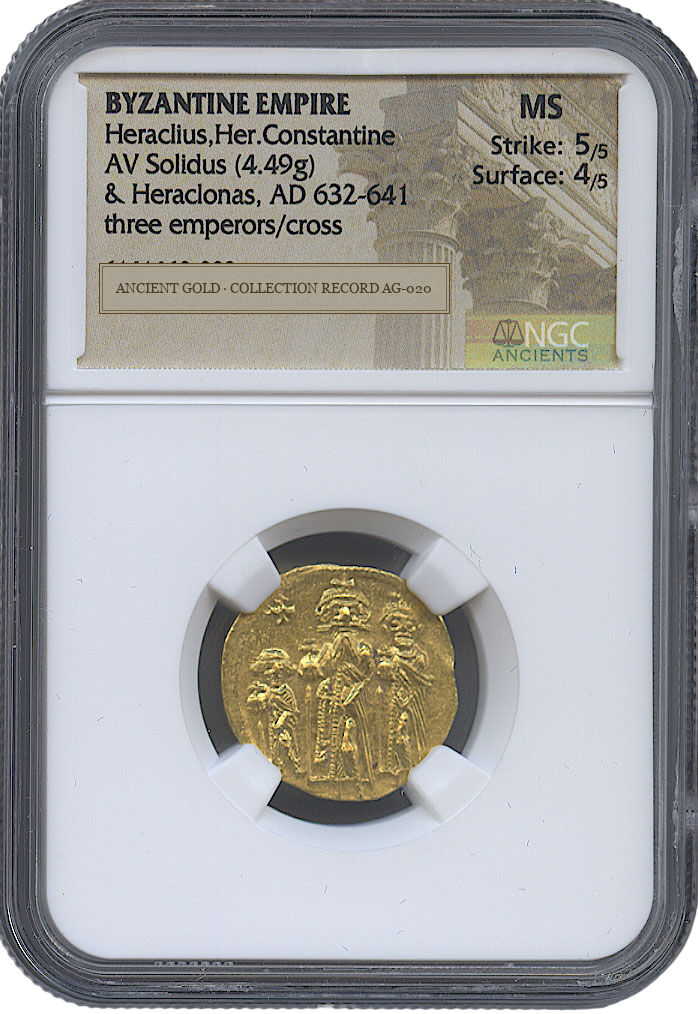
Coin
Three emperors stand as a carefully ordered dynasty while the reverse cross strips imperial legitimacy to its most enduring sacred emblem.
View Object Record
Coin
Heraclius and his two sons stand as a complete imperial household, while the cross reduces the empire’s hope of continuity to one monumental sign.
View Object Record
Coin
The mature bearded portrait of Constans II faces a cross potent, a severe image of sovereignty from an empire fighting for survival on several fronts.
View Object Record
Coin
Constans II and Constantine IV share the field as father and heir, while the reverse preserves both the cross and the younger sons who complicated the…
View Object Record
Coin
Constantine IV’s military portrait is paired with a cross guarded by his brothers, preserving both victory and the unresolved tensions of imperial family rule.
View Object Record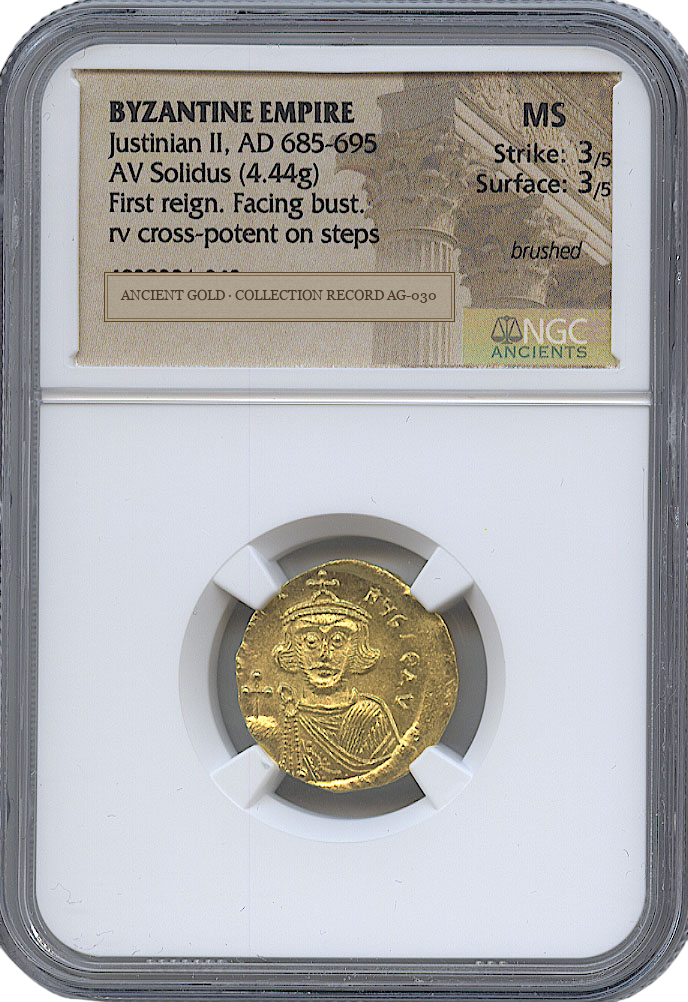
Coin
Justinian II’s first-reign military portrait faces the traditional cross, an imperial image struck just before Byzantine gold underwent a radical sacred transformation.
View Object Record
Coin
Christ takes the place of highest authority, while Justinian II appears on the reverse holding the cross: a decisive reordering of Byzantine coin imagery.
View Object Record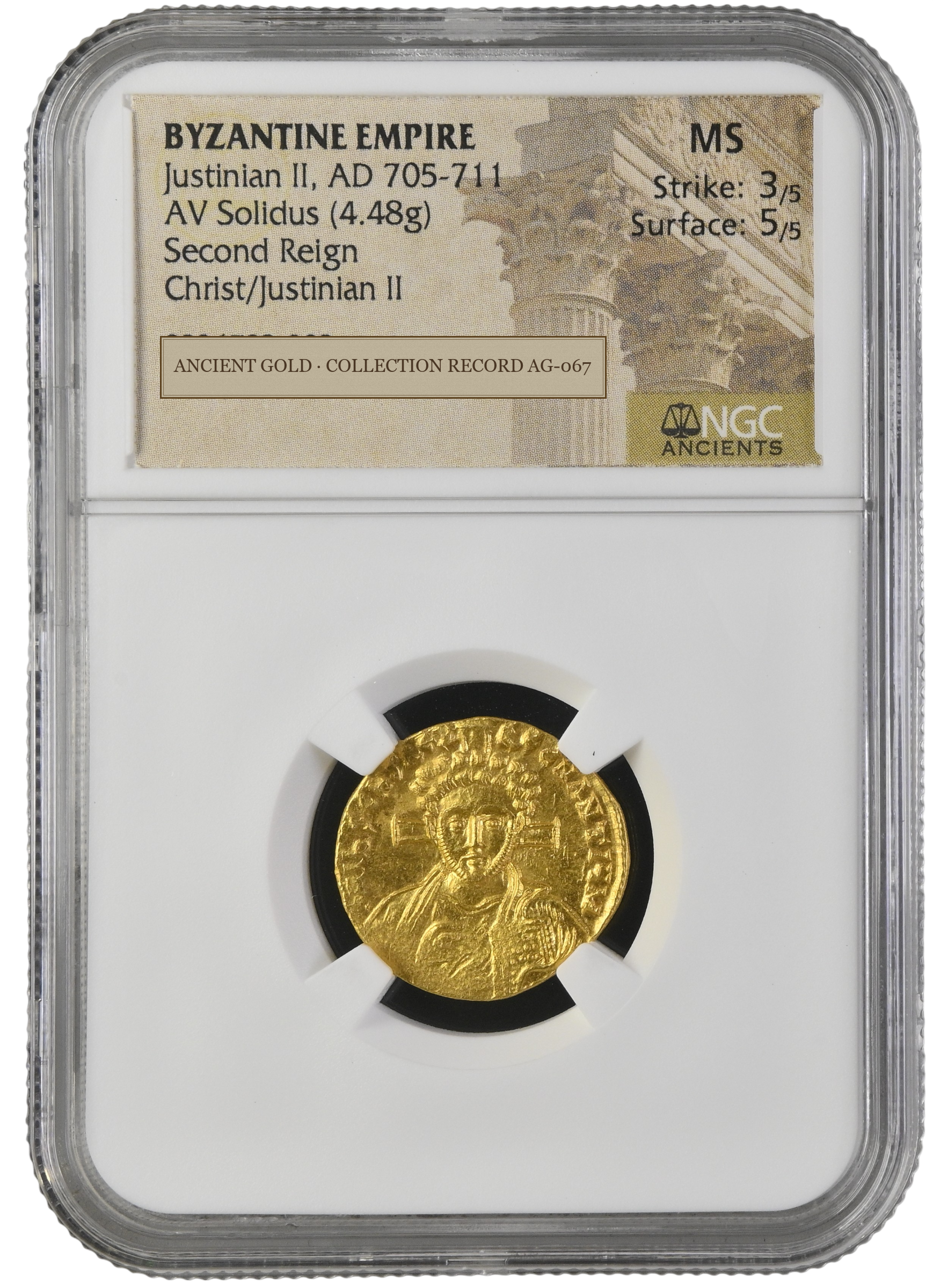
Coin
Restored after exile and mutilation, Justinian II places Christ the King opposite his own uncompromising portrait, turning a turbulent return into sacred authority.
View Object Record
Coin
A small gold tremissis from Justinian II’s restored reign carries the ruler’s returned authority in a denomination made for circulation beyond the ceremonial solidus.
View Object Record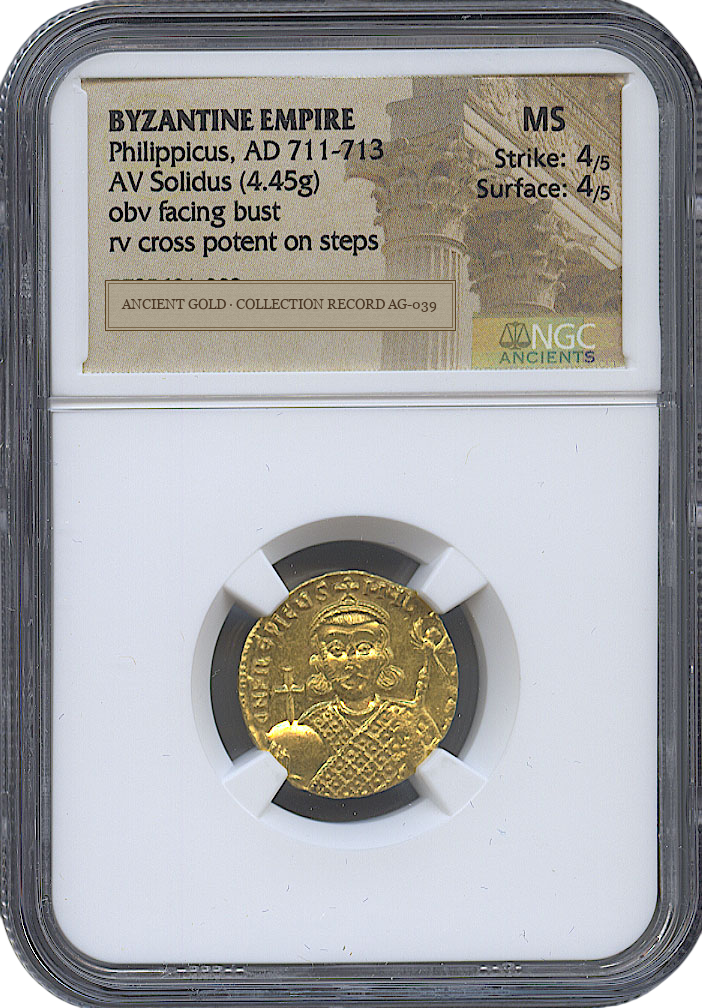
Coin
Philippicus’s brief reign survives in a confident facing portrait and cross potent, official permanence asserted by a ruler who held power for less than two years.
View Object Record
Coin
Leo III and Constantine V face one another across the two sides of the solidus, replacing sacred figural imagery with a direct statement of dynasty.
View Object Record
Coin
Constantine V places his deceased father Leo III opposite his own portrait, using gold to turn ancestry into continuing political authority.
View Object Record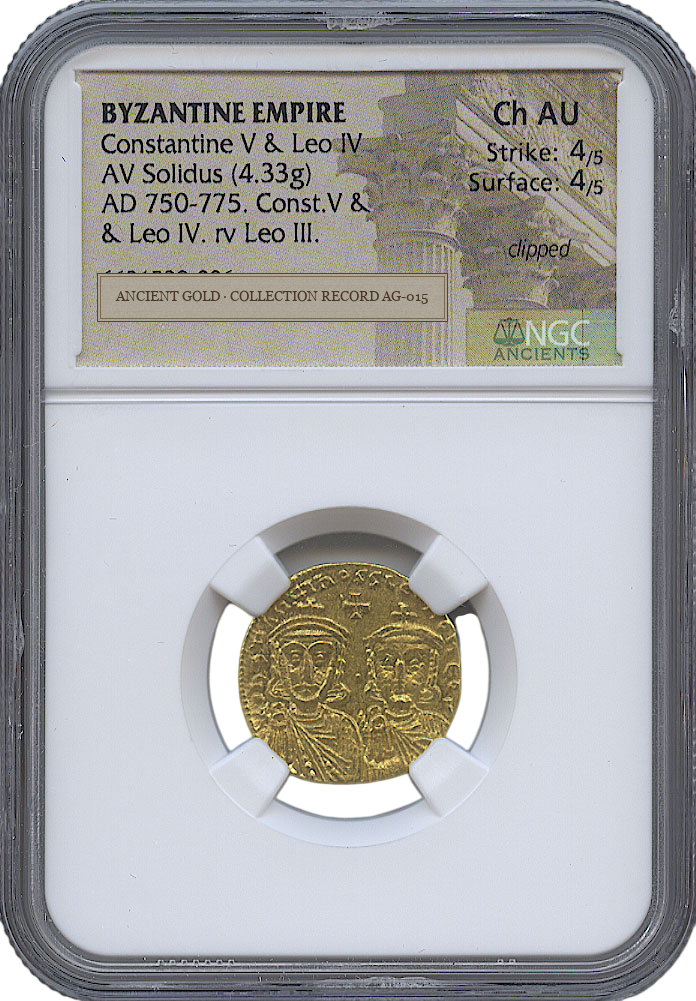
Coin
Constantine V and Leo IV appear together while Leo III occupies the reverse, arranging three generations of the Isaurian dynasty in gold.
View Object Record
Coin
Leo IV and the young Constantine VI face two deceased ancestors, turning the solidus into a four-generation theatre of legitimacy.
View Object Record