Byzantine
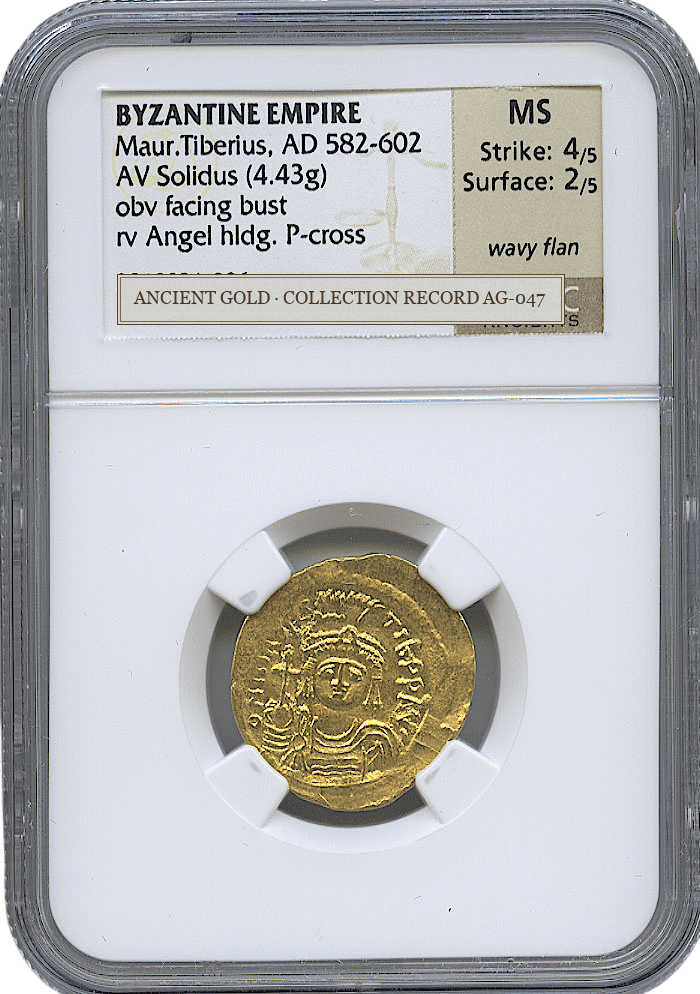
Maurice Tiberius Gold Solidus
AD 582–602
Maurice Tiberius appears as a military ruler while an angel carries the patriarchal cross, an image of victory poised before the empire’s seventh-century crisis.
View Object RecordThe Ancient Gold Collection
A scholarly catalogue of ancient gold coinage, presented as individual historical records.
Collection Discovery
Approach the collection through civilisation, ruler, period or dynasty. Each path preserves the relationship between an object and its historical setting.
Move between the cultural worlds represented by the surviving objects.
Study coinage through the authority named or portrayed on each issue.
Follow changes in weight, imagery and political language through time.
Trace succession and shared visual programmes across ruling houses.
Catalogue tools
Search the evidence record or narrow the catalogue by historical and numismatic context.
Showing the current catalogue selection
Open public research data (JSON)Byzantine
AD 582–602
Maurice Tiberius appears as a military ruler while an angel carries the patriarchal cross, an image of victory poised before the empire’s seventh-century crisis.
View Object Record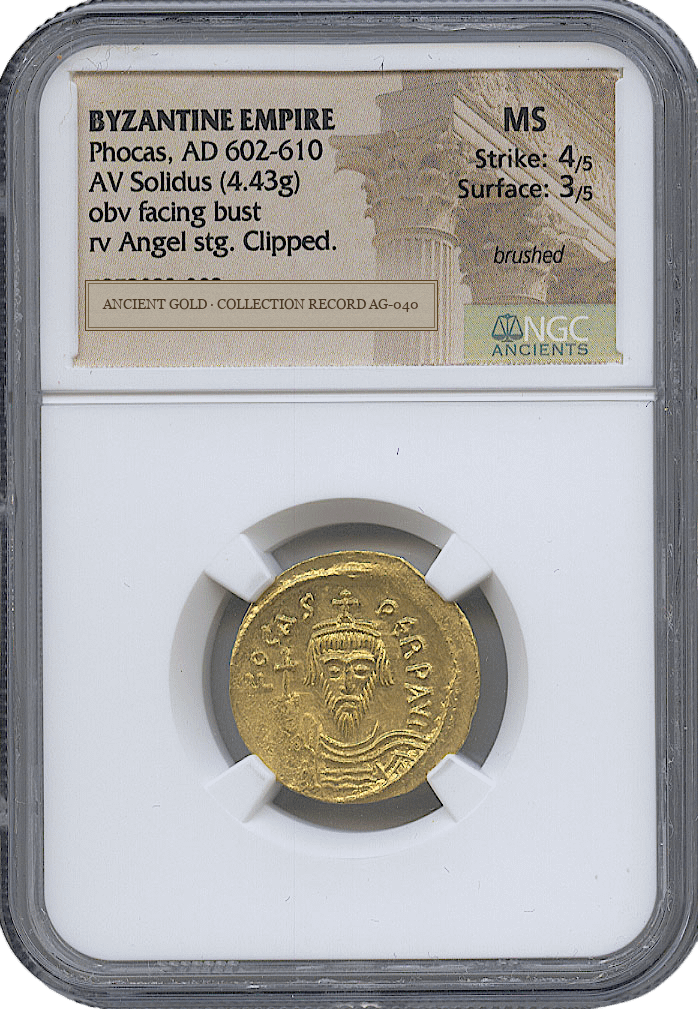
Byzantine
AD 602–610
Phocas’s unmistakable bearded portrait faces an angel of victory, preserving official confidence during one of Byzantium’s most violent changes of regime.
View Object Record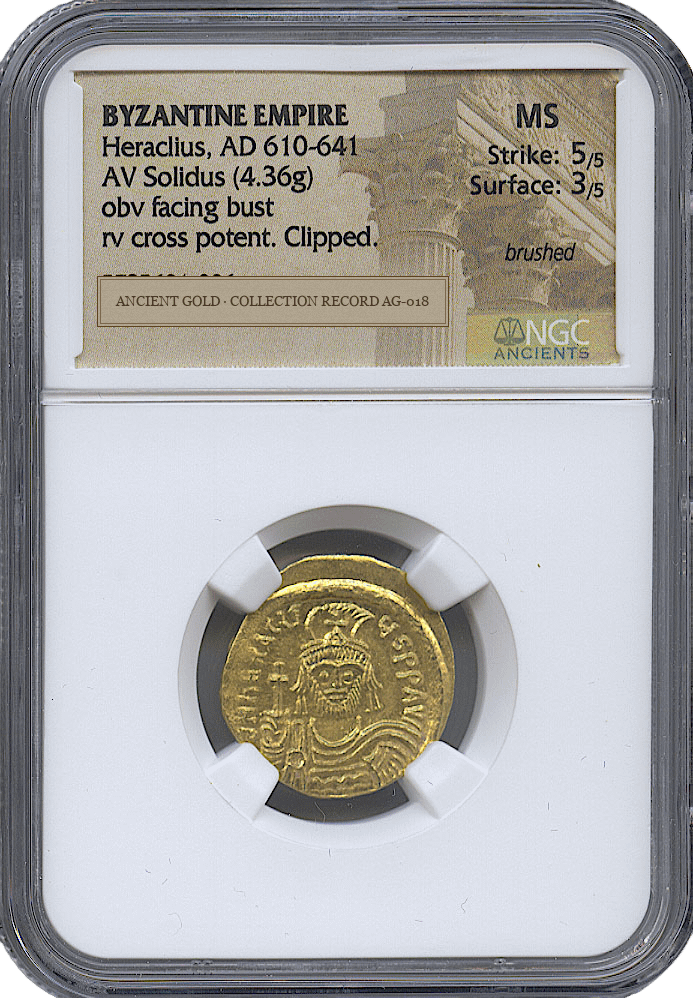
Byzantine
AD 610–641
Heraclius’s facing bust belongs to a reign that recovered the True Cross and then watched the old eastern order transform beyond recognition.
View Object Record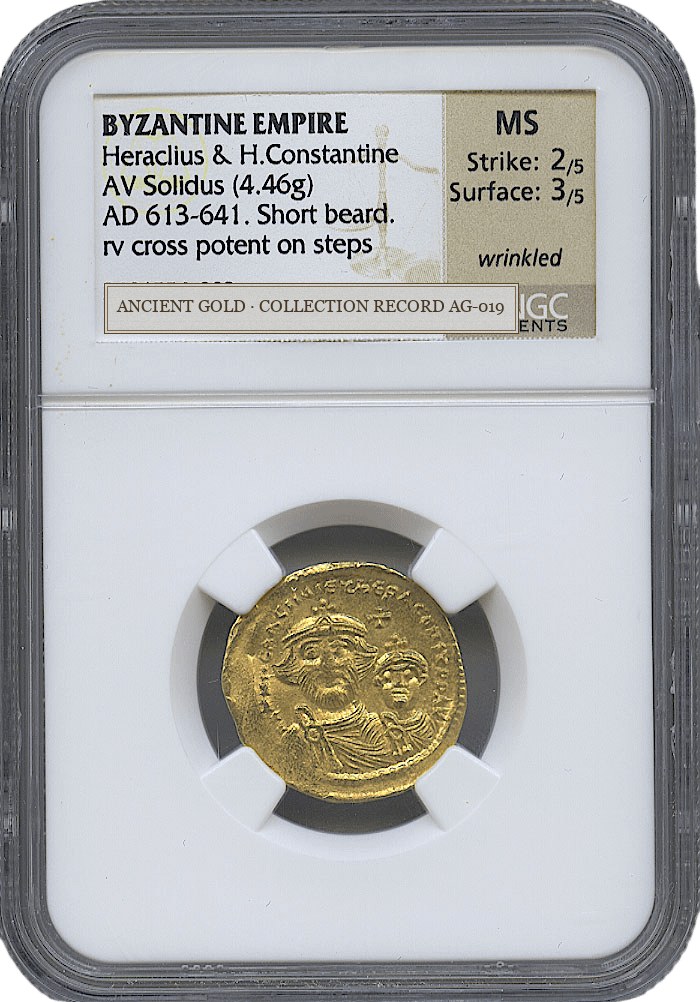
Byzantine
AD 613–641
Heraclius and his son appear together before a cross on steps, turning succession into a public promise during decades of war and religious change.
View Object Record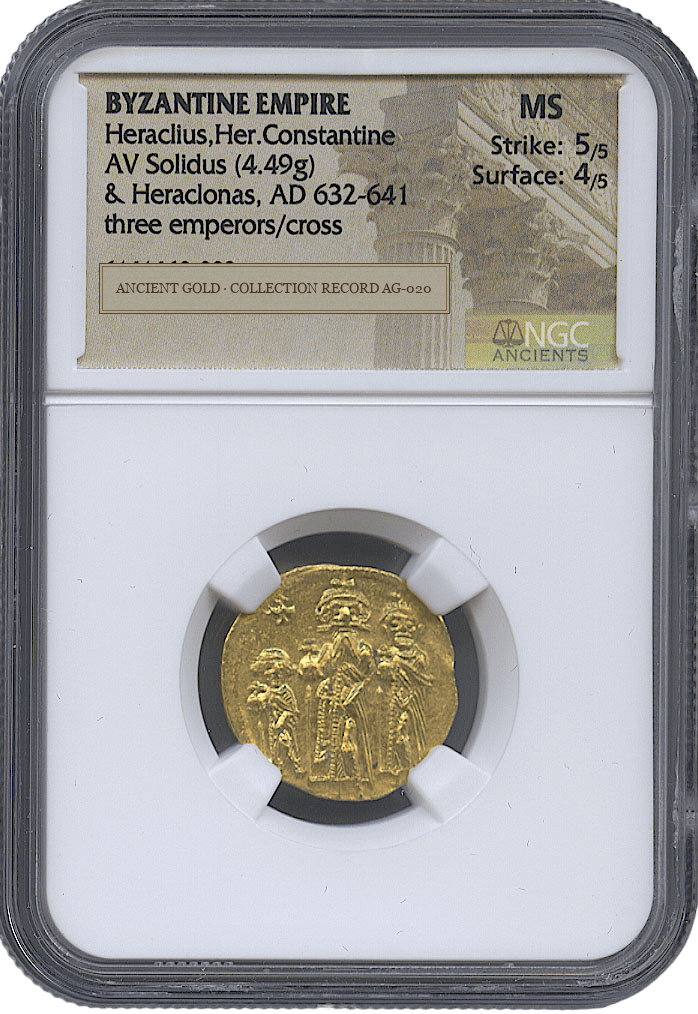
Byzantine
AD 632–641
Three emperors stand as a carefully ordered dynasty while the reverse cross strips imperial legitimacy to its most enduring sacred emblem.
View Object Record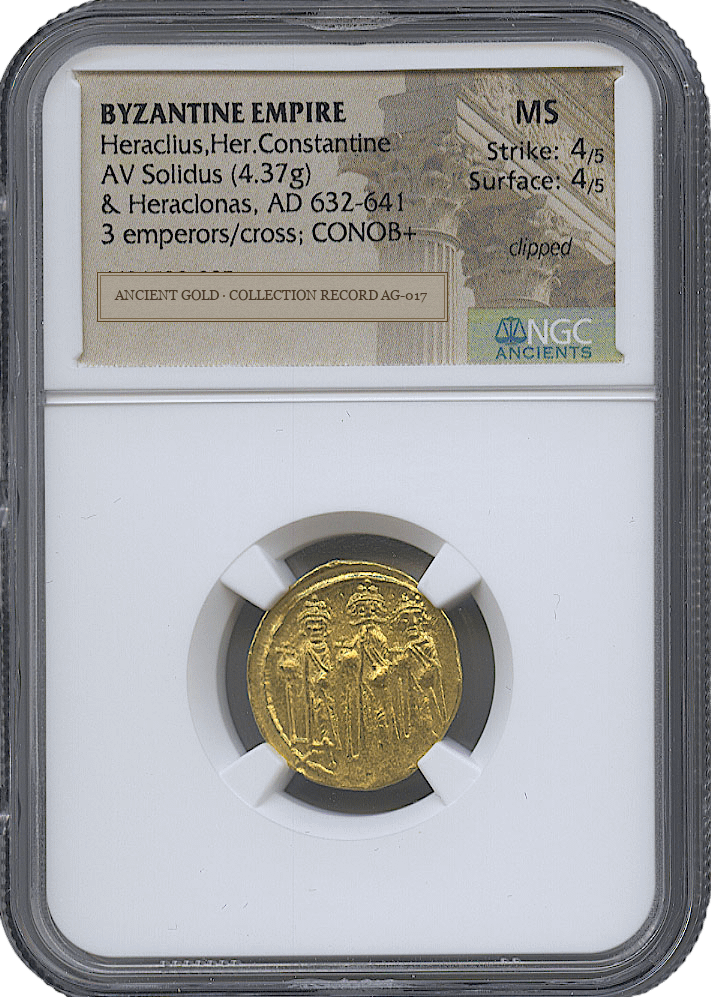
Byzantine
AD 632–641
Heraclius and his two sons stand as a complete imperial household, while the cross reduces the empire’s hope of continuity to one monumental sign.
View Object Record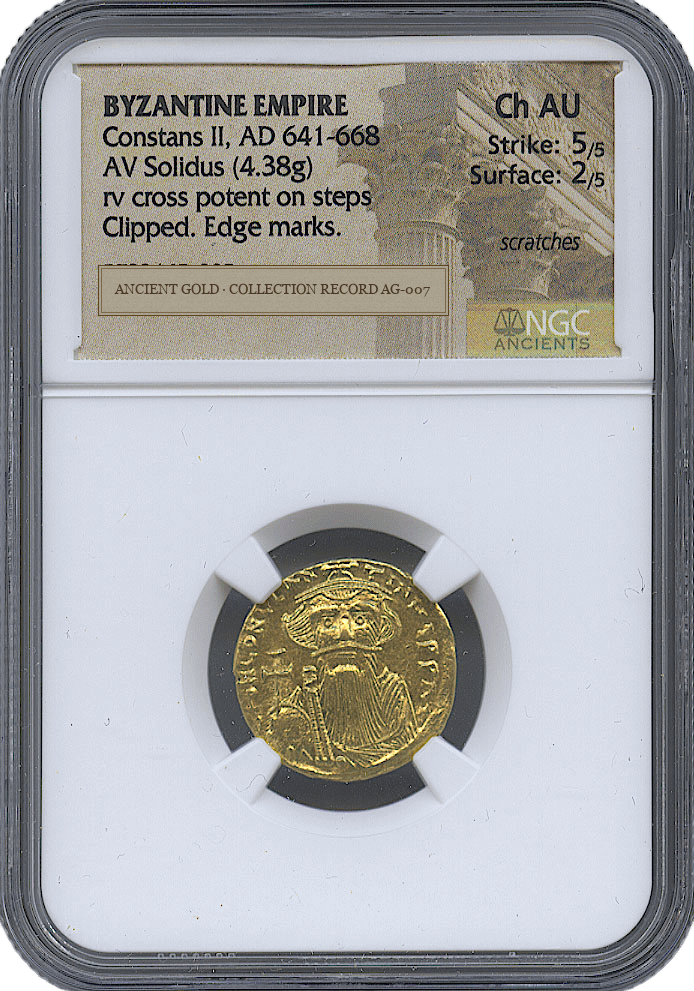
Byzantine
AD 641–668
The mature bearded portrait of Constans II faces a cross potent, a severe image of sovereignty from an empire fighting for survival on several fronts.
View Object Record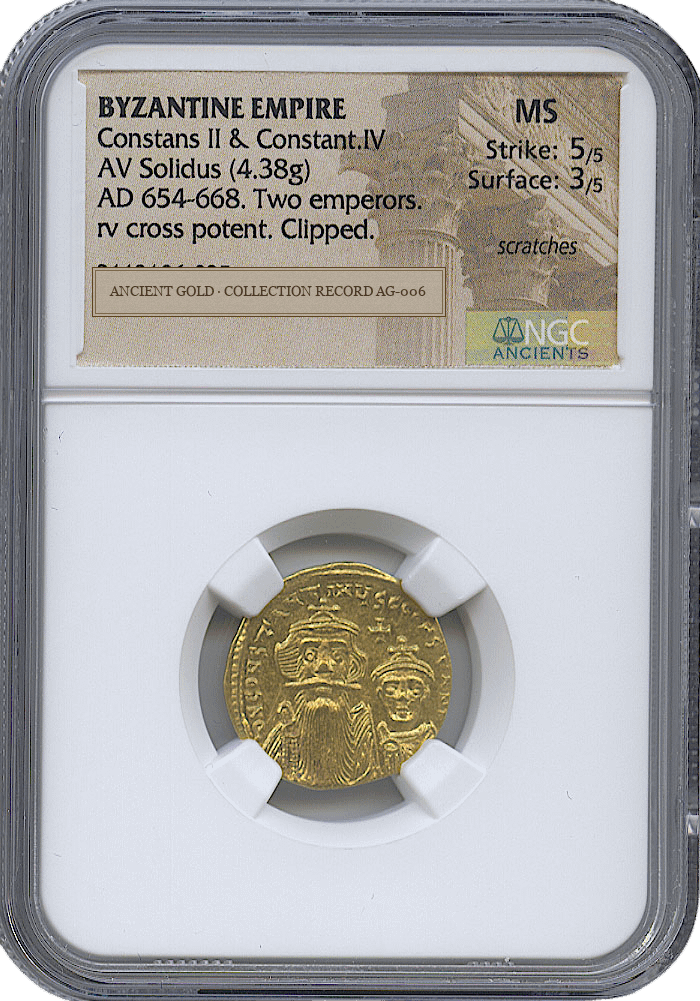
Byzantine
AD 654–668
Constans II and Constantine IV share the field as father and heir, while the reverse preserves both the cross and the younger sons who complicated the succession.
View Object Record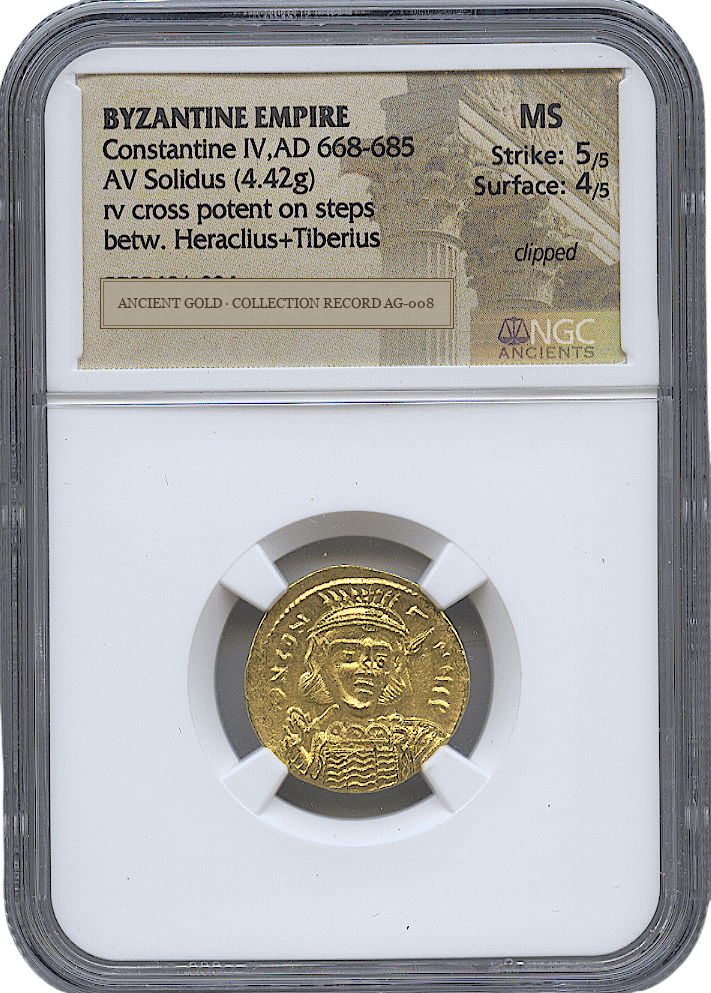
Byzantine
AD 668–685
Constantine IV’s military portrait is paired with a cross guarded by his brothers, preserving both victory and the unresolved tensions of imperial family rule.
View Object Record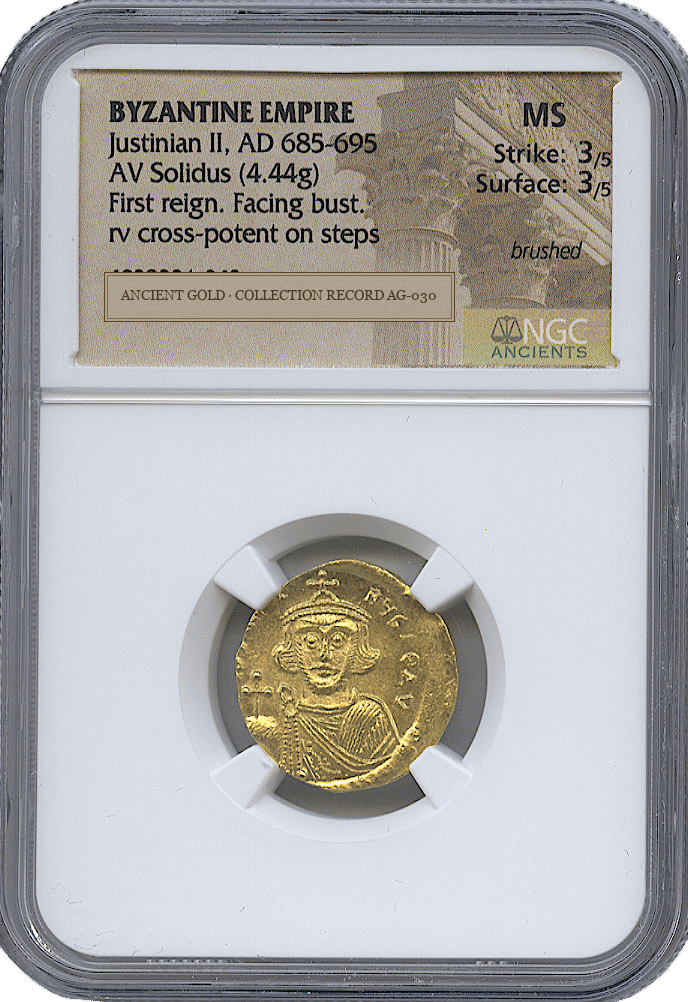
Byzantine
AD 685–695
Justinian II’s first-reign military portrait faces the traditional cross, an imperial image struck just before Byzantine gold underwent a radical sacred transformation.
View Object Record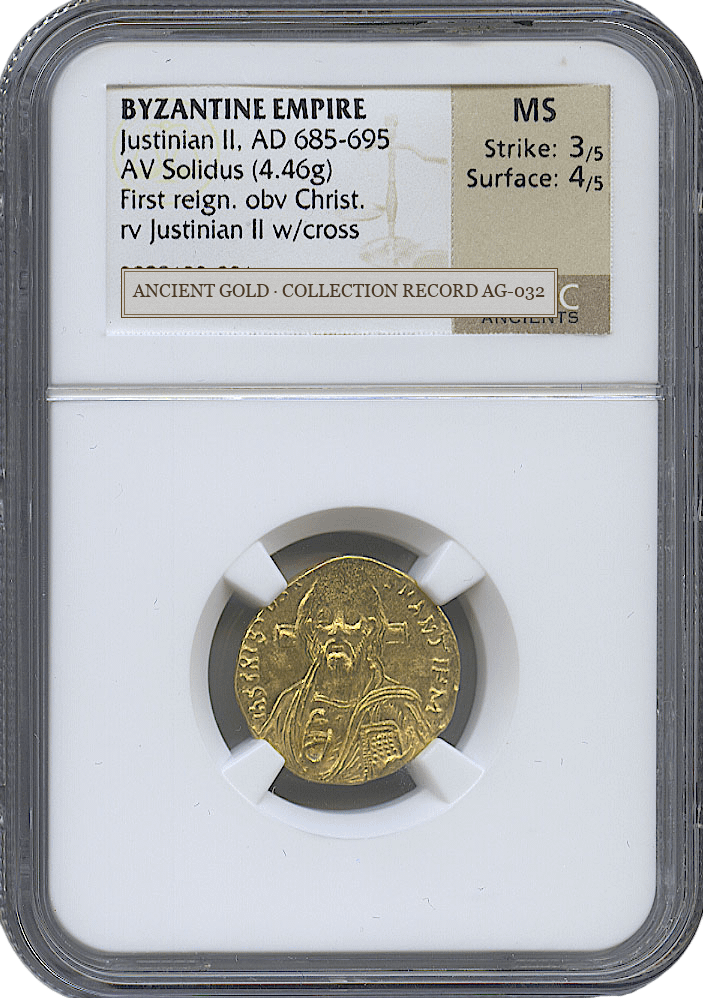
Byzantine
AD 685–695
Christ takes the place of highest authority, while Justinian II appears on the reverse holding the cross: a decisive reordering of Byzantine coin imagery.
View Object Record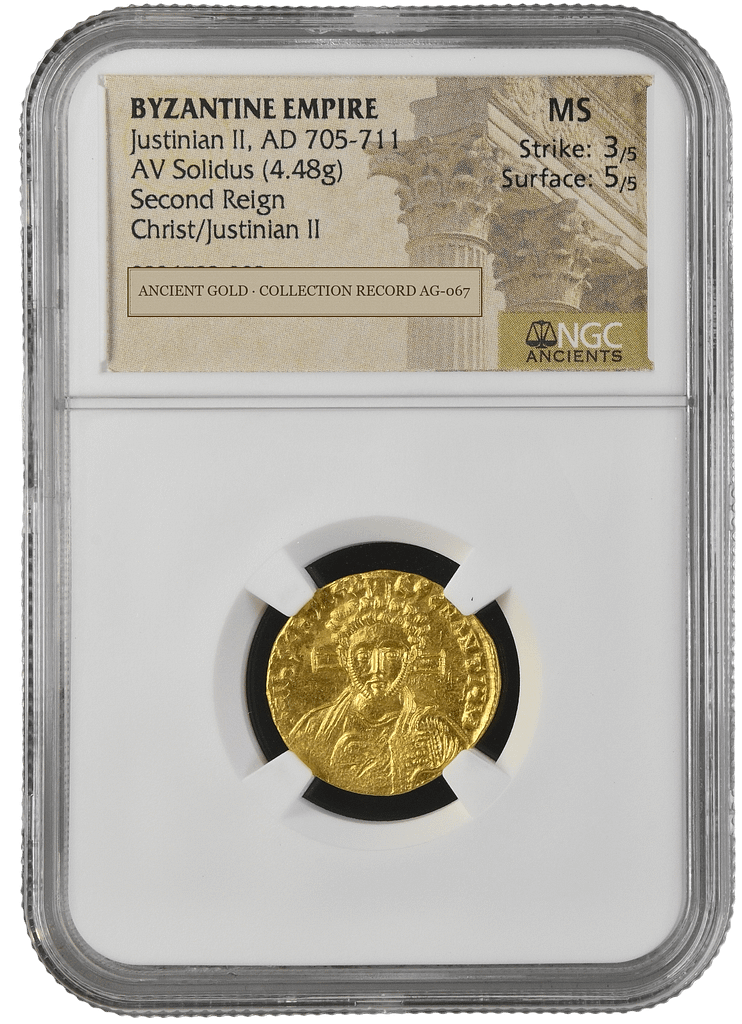
Byzantine
AD 705–711
Restored after exile and mutilation, Justinian II places Christ the King opposite his own uncompromising portrait, turning a turbulent return into sacred authority.
View Object Record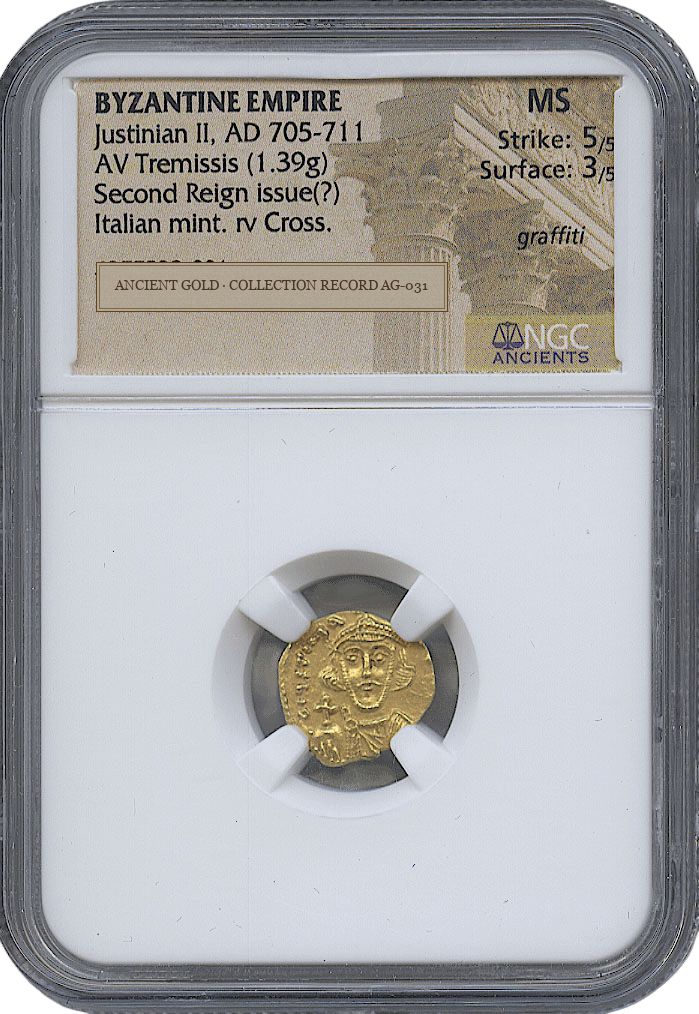
Byzantine
AD 705–711
A small gold tremissis from Justinian II’s restored reign carries the ruler’s returned authority in a denomination made for circulation beyond the ceremonial solidus.
View Object Record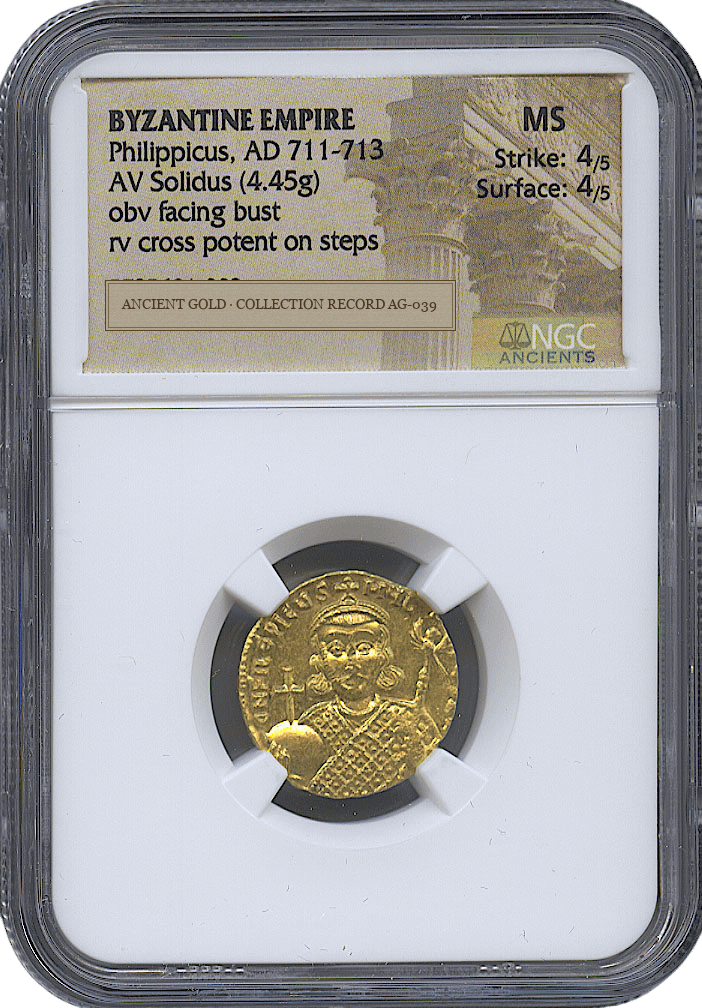
Byzantine
AD 711–713
Philippicus’s brief reign survives in a confident facing portrait and cross potent, official permanence asserted by a ruler who held power for less than two years.
View Object Record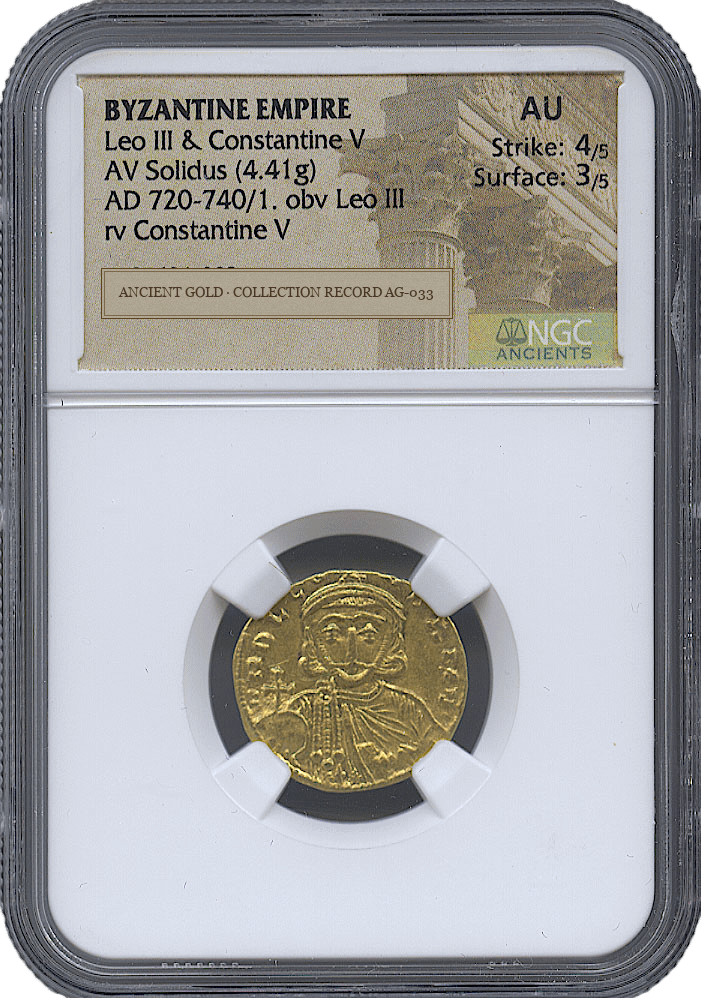
Byzantine
AD 720–740/1
Leo III and Constantine V face one another across the two sides of the solidus, replacing sacred figural imagery with a direct statement of dynasty.
View Object Record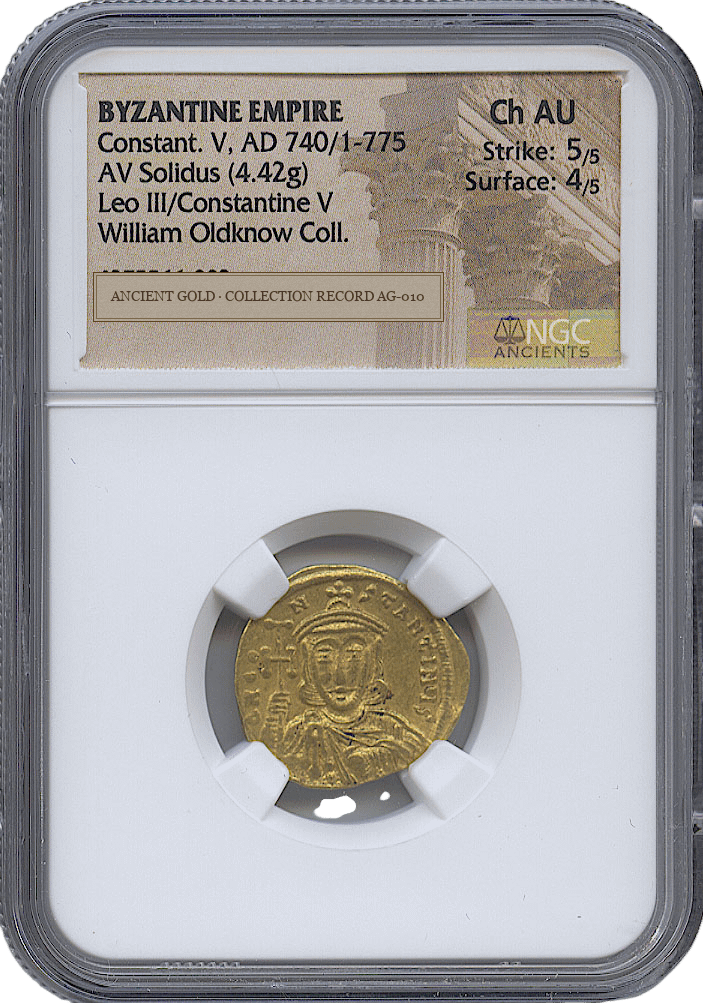
Byzantine
AD 740/1–775
Constantine V places his deceased father Leo III opposite his own portrait, using gold to turn ancestry into continuing political authority.
View Object Record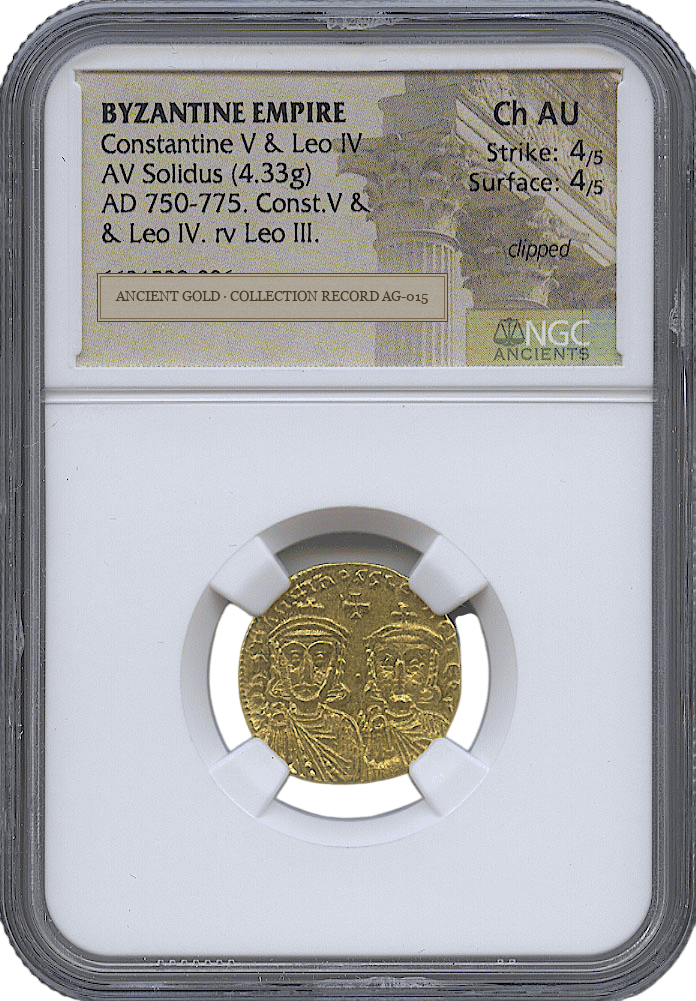
Byzantine
AD 750–775
Constantine V and Leo IV appear together while Leo III occupies the reverse, arranging three generations of the Isaurian dynasty in gold.
View Object Record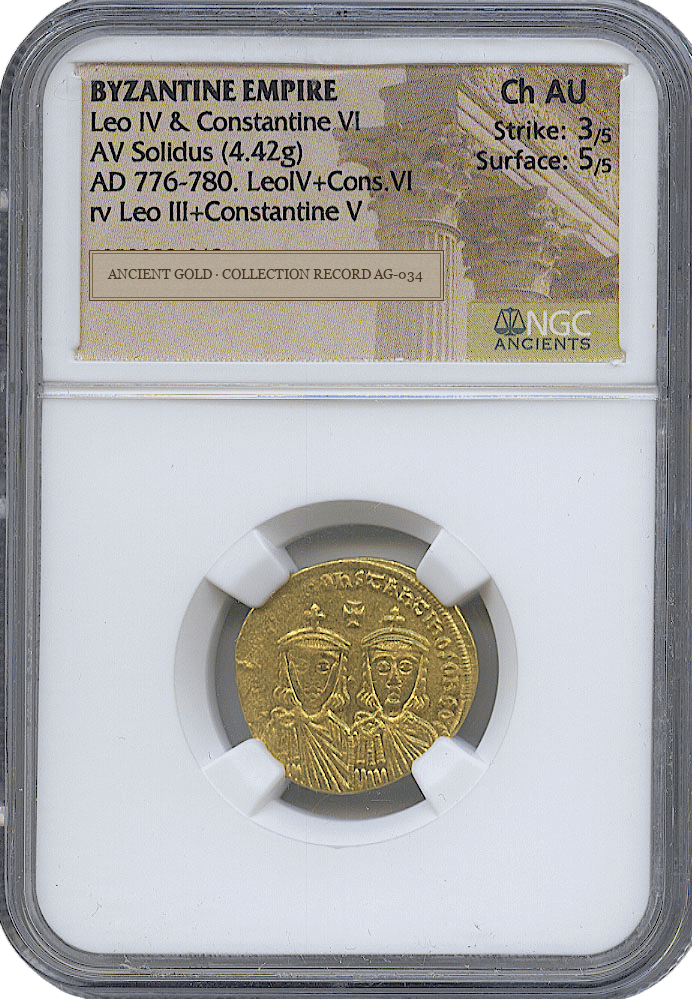
Byzantine
AD 776–780
Leo IV and the young Constantine VI face two deceased ancestors, turning the solidus into a four-generation theatre of legitimacy.
View Object Record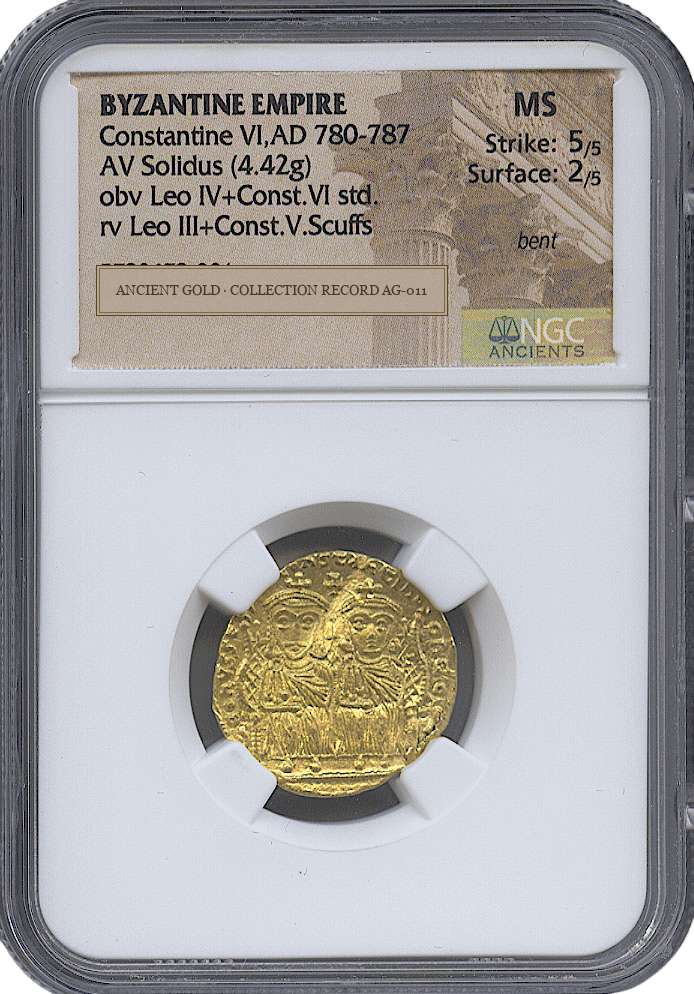
Byzantine
AD 780–787
Constantine VI appears beside his father on one face and his grandfather and great-grandfather on the other, inheriting a dynasty whose internal tensions would shape his fate.
View Object Record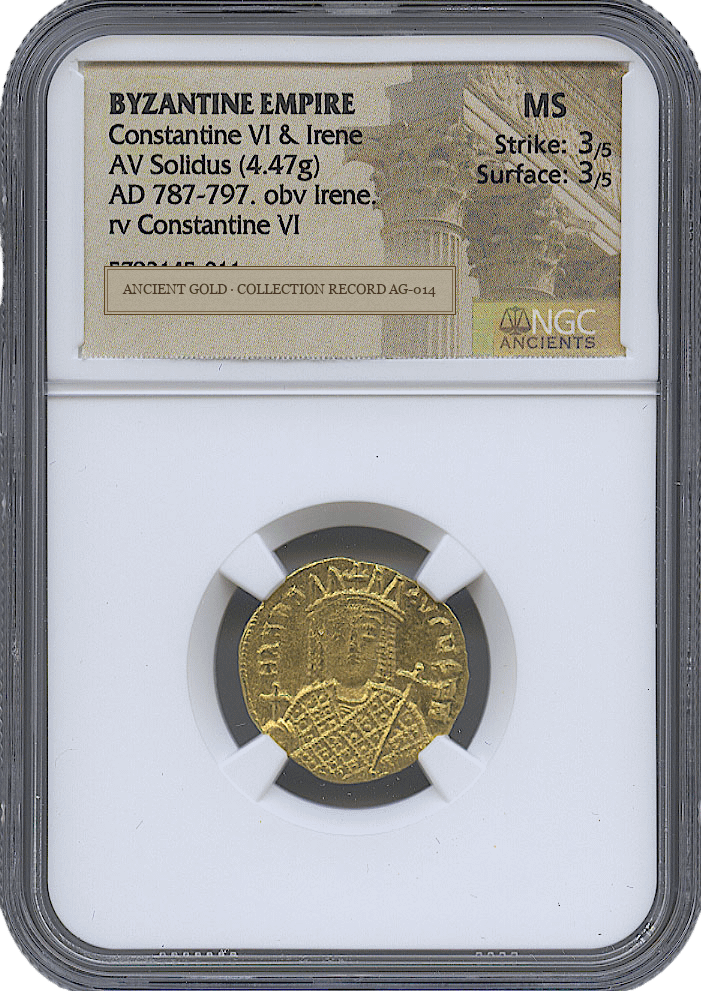
Byzantine
AD 787–797
Irene occupies one face and Constantine VI the other, a stark two-person image from one of Byzantium’s most charged struggles between regent, mother and emperor.
View Object Record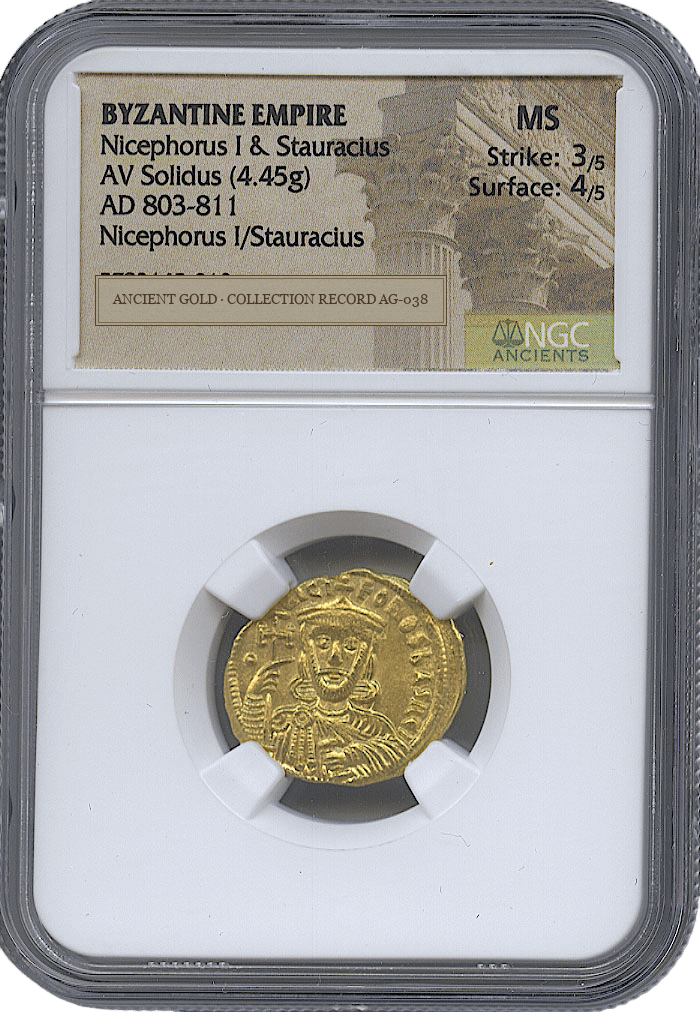
Byzantine
AD 803–811
Nicephorus I and Stauracius divide the solidus between reigning father and designated son, restoring a direct dynastic portrait after Irene’s sole rule.
View Object Record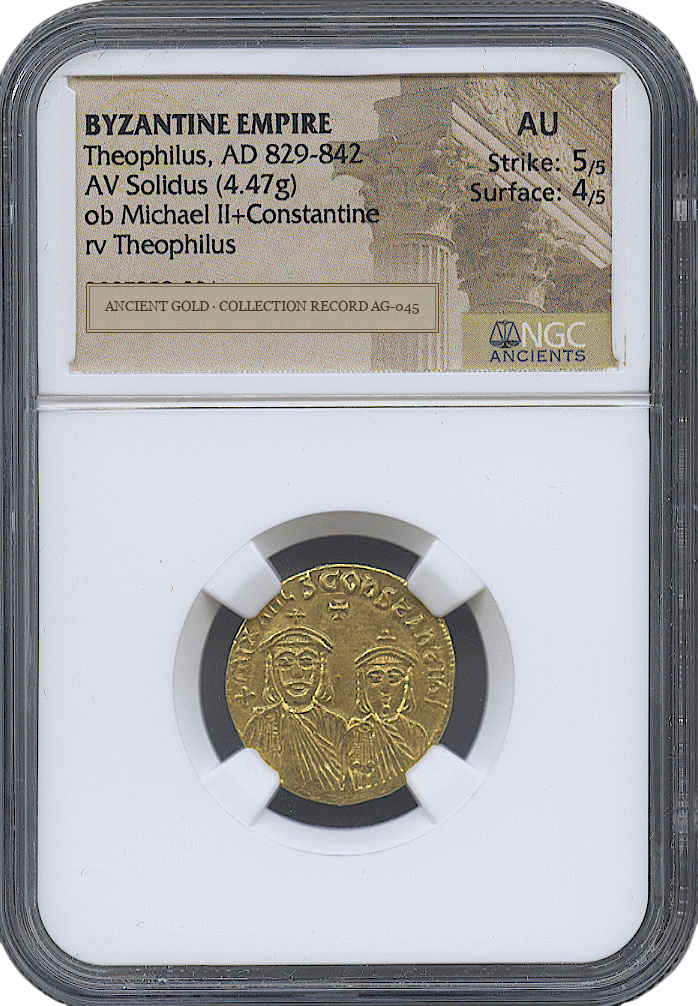
Byzantine
AD 829–842
Theophilus places his father and a deceased elder brother opposite his own portrait, making family memory the foundation of present rule.
View Object Record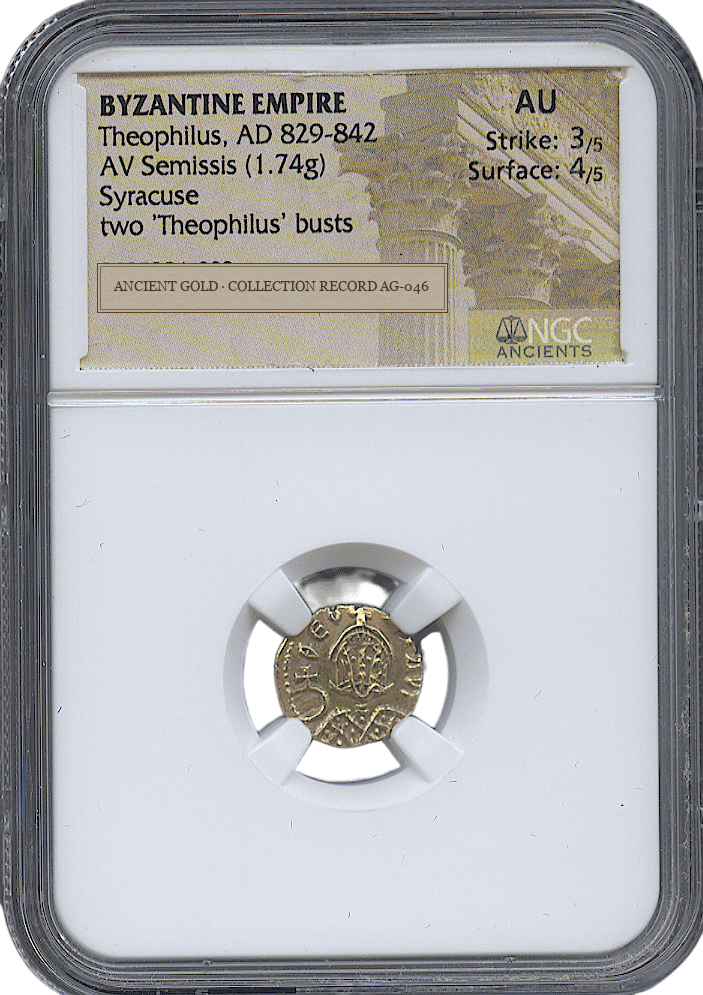
Byzantine
AD 829–842
This small Syracuse semissis repeats Theophilus on both sides, translating Constantinopolitan authority into the distinct visual language of a western mint.
View Object Record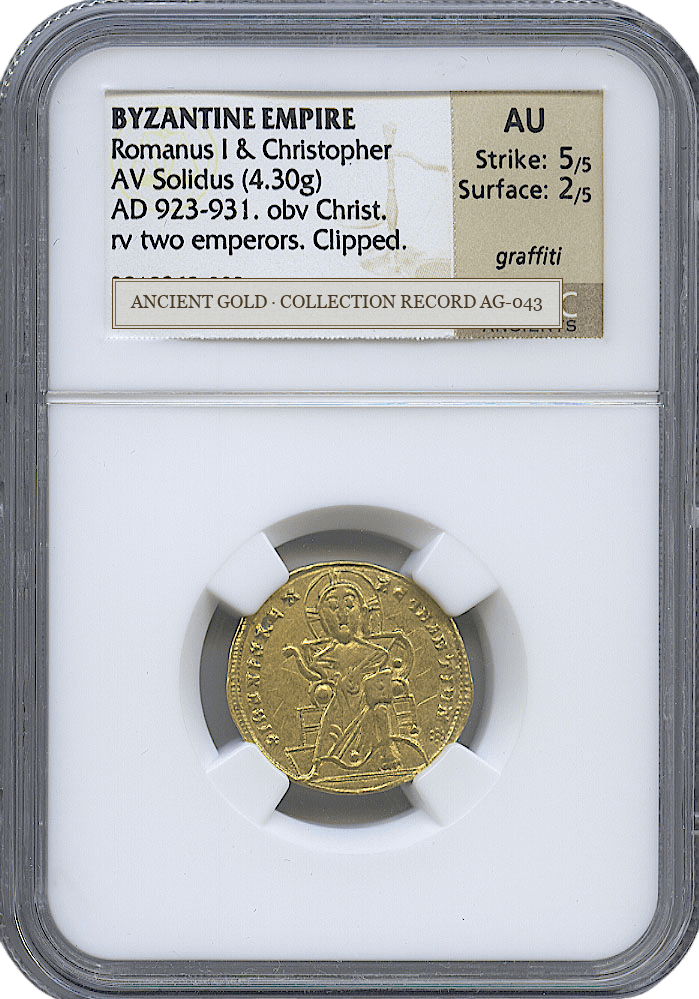
Byzantine
AD 923–931
Christ enthroned faces Romanus I and Christopher, placing an ambitious shared dynasty beneath a visibly higher sacred kingship.
View Object Record