Byzantine
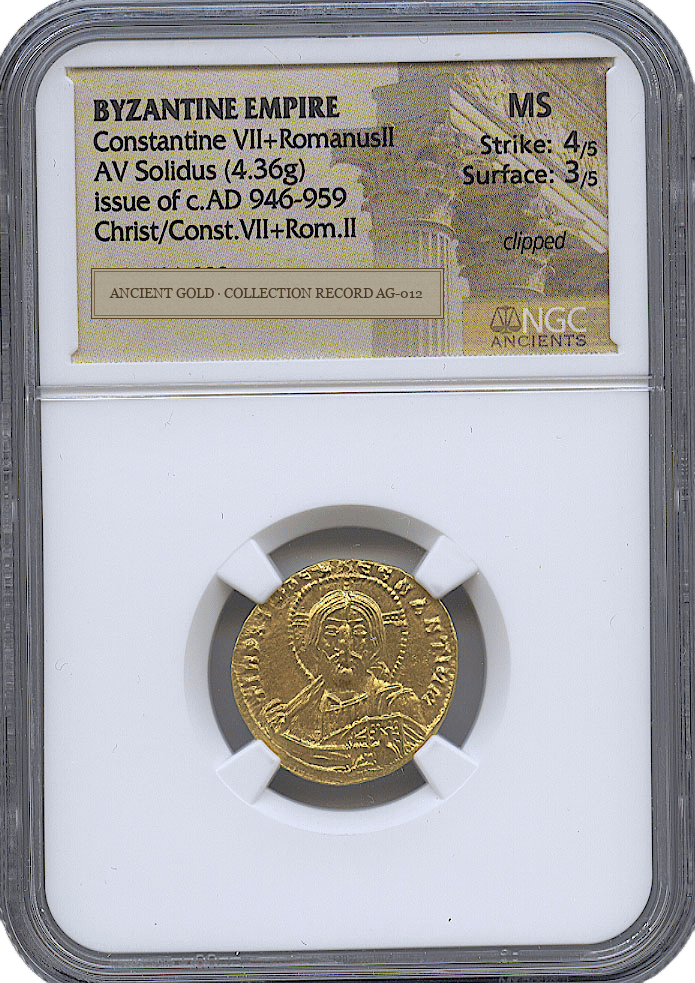
Constantine VII and Romanus II Gold Solidus
c. AD 946–959
Christ precedes Constantine VII and Romanus II, presenting scholarship, ceremony and succession as government exercised beneath sacred authority.
View Object RecordThe Ancient Gold Collection
A scholarly catalogue of ancient gold coinage, presented as individual historical records.
Collection Discovery
Approach the collection through civilisation, ruler, period or dynasty. Each path preserves the relationship between an object and its historical setting.
Move between the cultural worlds represented by the surviving objects.
Study coinage through the authority named or portrayed on each issue.
Follow changes in weight, imagery and political language through time.
Trace succession and shared visual programmes across ruling houses.
Catalogue tools
Search the evidence record or narrow the catalogue by historical and numismatic context.
Showing the current catalogue selection
Open public research data (JSON)Byzantine
c. AD 946–959
Christ precedes Constantine VII and Romanus II, presenting scholarship, ceremony and succession as government exercised beneath sacred authority.
View Object Record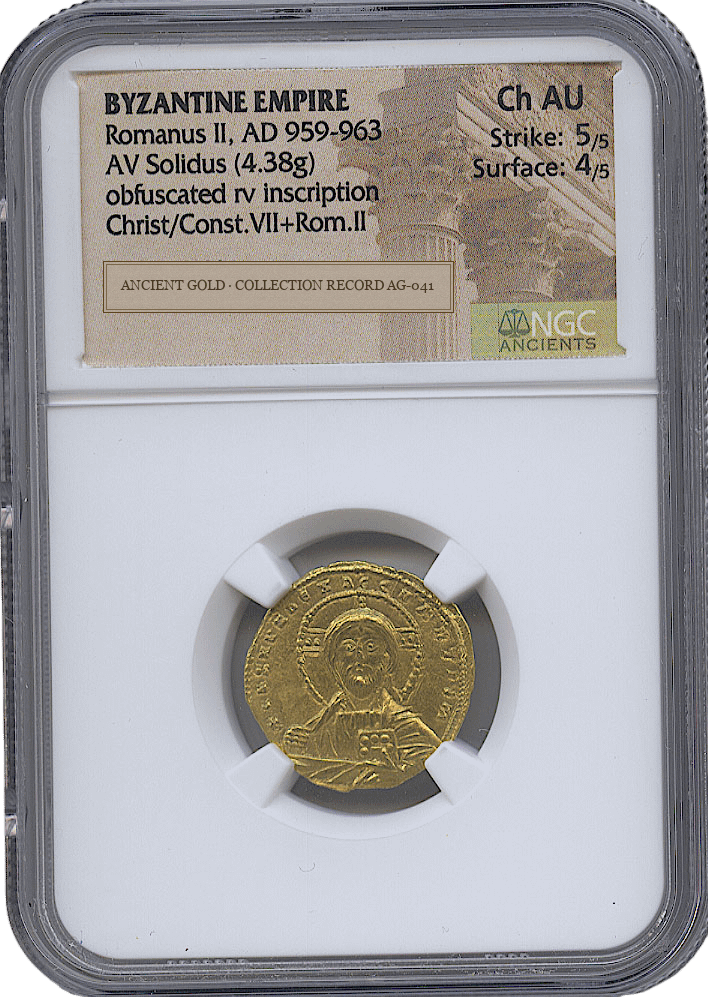
Byzantine
AD 959–963
Christ faces Constantine VII and Romanus II beneath an altered reverse inscription, a politically charged solidus from Romanus II’s short independent reign.
View Object Record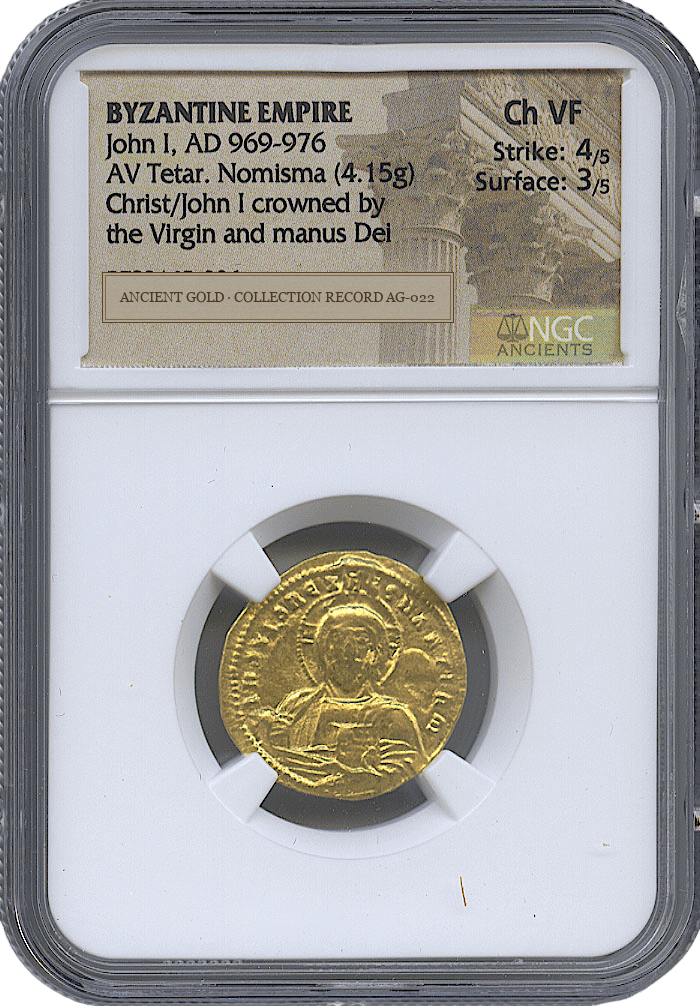
Byzantine
AD 969–976
Christ confronts the viewer while John I is crowned by the Virgin and the hand of God, turning a contested accession into a ceremony of divine approval.
View Object Record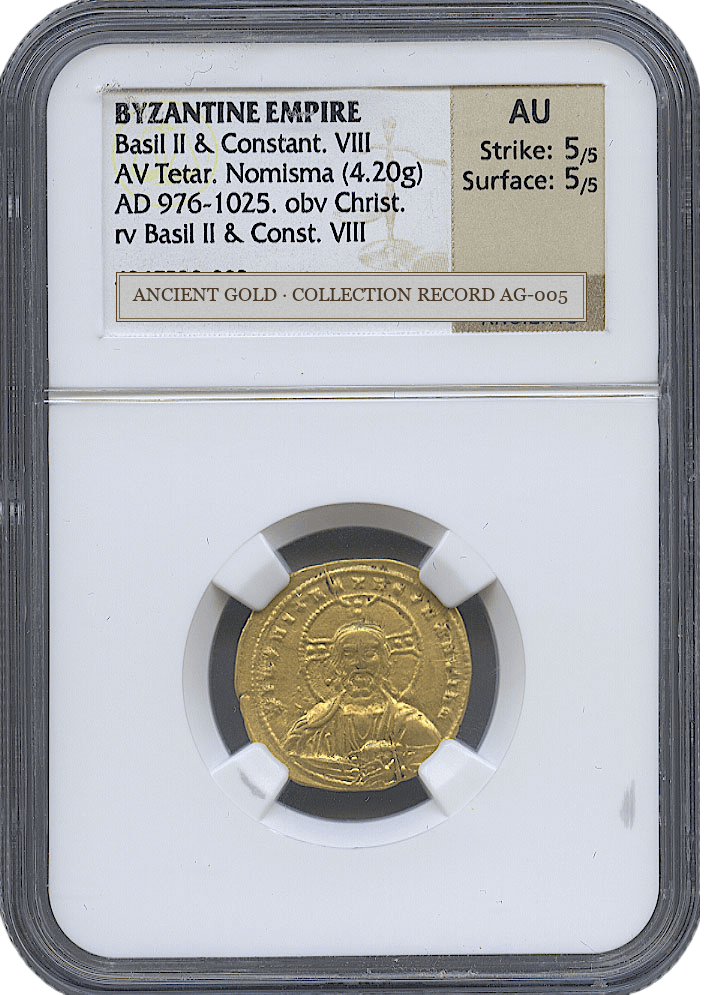
Byzantine
AD 976–1025
Christ’s commanding portrait and the paired emperors Basil II and Constantine VIII express the sacred and dynastic foundations of Macedonian power.
View Object Record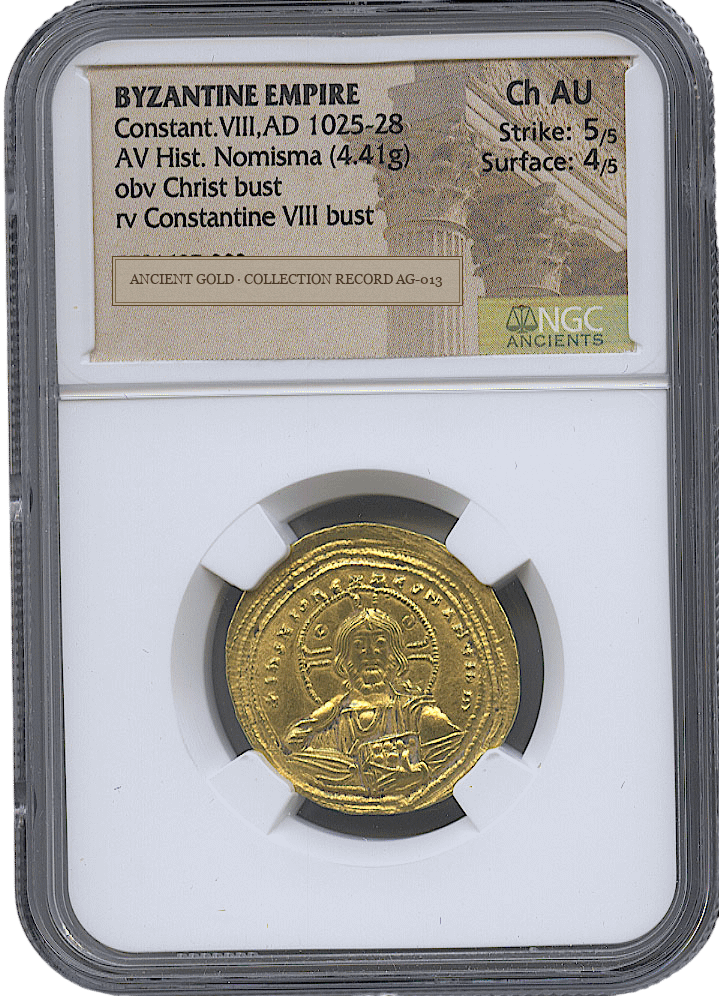
Byzantine
AD 1025–1028
Constantine VIII stands alone opposite Christ after decades as junior emperor, his portrait finally presenting the colleague as sole sovereign.
View Object Record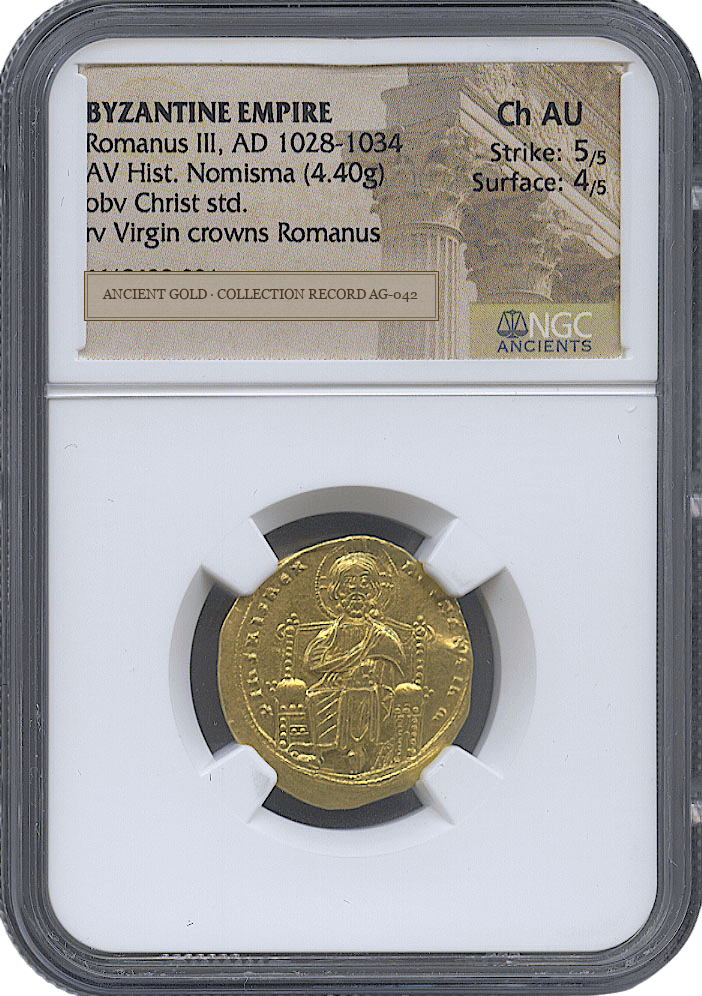
Byzantine
AD 1028–1034
Christ stands in majesty while the Virgin crowns Romanus III, staging imperial rule as a sacred coronation rather than a merely political succession.
View Object Record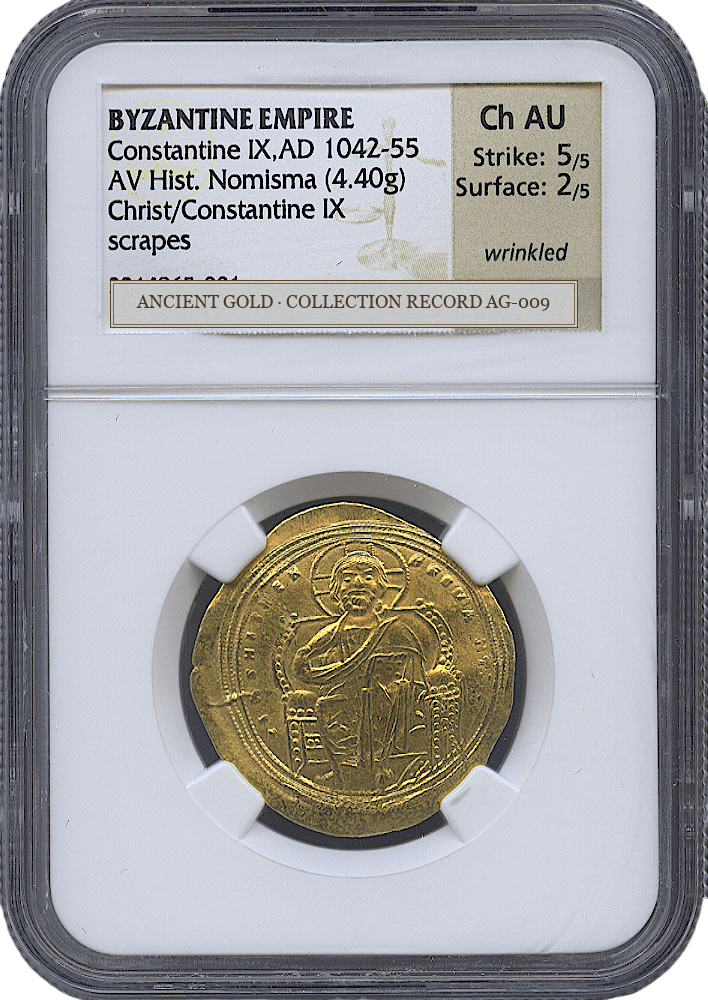
Byzantine
AD 1042–1055
Christ enthroned faces Constantine IX across a broad histamenon, projecting sacred order during a reign of court culture, diplomacy and mounting pressure.
View Object Record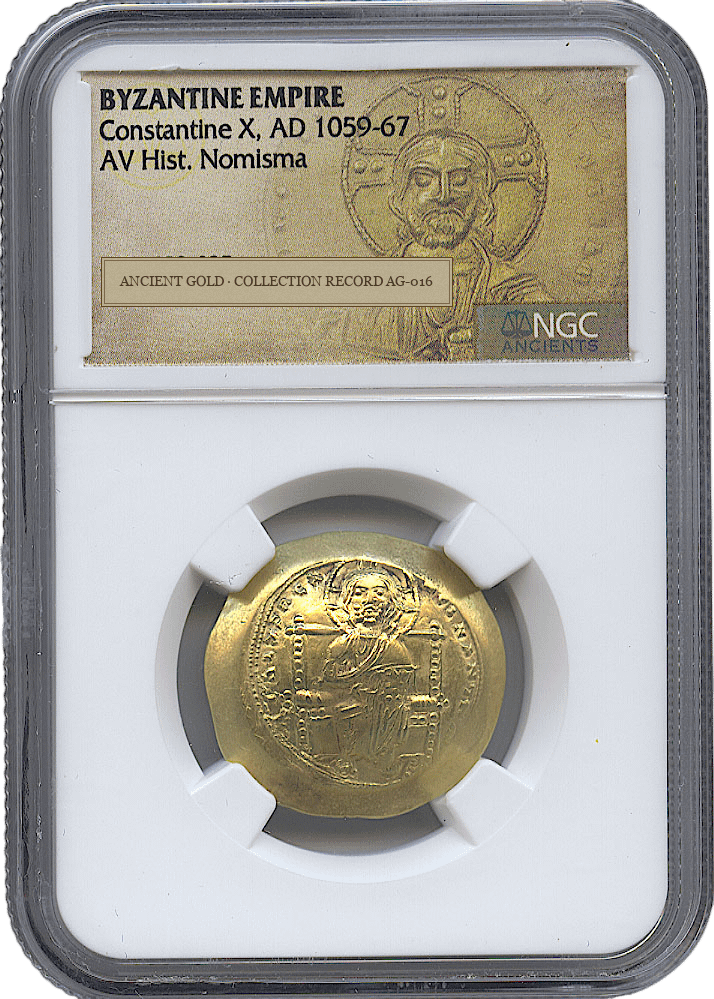
Byzantine
AD 1059–1067
Christ enthroned faces Constantine X on a broad histamenon, preserving sacred calm at the opening of the Doukas dynasty.
View Object Record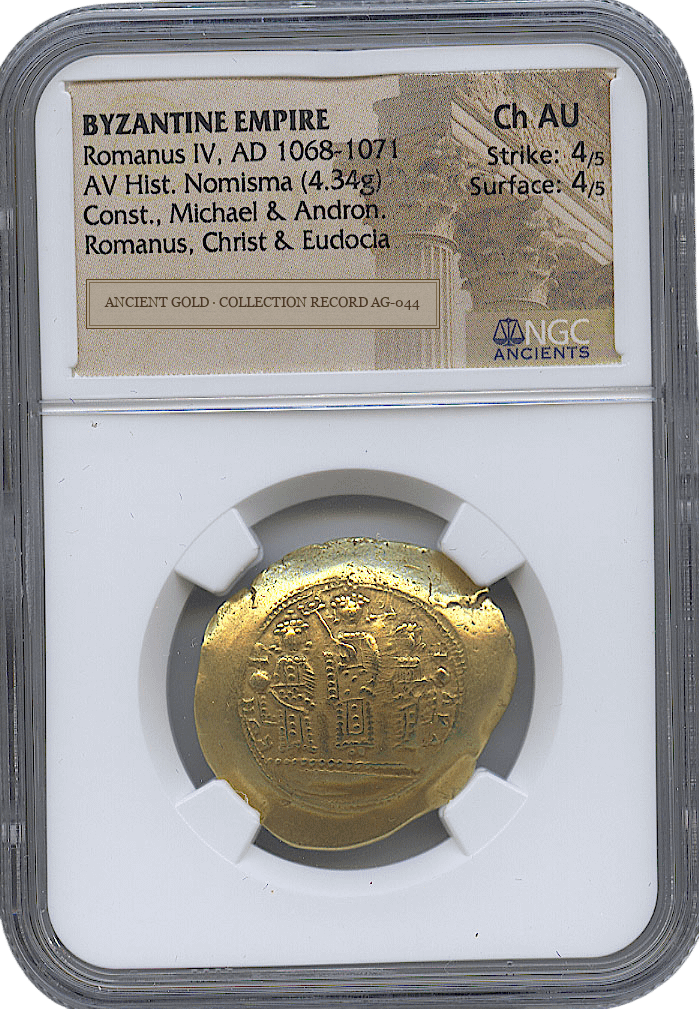
Byzantine
AD 1068–1071
Romanus IV shares his gold with Eudocia and the young Doukas heirs, exposing the complicated family settlement behind a reign remembered for Manzikert.
View Object Record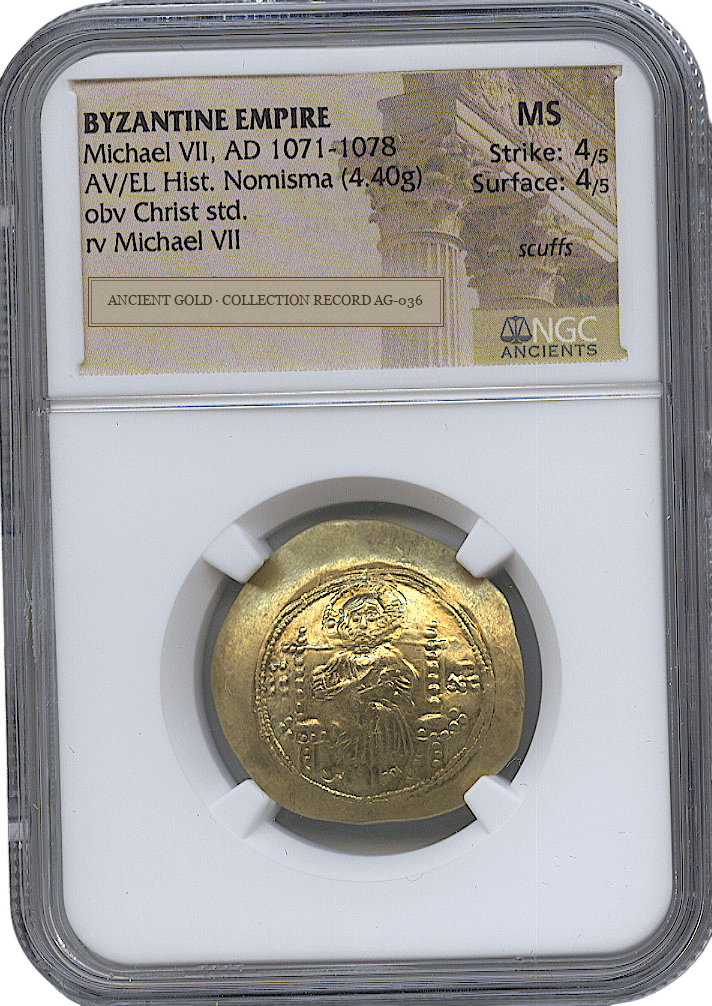
Byzantine
AD 1071–1078
Christ stands opposite Michael VII, whose serene histamenon conceals the fiscal strain that gave the emperor his enduring numismatic nickname.
View Object Record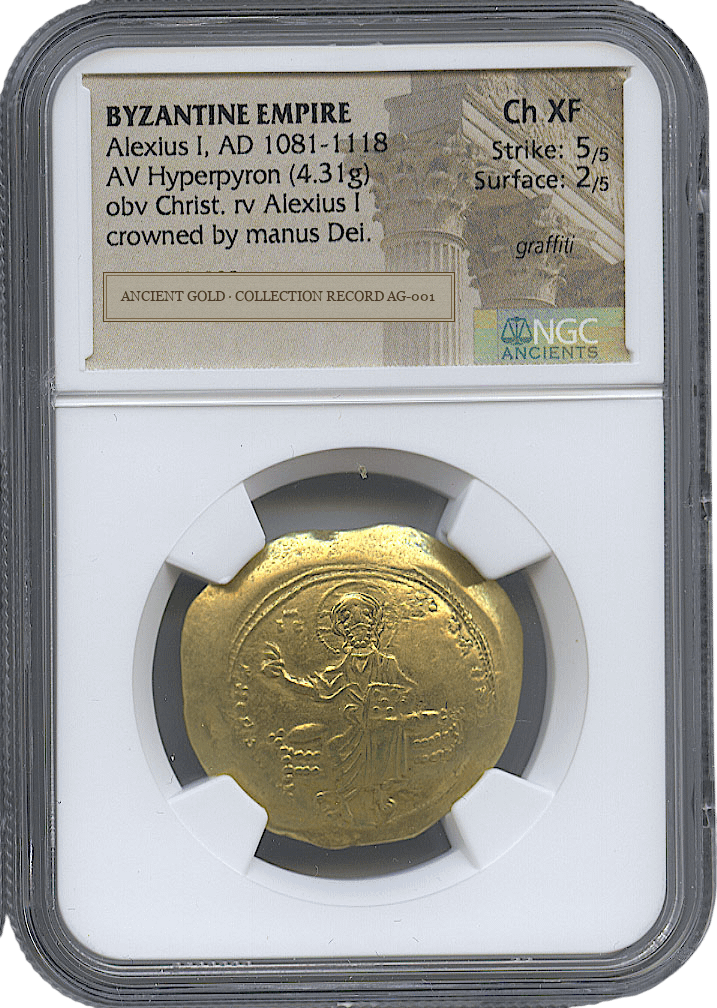
Byzantine
AD 1081–1118
Christ blesses from the broad hyperpyron while the hand of God crowns Alexius I, announcing both a restored emperor and a restored gold currency.
View Object Record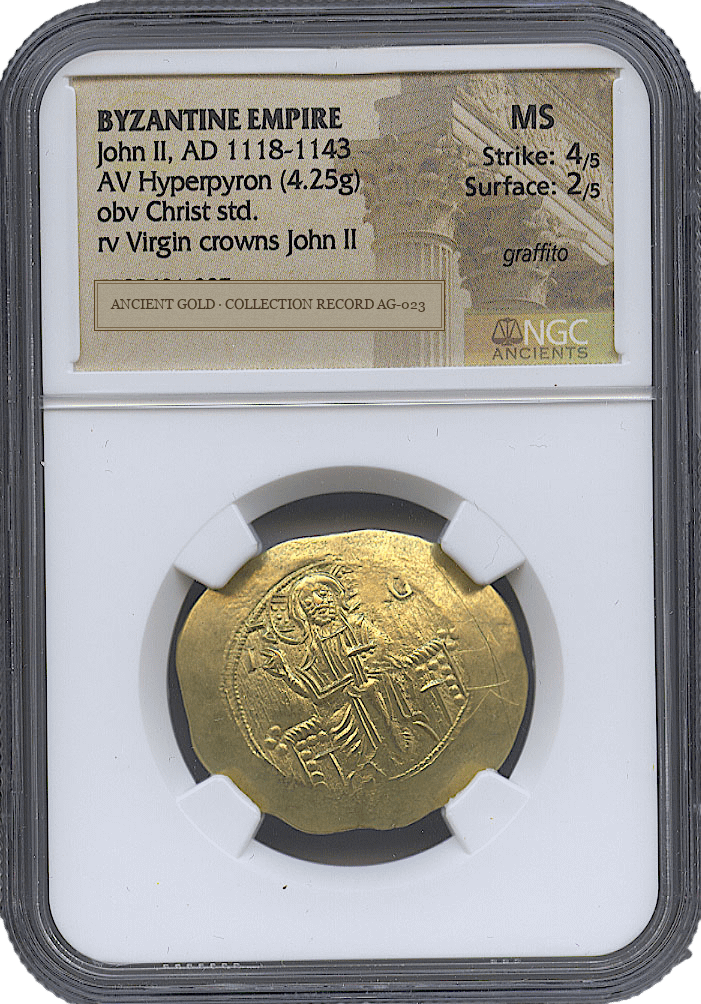
Byzantine
AD 1118–1143
Christ stands opposite a coronation by the Virgin, presenting John II’s inheritance of the Komnenian restoration as an act of sacred continuity.
View Object Record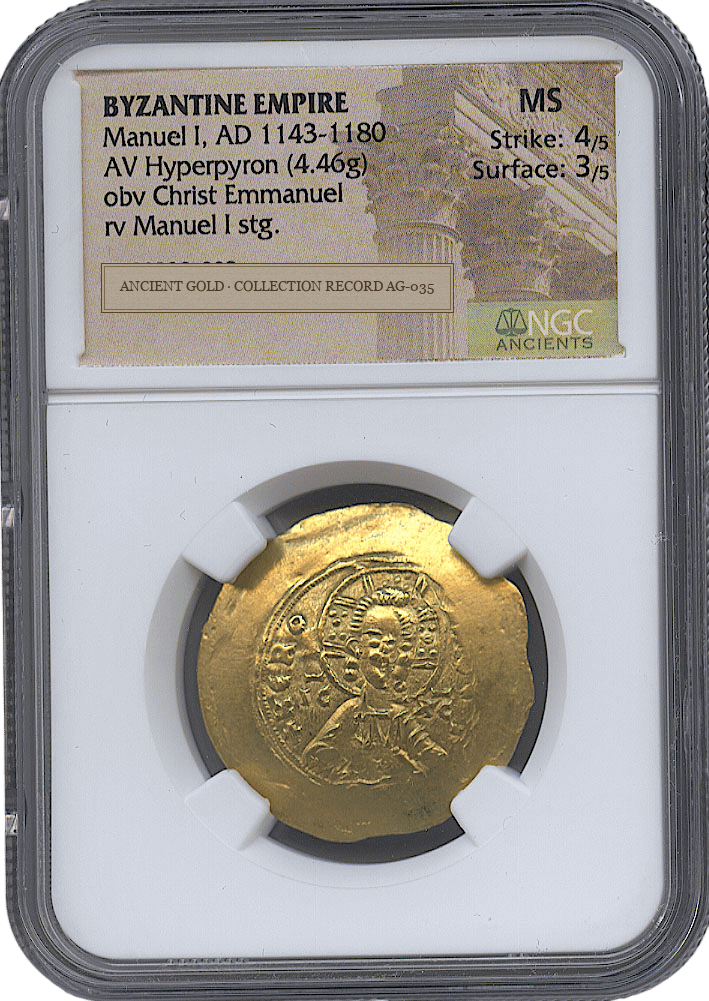
Byzantine
AD 1143–1180
The youthful Christ Emmanuel faces Manuel I standing in imperial splendour, pairing sacred promise with the cosmopolitan ambition of the Komnenian court.
View Object Record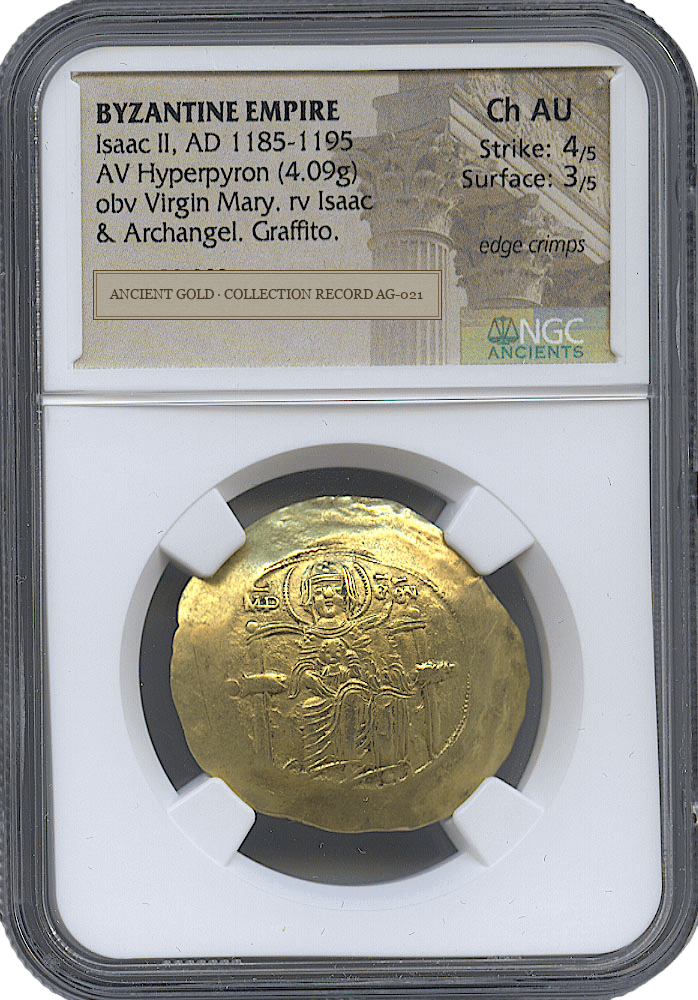
Byzantine
AD 1185–1195
The Virgin occupies one face while Isaac II stands with an archangel on the other, wrapping a fragile Angelos reign in a powerful network of heavenly protection.
View Object Record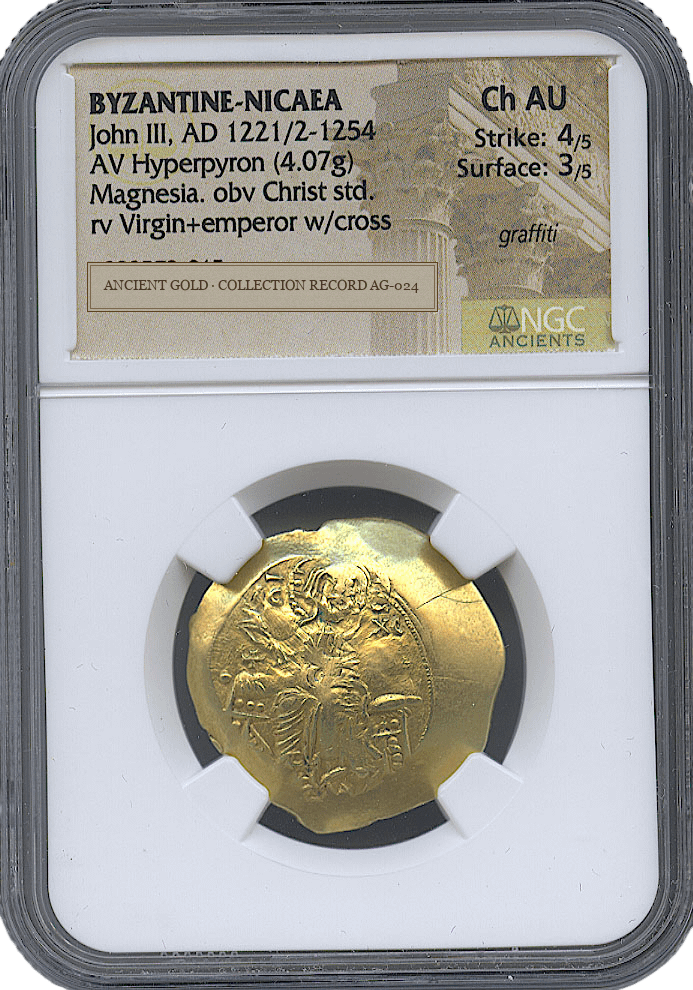
Byzantine
AD 1221/2–1254
Struck at Magnesia in the empire of Nicaea, this hyperpyron claims Constantinopolitan sacred kingship for a court ruling in exile.
View Object Record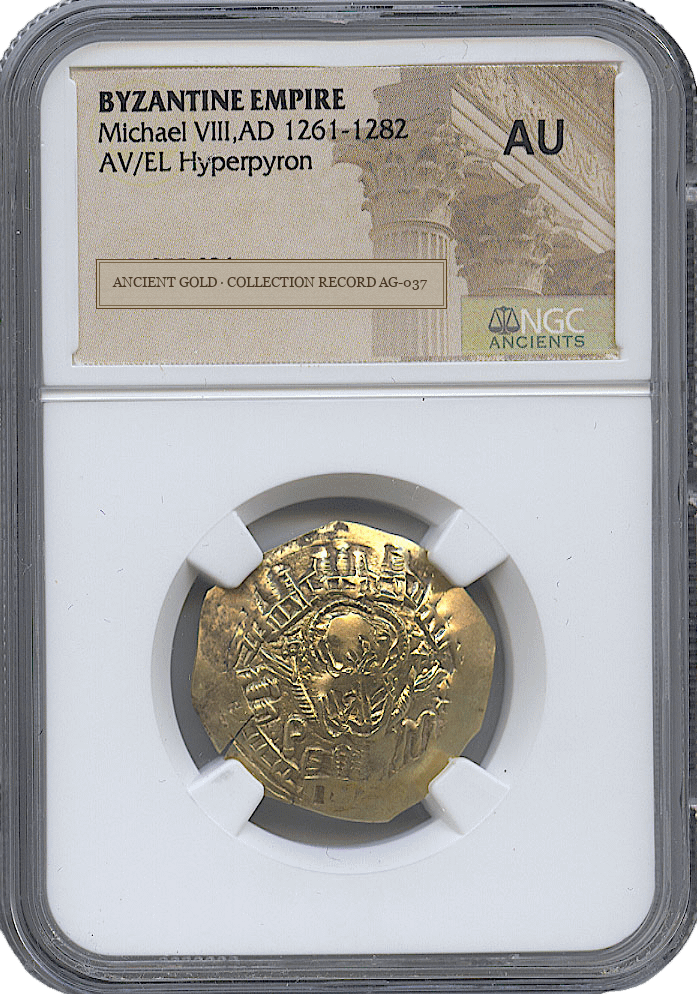
Byzantine
AD 1261–1282
The Virgin within Constantinople’s walls faces Michael VIII, celebrating the restoration of the capital and the birth of the Palaiologan dynasty.
View Object Record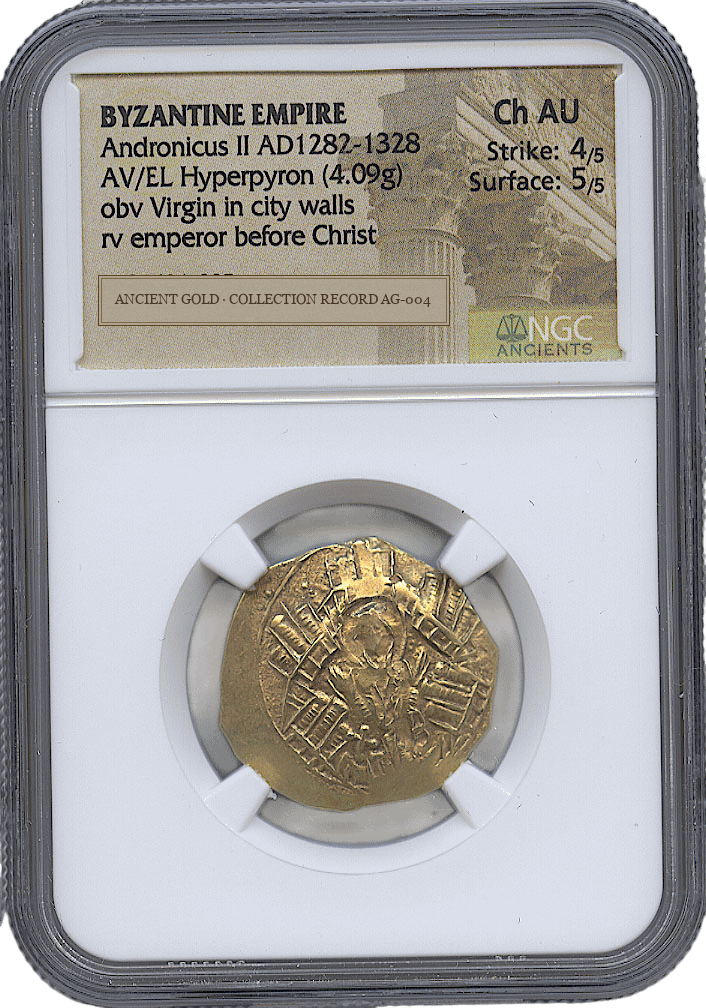
Byzantine
AD 1282–1328
The Virgin shelters Constantinople while Andronicus II kneels before Christ, an image of humility from a reign confronting the empire’s accelerating contraction.
View Object Record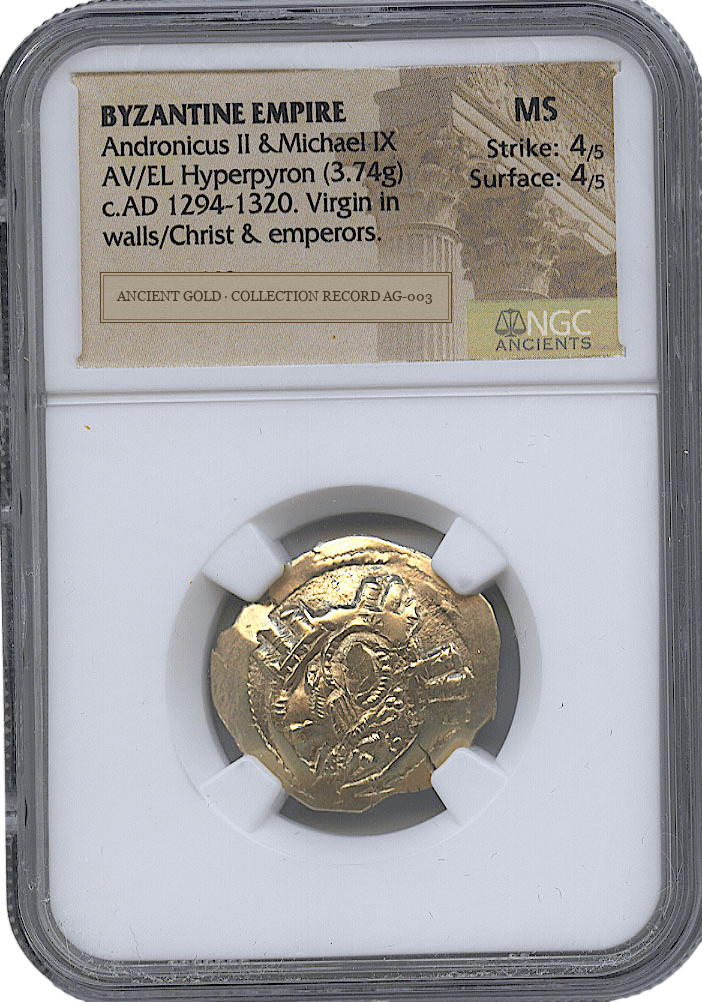
Byzantine
c. AD 1294–1320
The Virgin guards the capital while Christ receives Andronicus II and Michael IX, using sacred ceremony to stabilize a difficult father-and-son partnership.
View Object Record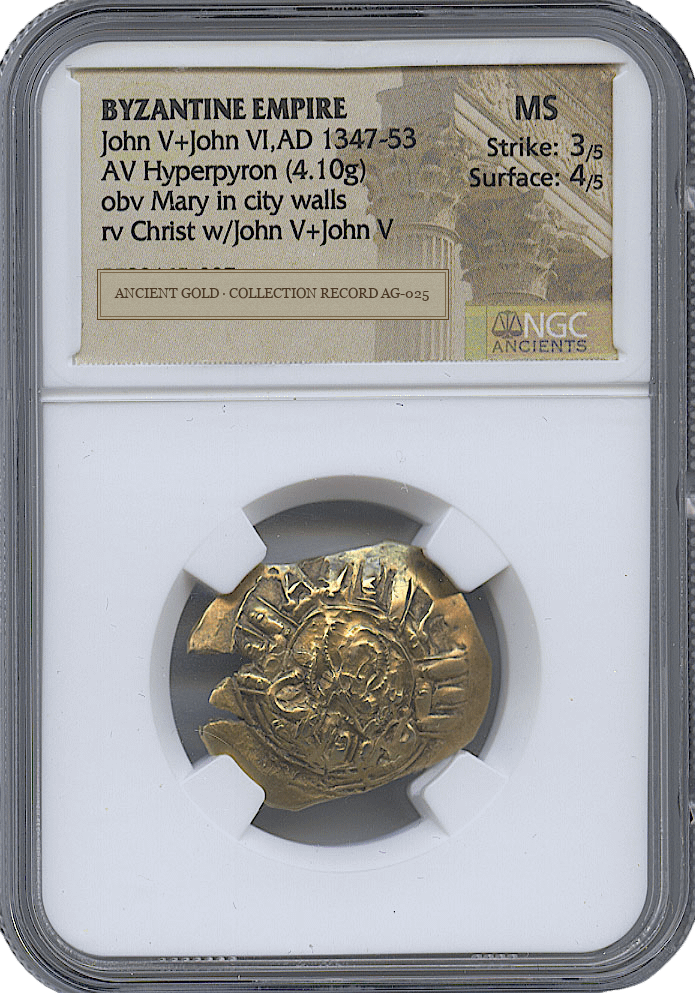
Byzantine
AD 1347–1353
The Virgin protects the city while Christ stands with John V and John VI, preserving an ideal of concord during a civil war over the imperial throne.
View Object Record