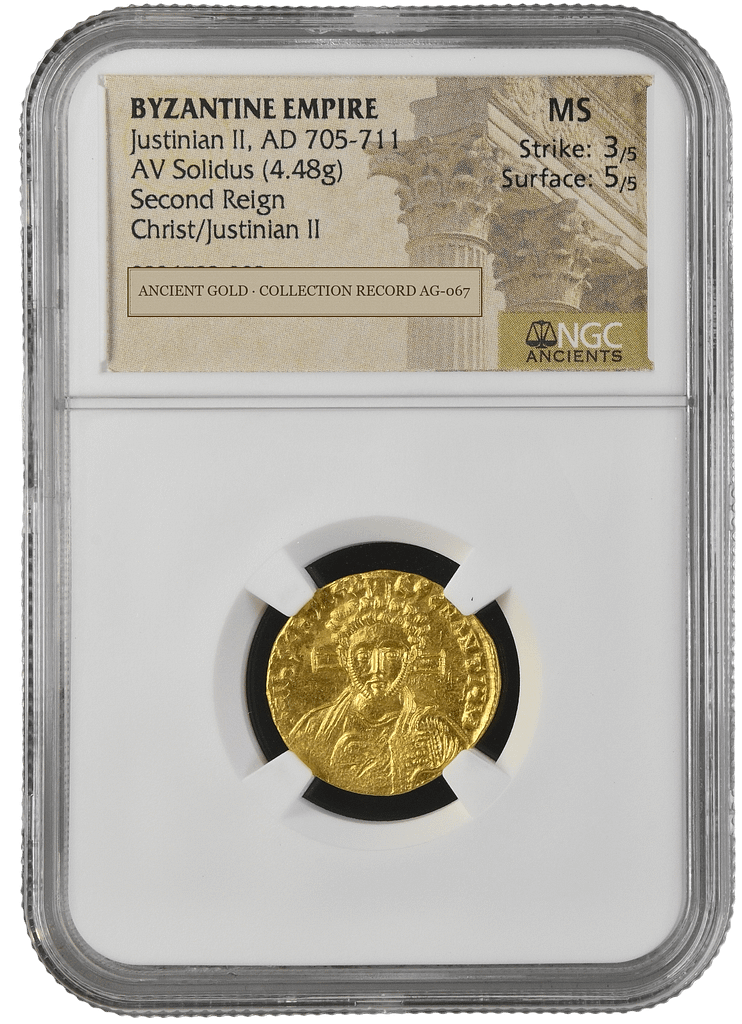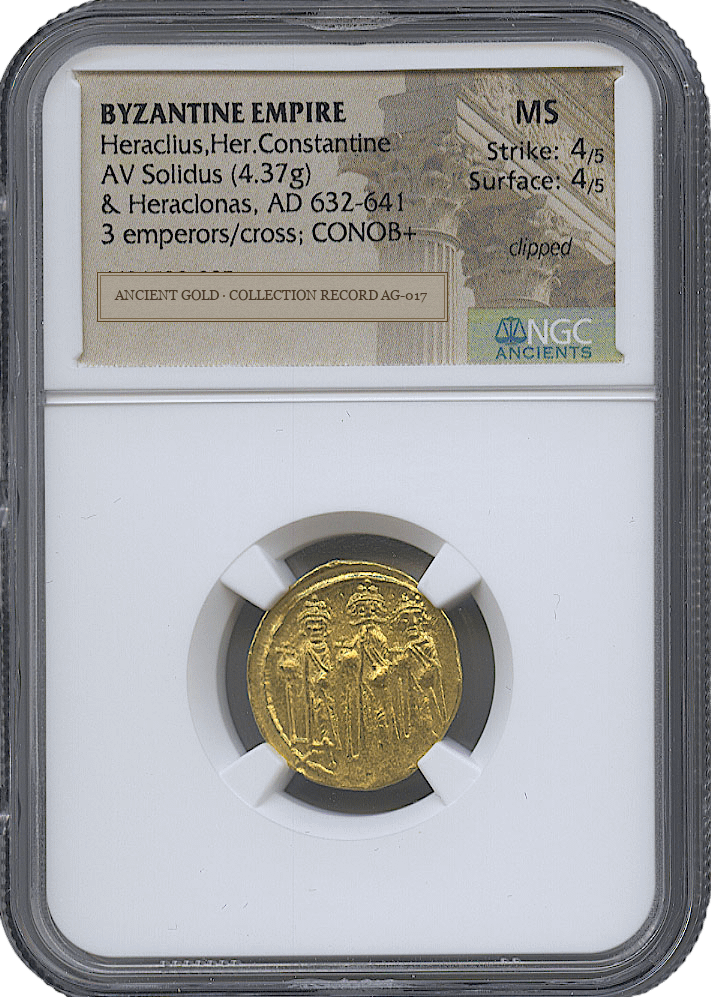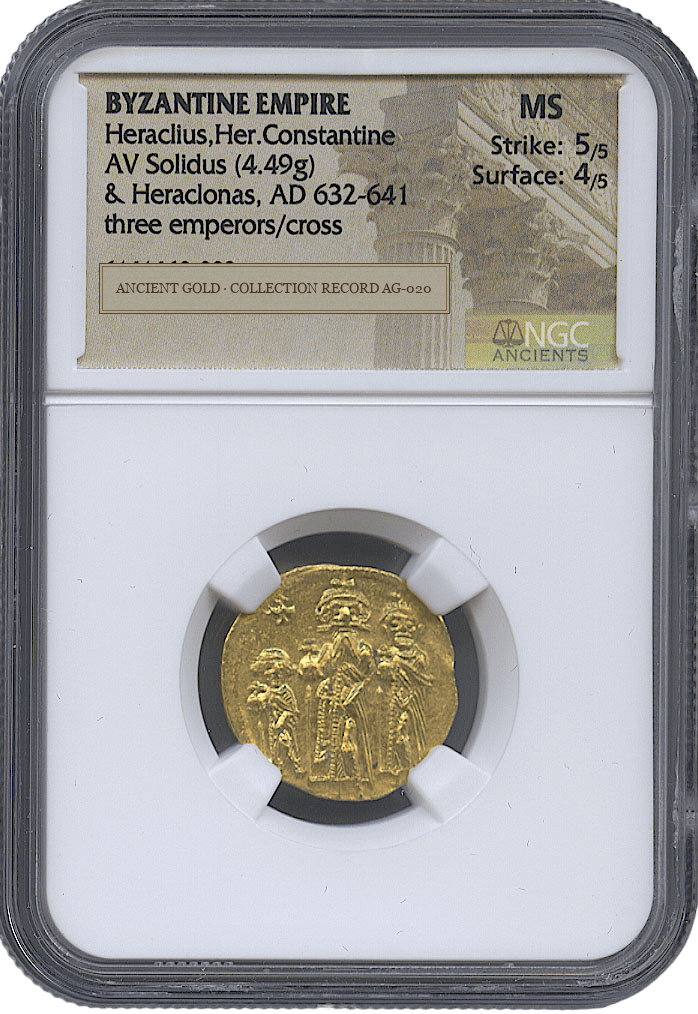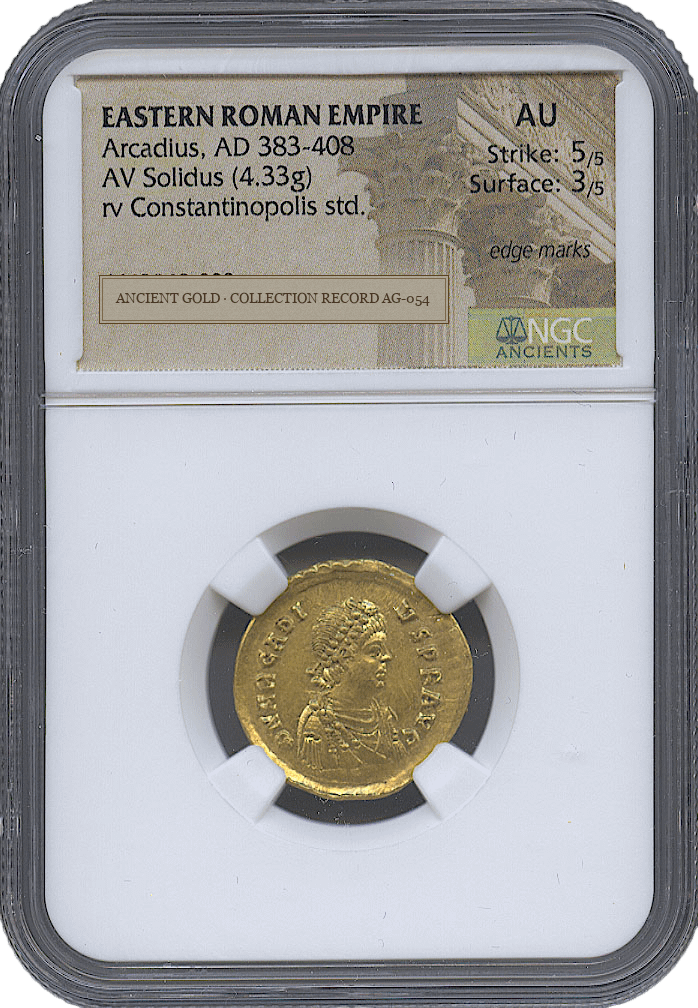
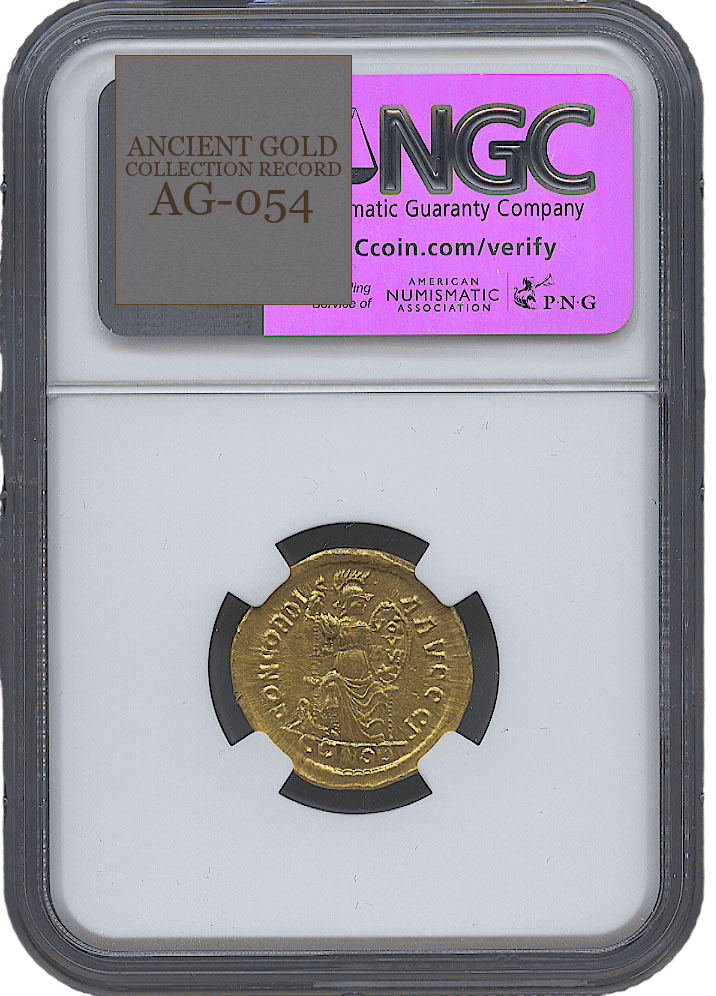
CONOB is an exergual formula associated with gold struck at Constantinople. CON identifies the mint; OB is conventionally read through Greek numerals as 72 and also evokes obryzum, refined gold. The formula thus connects place, standard and official assurance.
Why seventy-two matters
The solidus was conventionally struck at seventy-two to the Roman pound. That historical target explains the numerical reading, but it does not mean every surviving coin must weigh exactly the same. Individual measurements reflect production tolerances and later history.
Where to look
Find the exergue below the reverse design. On AG-054, CONOB sits beneath Constantinopolis and the prow. It belongs to the reverse inscriptional system but has a different function from the surrounding legend: the principal legend names a political idea, while the exergue helps identify mint and monetary standard.
Variants require care
Related issues can use abbreviated or modified formulas, and officina marks may appear elsewhere in the field. A reader should transcribe what is visible before expanding it. A partially struck letter is not permission to reconstruct a whole mint signature without comparison.
Why the formula endured
A trusted gold coin had to communicate consistency across distance. The imperial portrait named authority, the reverse expressed order or faith, and the mint formula tied the object to an administrative centre and a weight system. CONOB is therefore both technical and political.
Questions readers ask
Does CONOB mean “pure gold”?
It signals an official refined-gold standard, but the formula alone is not a modern assay result for an individual coin.
Is every CONOB coin from Constantinople?
The standard expansion points to Constantinople, yet imitations and copied formulas exist. Attribution must consider style, fabric, field marks and published typology together.
Is OB an officina?
No. An officina is a workshop division and is normally indicated by a separate letter or numeral.