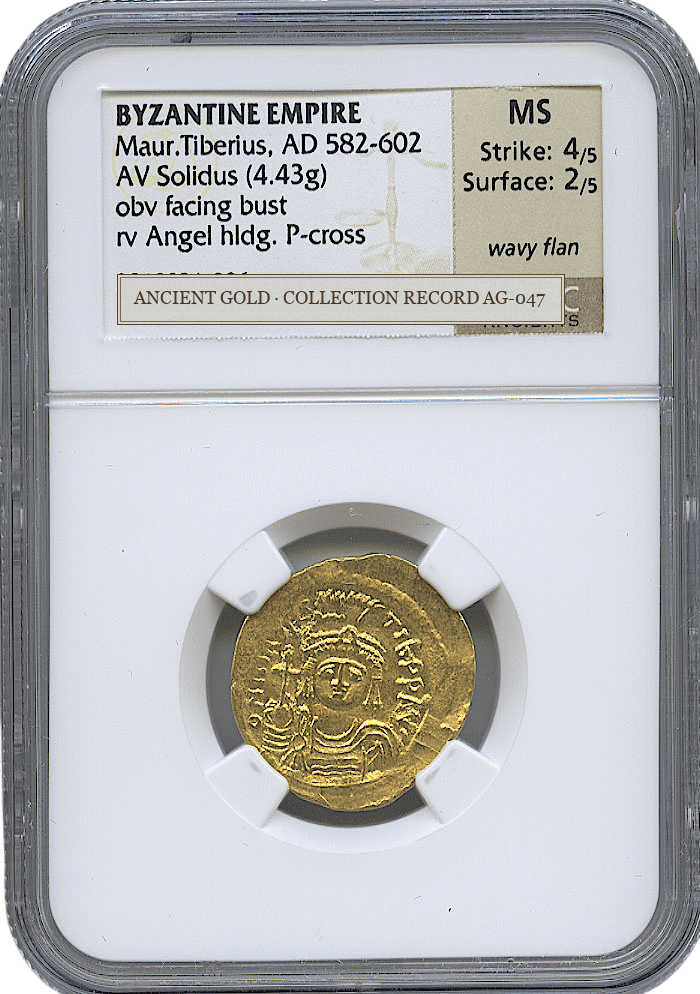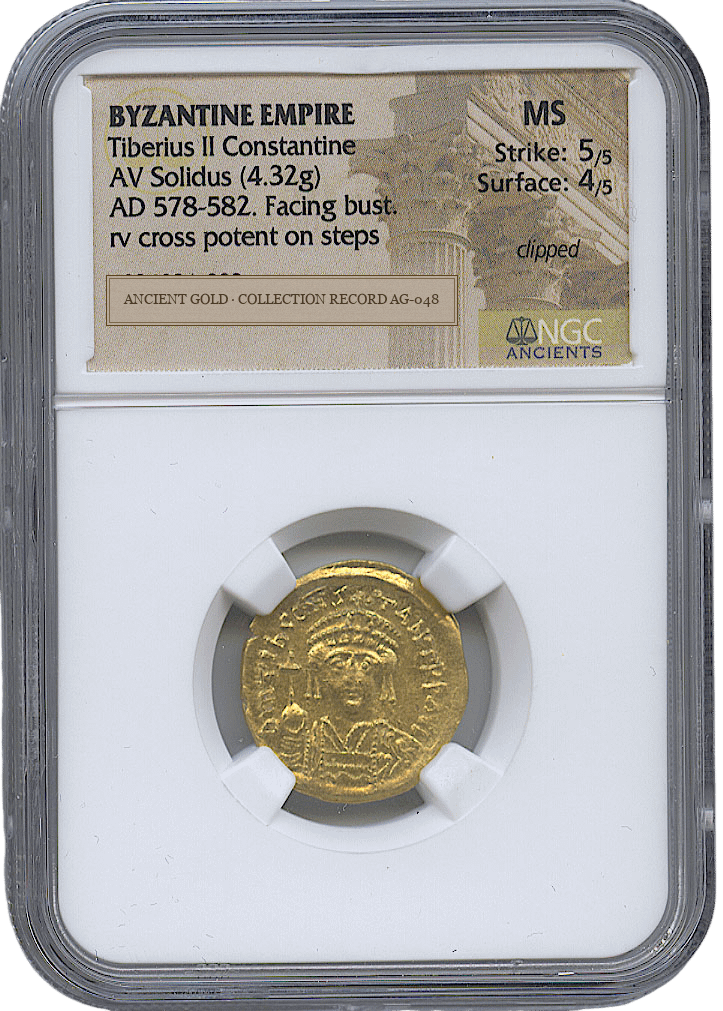
Constantinople was the principal mint of the eastern Roman and Byzantine empires. Its gold coinage carried a stable monetary idea through radical changes in imperial image, language and theology.
A capital made visible
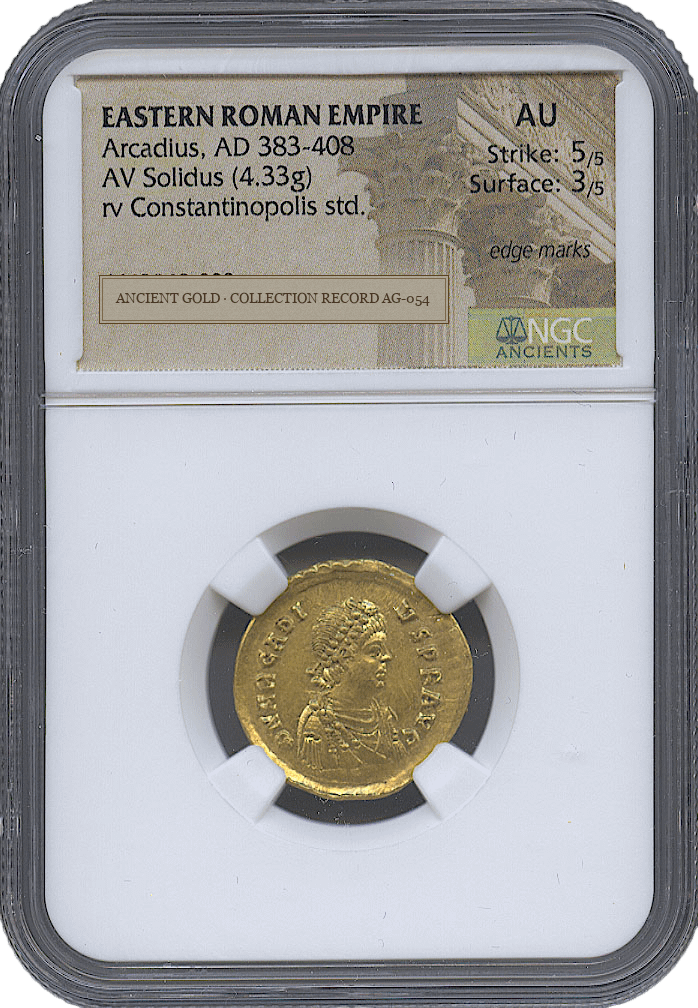
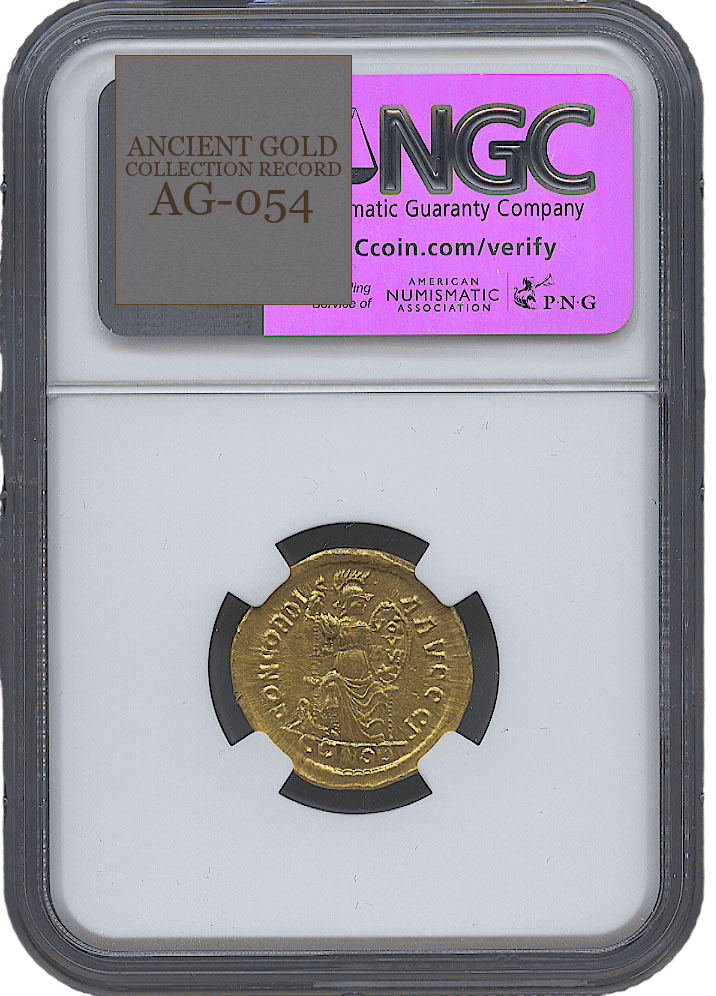
Late Roman reverses could personify Constantinopolis as an enthroned woman, as on AG-054. The image made the city itself a guarantor of victorious government. Mint signatures in the exergue supplied a second, administrative statement of place.
From emperor to sacred hierarchy
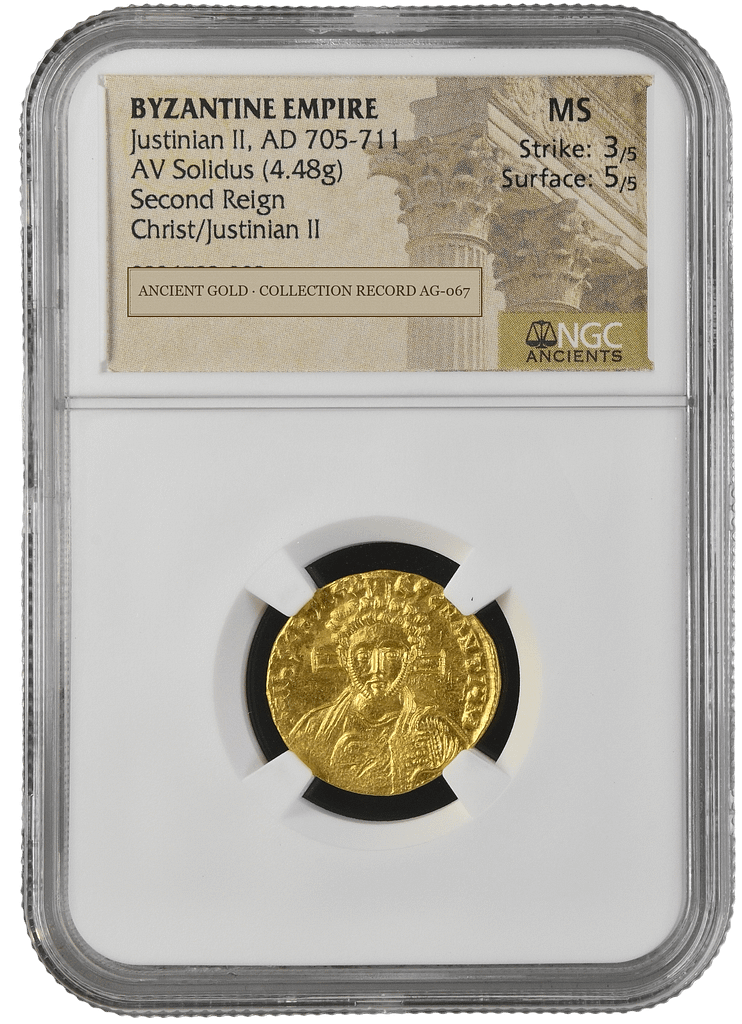
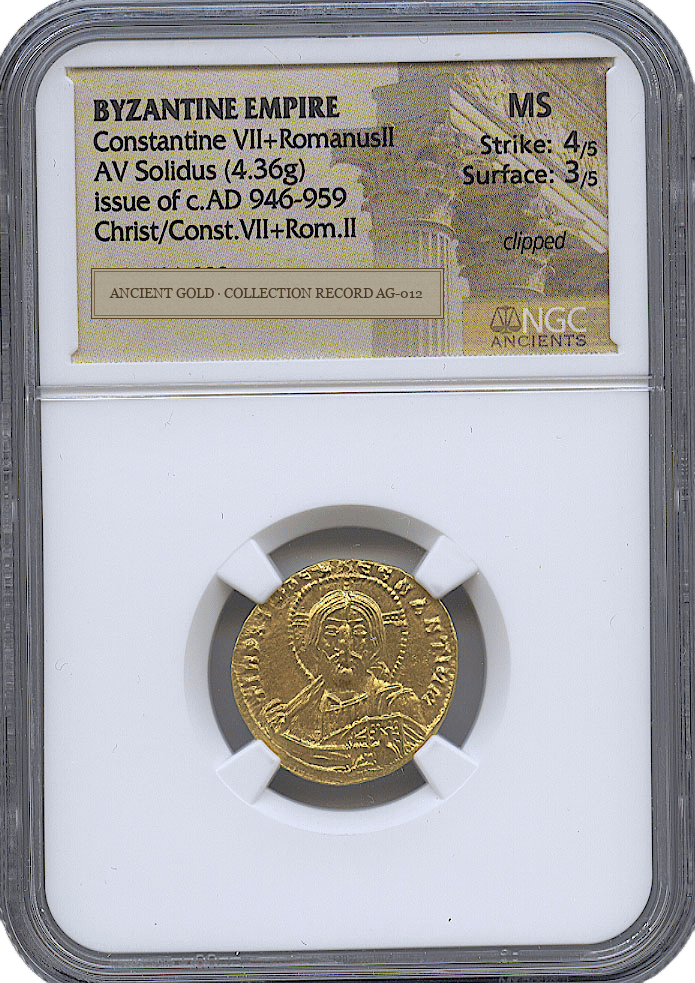
Later issues reorganized the two faces. AG-012 places Christ Pantokrator before Constantine VII and Romanus II. AG-067 makes Christ the primary portrait and the restored Justinian II the answering ruler. The gold coin became a small constitutional image: heavenly sovereignty on one face, earthly office on the other.
Reading an officina
Large mints divided production among workshops. An officina mark can help distinguish varieties, but it should be recorded only when the mark is visible and the published typology supports the reading. AG-054 is attributed to the third officina; most collection records do not yet preserve enough evidence for that field.
Continuity and change
The design language changed from military busts and Victory to Christ, the Virgin and dynastic coronation. What remained was the use of high-value gold to circulate an official claim across the empire. Each record should therefore connect iconography, inscription and mint attribution rather than treating the portrait as decoration.
Questions readers ask
Was all Byzantine gold struck in Constantinople?
No. Provincial and regional mints also struck gold, including Syracuse and Italian mints. A capital attribution must be demonstrated, not assumed.
Why do catalogue references matter?
They allow a reader to test the combination of ruler, type, legend, field marks, mint and date against a published corpus.
What is still missing from many records?
Exact type concordances, die axes and officinae are often not recorded in the public object file and remain identified as such.