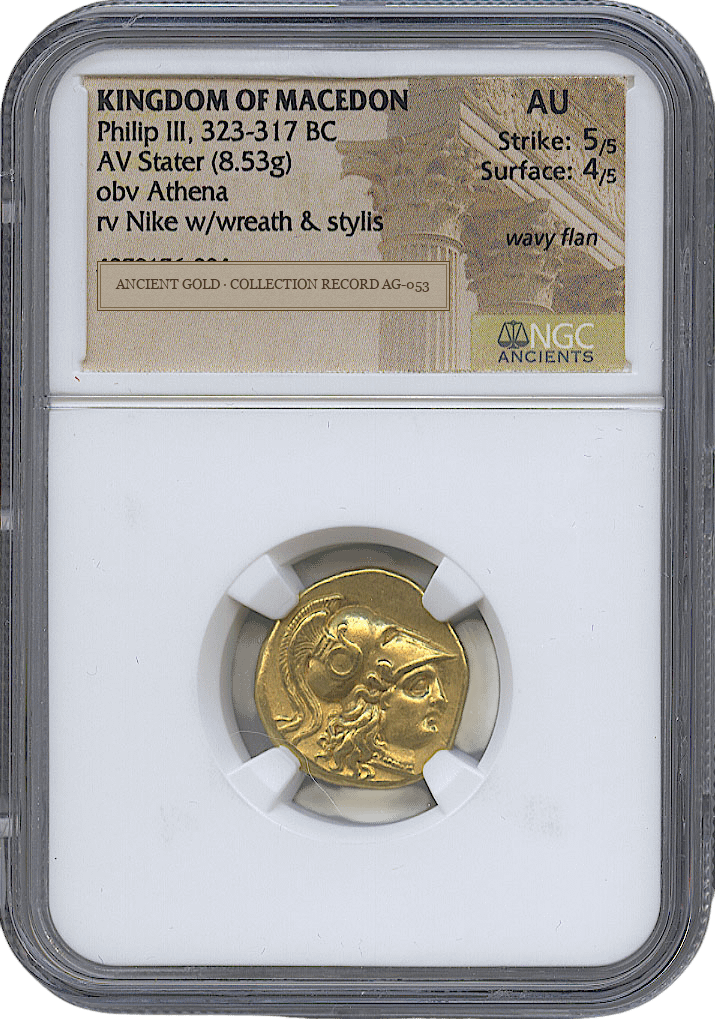
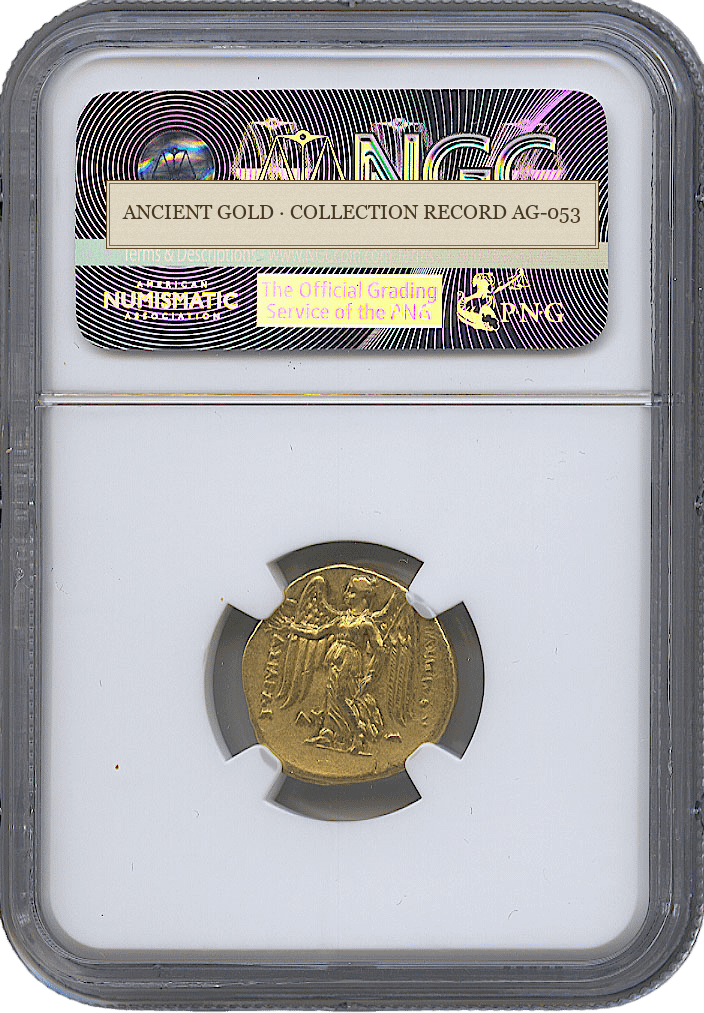
The winged reverse figure on imperial gold moves from classical Victory toward a Christian angel through reuse, reinterpretation and changed attributes. The transition is best read as a continuum rather than a single iconographic switch.
Victory as inherited language
Greek and Roman coinages made Nike or Victoria a compact sign of success. AG-053 shows Nike with wreath and stylis. Late Roman rulers retained the winged figure because it was instantly legible across a diverse empire.
The cross changes the reading
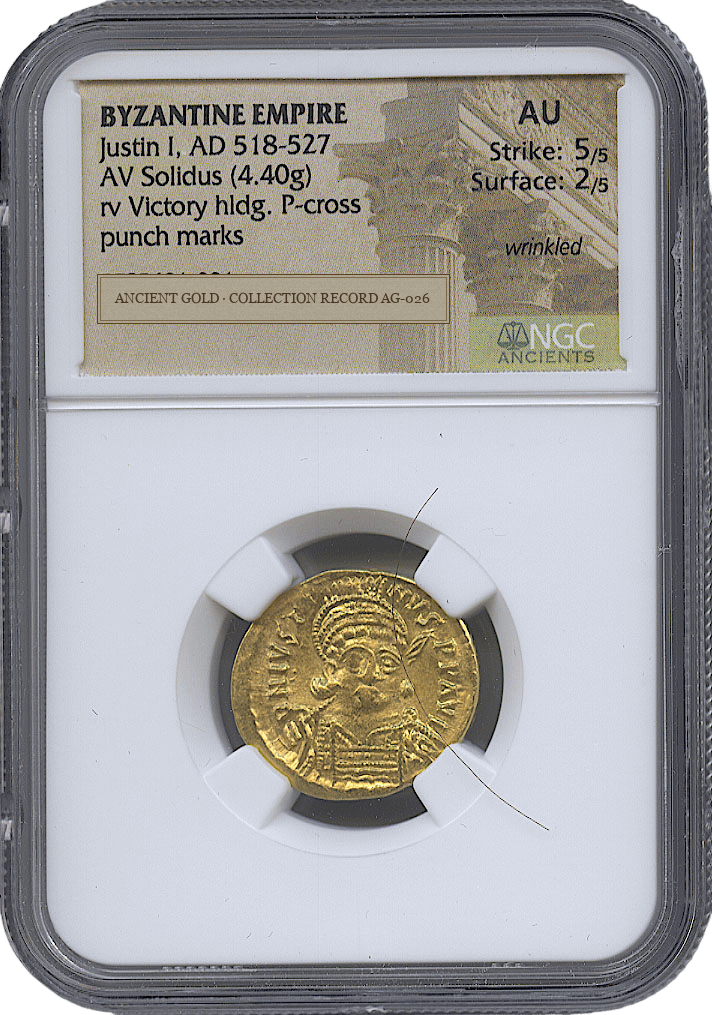
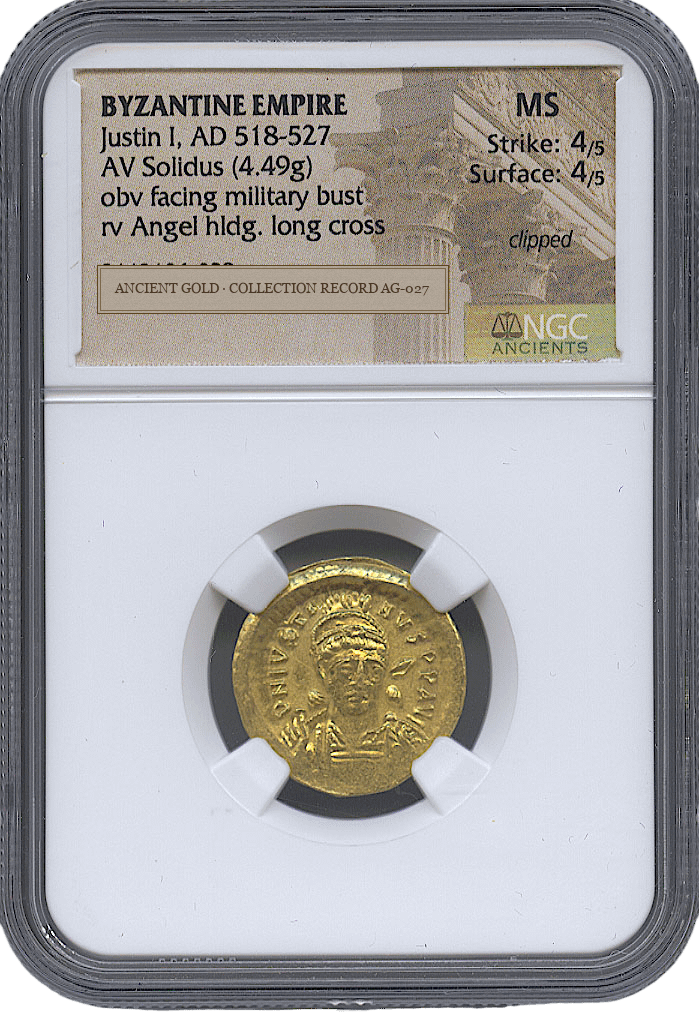
On fifth- and sixth-century solidi, the winged figure may hold a long or patriarchal cross and a globus cruciger. The body remains familiar while the attributes locate victory inside a Christian imperial order. AG-026 and AG-027 preserve the distinction in their catalogue titles: one is described as Victory, the other as an angel.
Labels follow evidence
Modern catalogues sometimes differ over where to place the terminological boundary. A responsible object record should follow the established type description while explaining the visual continuity. Calling every winged figure an angel erases classical inheritance; calling every one Victory can suppress the Christian claim of the later issue.
Historical meaning
The transformation gave rulers a useful visual bridge. The empire could present Christianity as fulfilment rather than rupture: the old promise of triumph remained, but its source and symbols were redefined.
Questions readers ask
How can I tell Victory from an angel?
Study attributes, inscription, date and type corpus. A wreath or trophy often supports Victory; a long cross or globus cruciger strengthens an angelic reading, but context remains essential.
Did Christian imagery eliminate classical imagery?
No. Byzantine visual culture repeatedly adapted Roman personifications, dress and compositional formulas.
Why compare multiple objects?
A sequence reveals gradual change that one coin cannot show by itself.