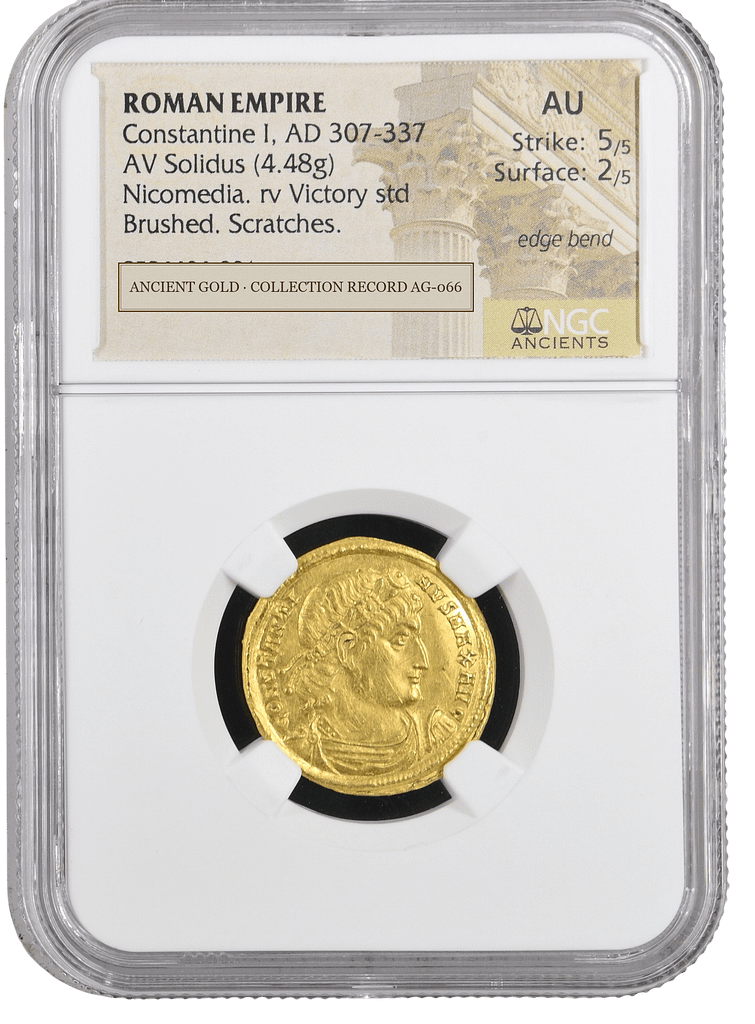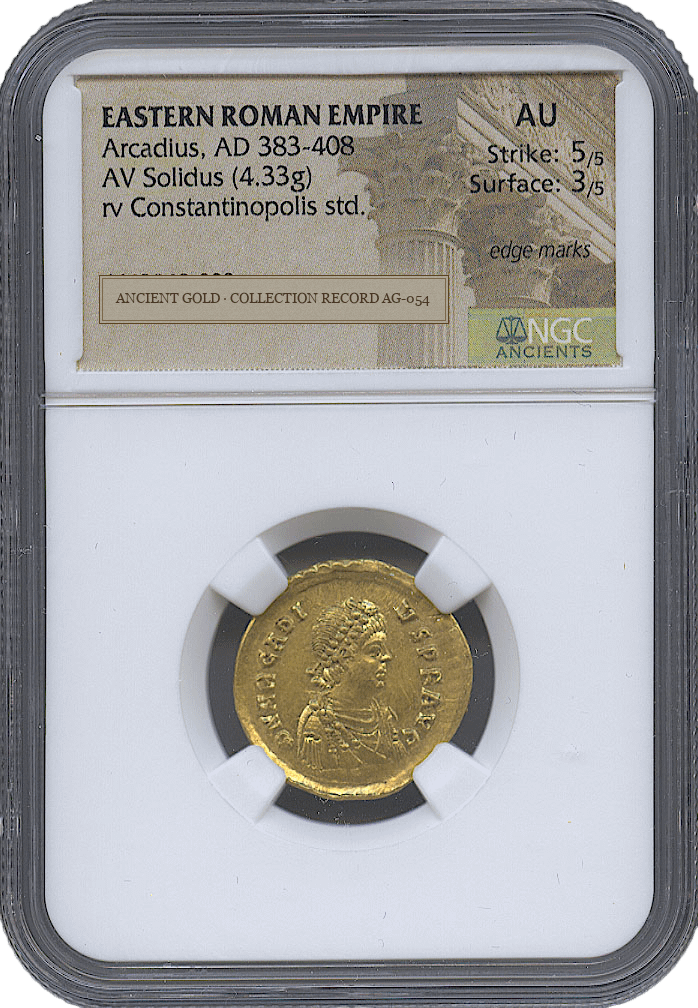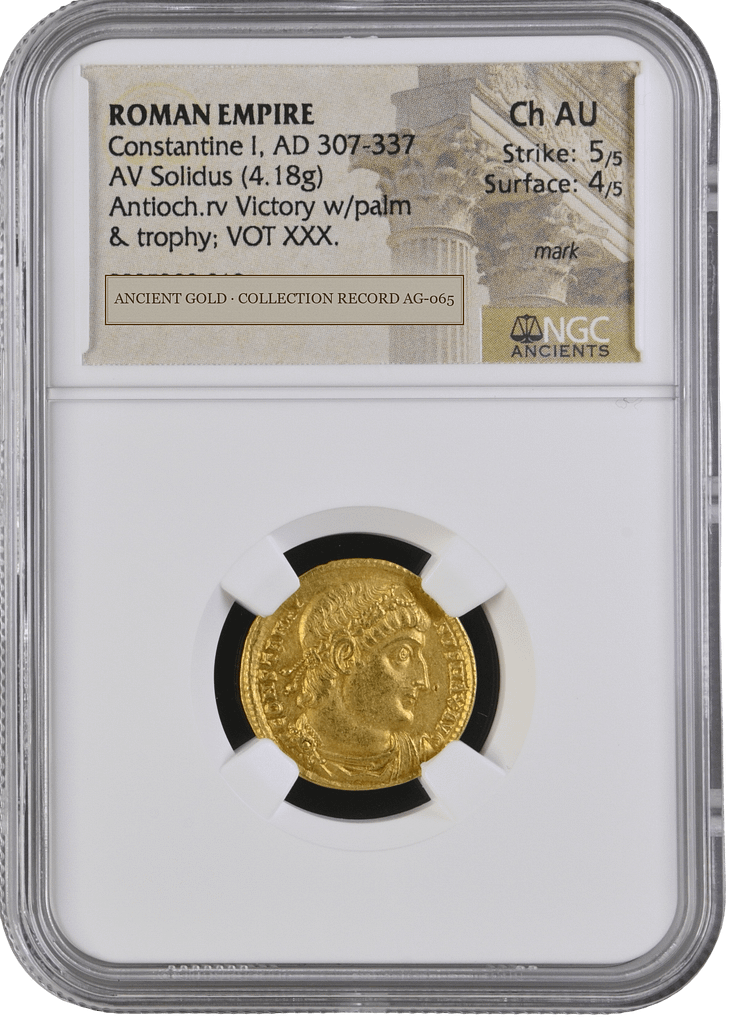
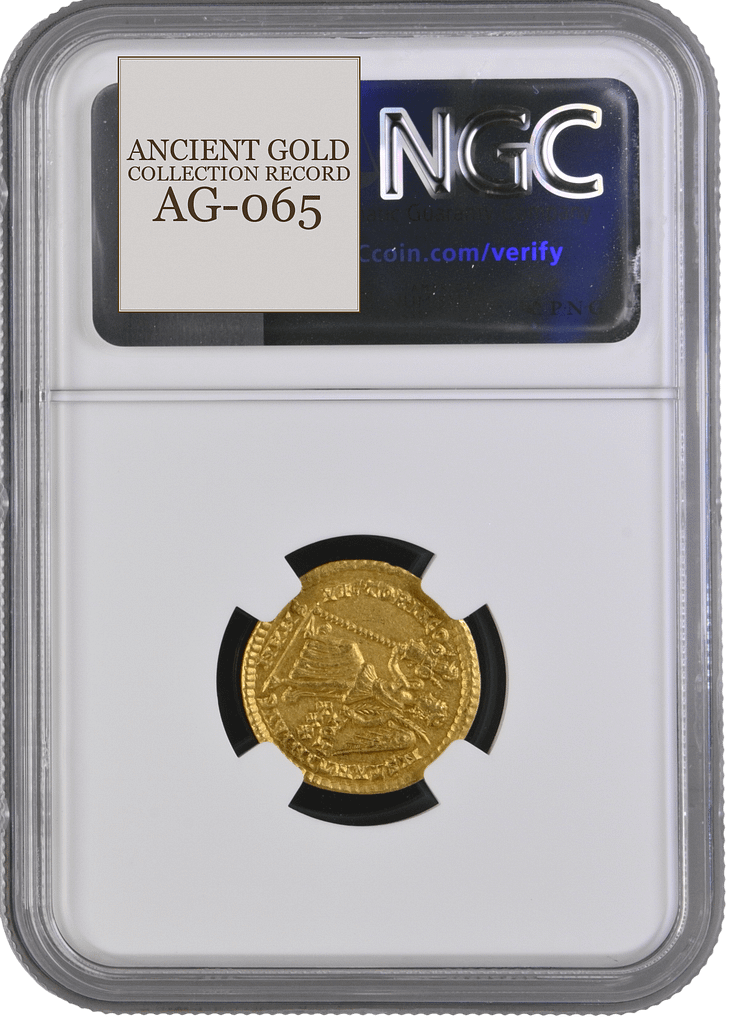
VOTA inscriptions record imperial vows associated with anniversaries of rule. They transform time into a political message: completed years demonstrate survival, while renewed vows project legitimate government into the future.
Reading the numerals
VOT is an abbreviation of vota. Roman numerals state the anniversary. Additional language such as MVLT or MVL expands the wish toward further years. On AG-065, VOT XXX refers to Constantine’s tricennial vows. The inscription belongs to a wider ceremonial system, not merely a date label.
Images perform the vow
A shield can carry the numerals; Victory may inscribe them; paired Victories may support a wreath. These actions make the anniversary visible as triumph. AG-066 shows why verbs matter: Victory writes the vow while Genius supports the shield.
What a votive type can establish
A type can anchor an issue within a commemorative program and help refine chronology. It cannot by itself prove where an individual coin circulated, who received it or how long it remained in use. Those require separate evidence.
Vows and co-rule
Shared imperial government can complicate the formula. AG-054 combines a votive shield with CONCORDIA AVGGG, joining promised duration to the harmony of three Augusti. The reverse makes longevity and political partnership reinforce one another.
Questions readers ask
Does VOT XXX mean the coin was struck exactly in year thirty?
It identifies a program connected to the tricennalia; precise dating still depends on mint, legend and type sequence.
Why put vows on money?
Coinage carried anniversary language through salaries, payments and exchange, giving ceremony an unusually wide audience.
Are missing letters safe to restore?
Only when the visible trace and a well-established type support the expansion; the record should show where restoration is uncertain.