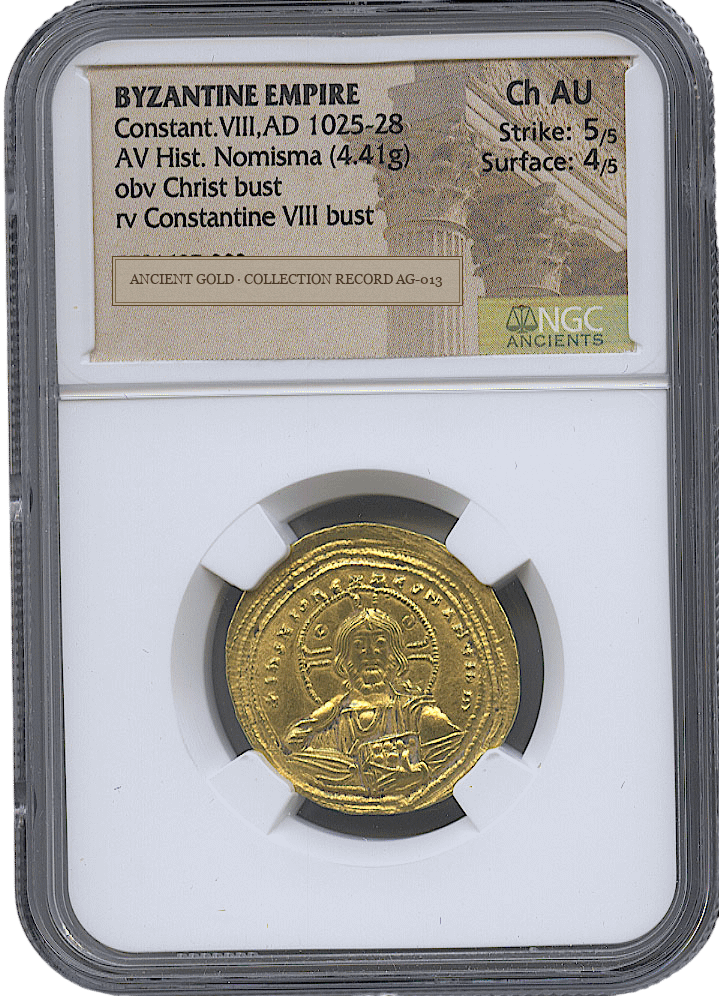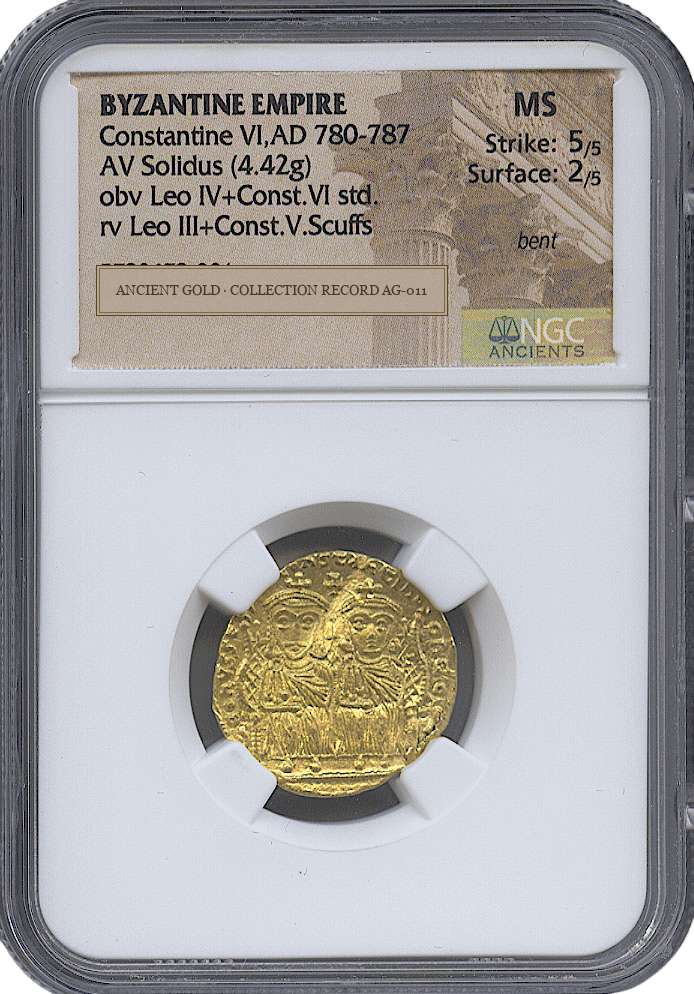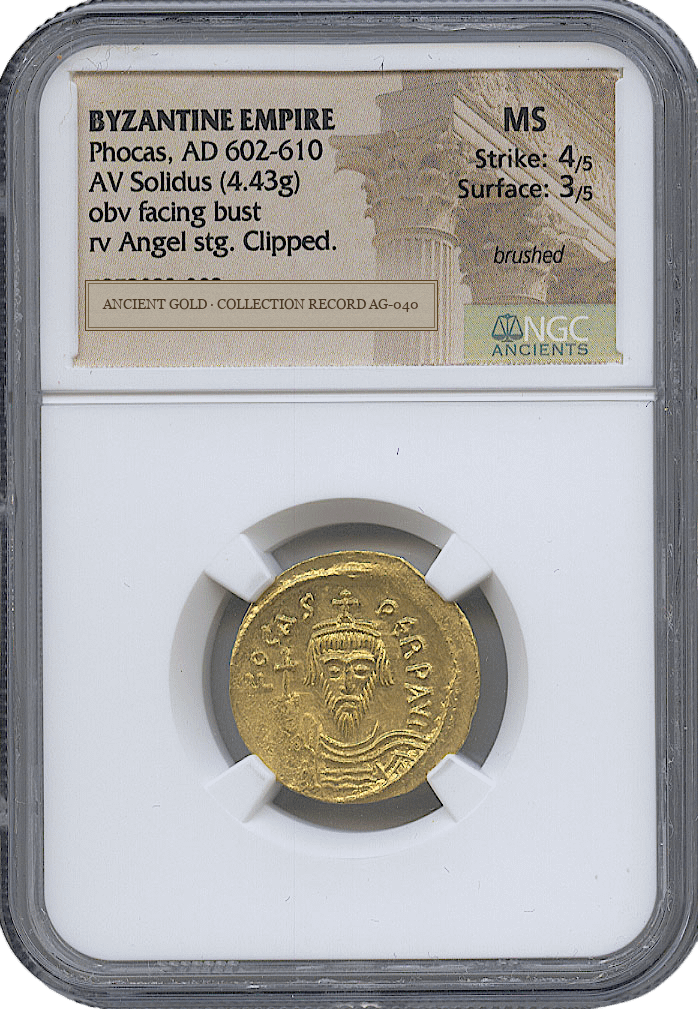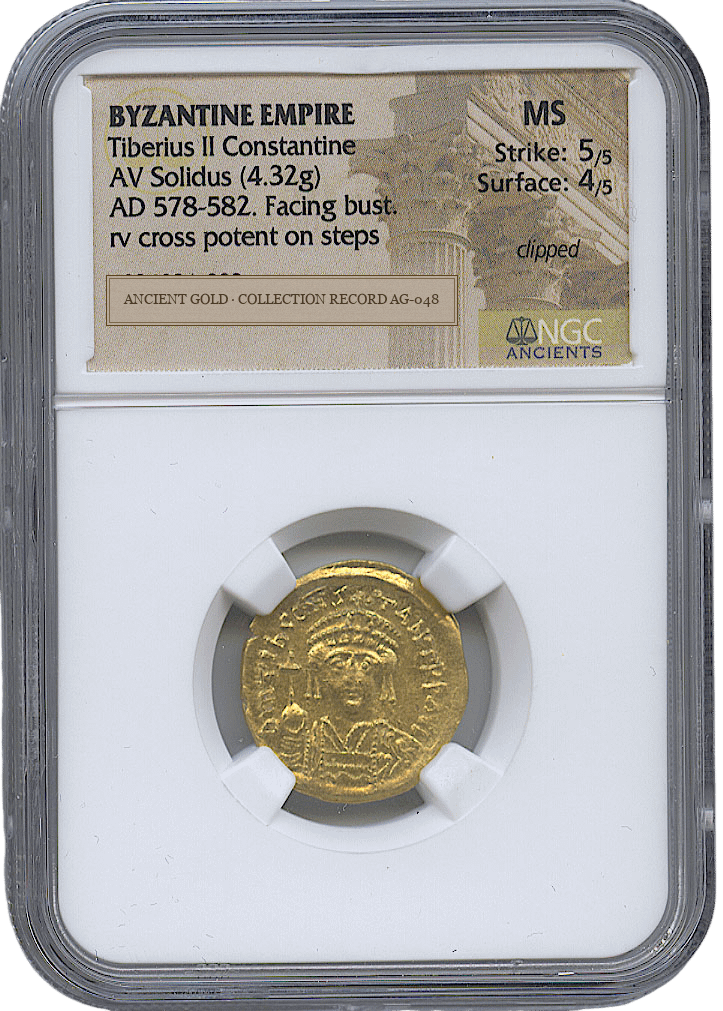
Family portraits on Byzantine gold are diagrams of authority. They name present rulers, designate heirs, remember founders and make unstable political arrangements appear ordered.
How hierarchy is shown
The senior figure may occupy the centre, appear larger, wear different regalia or take the obverse. Children are often smaller or beardless. A cross held between two rulers can bind them into one visual unit. These conventions communicate rank even when a viewer cannot read the legend.
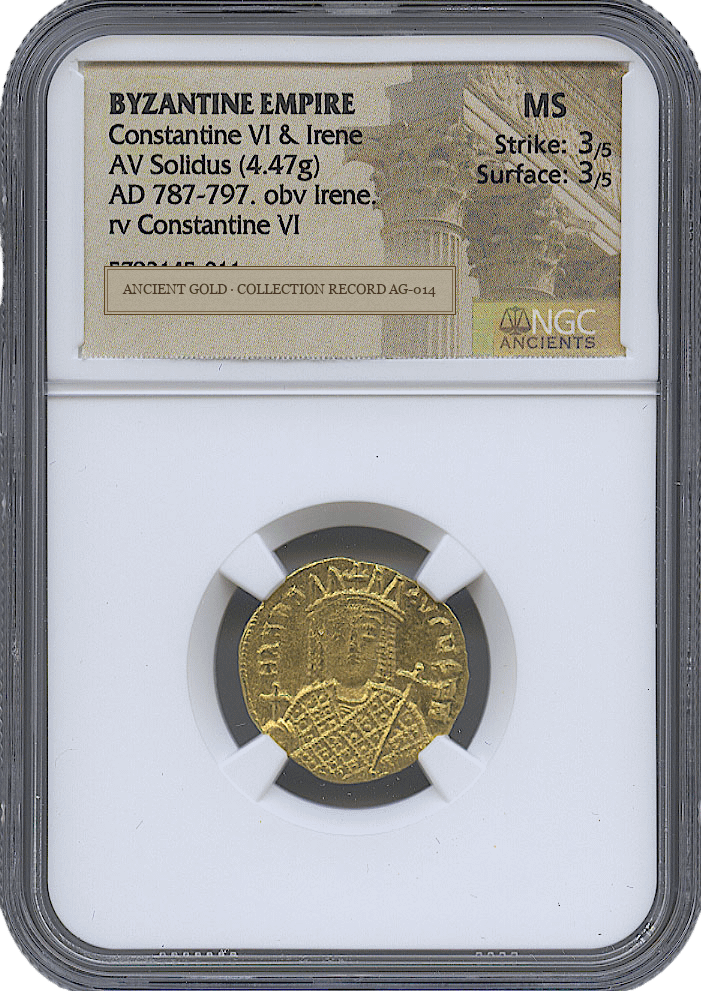
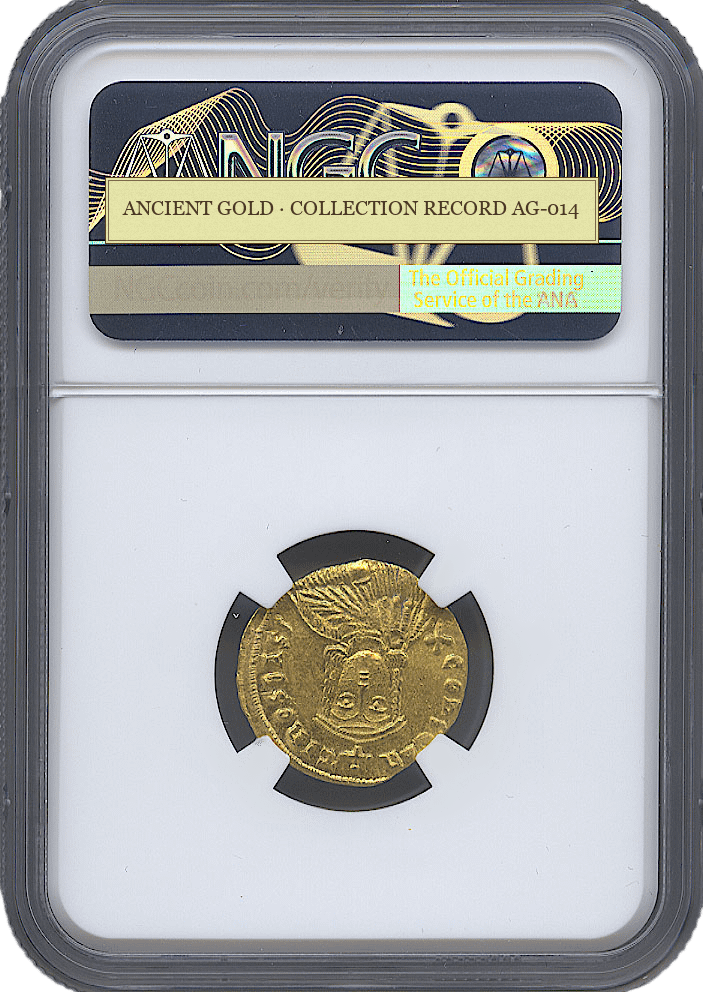
Irene and Constantine VI
AG-014 places Irene and her son on separate faces. Irene’s imperial dress and crown make her a sovereign presence rather than a marginal attendant. The division conveys partnership, but it also lets each portrait claim a complete field. Later conflict should not be read backward as though the die engraver illustrated an inevitable outcome.
Fathers, sons and founders
AG-010 keeps Leo III, the dynastic founder, visible on coinage of Constantine V. Other issues pair a reigning emperor with an heir or place ancestors opposite the living pair. The dead can remain politically active as legitimating images.
Co-rule is not equality
Two named emperors do not necessarily possess equal power. Placement and scale express precedence, while titles and historical sources refine the picture. Coinage records the official claim made by the issuing authority, not every negotiation behind it.
Questions readers ask
Why include children on coins?
Visibility makes succession present and discourages alternative claims.
Can coin order tell us who was senior?
Often, but it must be tested against legends, regalia, date and published typology.
Does a family portrait prove harmony?
No. It demonstrates the harmony the state chose to proclaim.