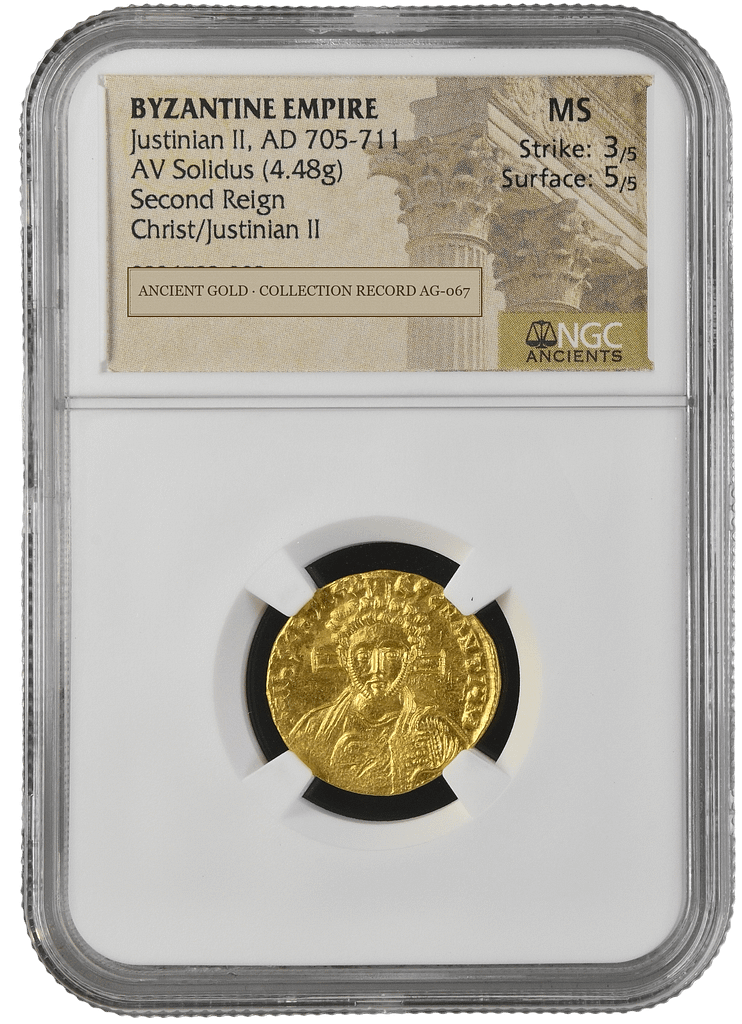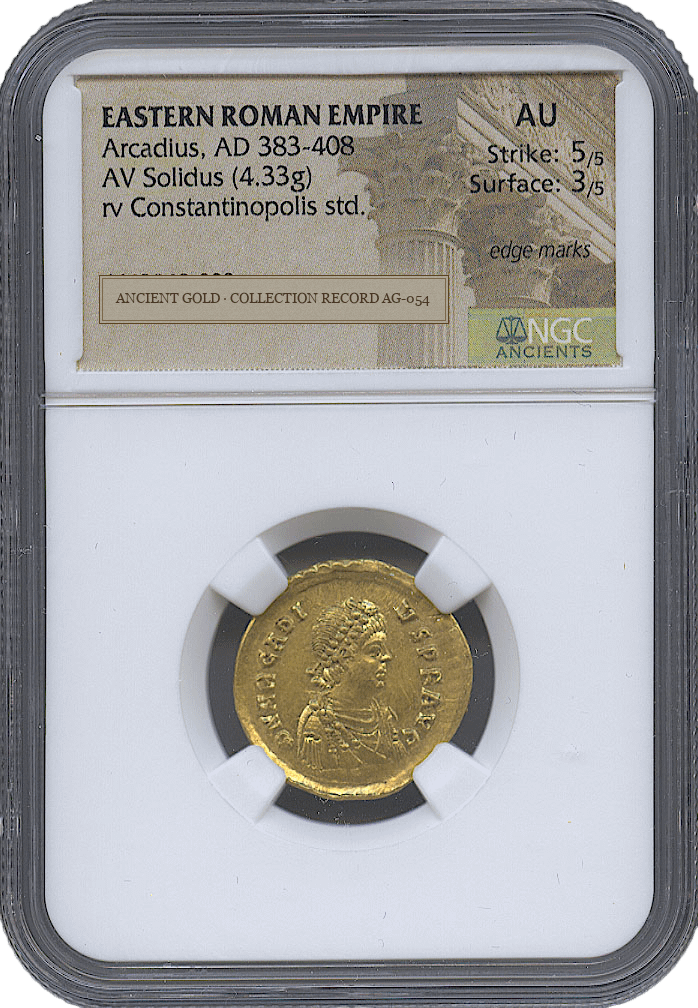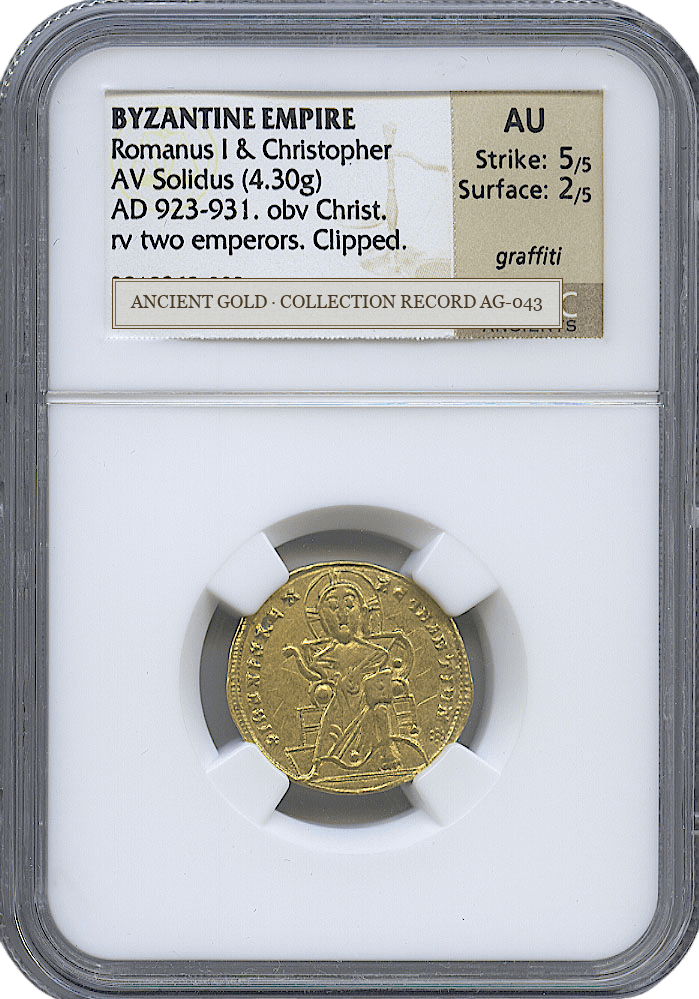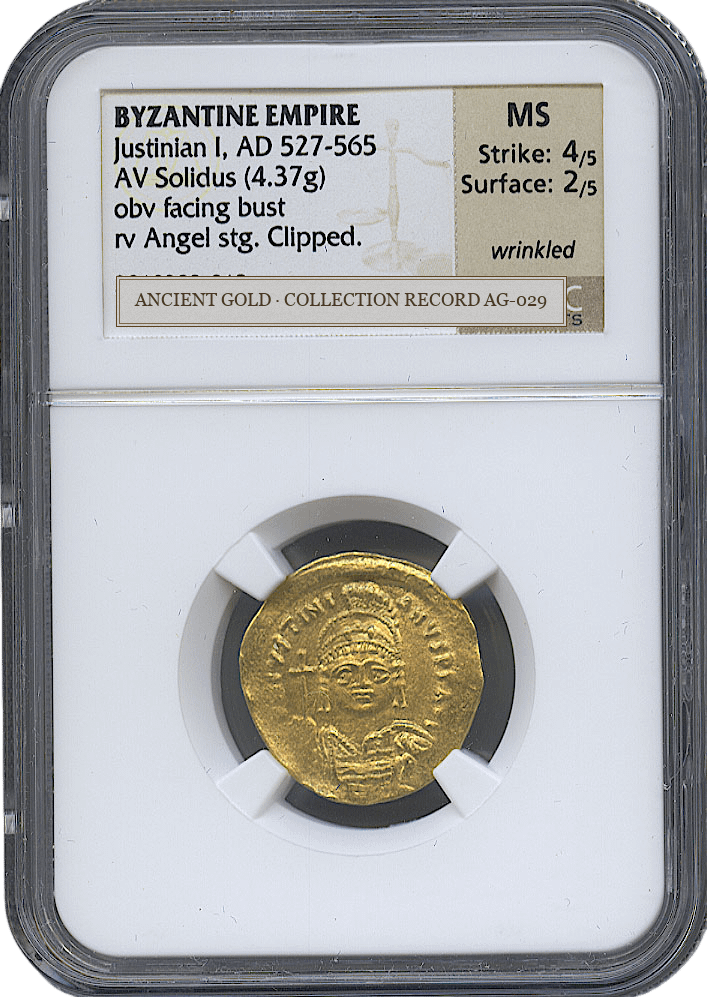
Imperial portraits on gold identify an office as much as a face. Hair, beard and physiognomy can distinguish rulers, but diadem, armour, loros, globe and cross explain what kind of ruler the image claims to show.
Profile and frontal authority
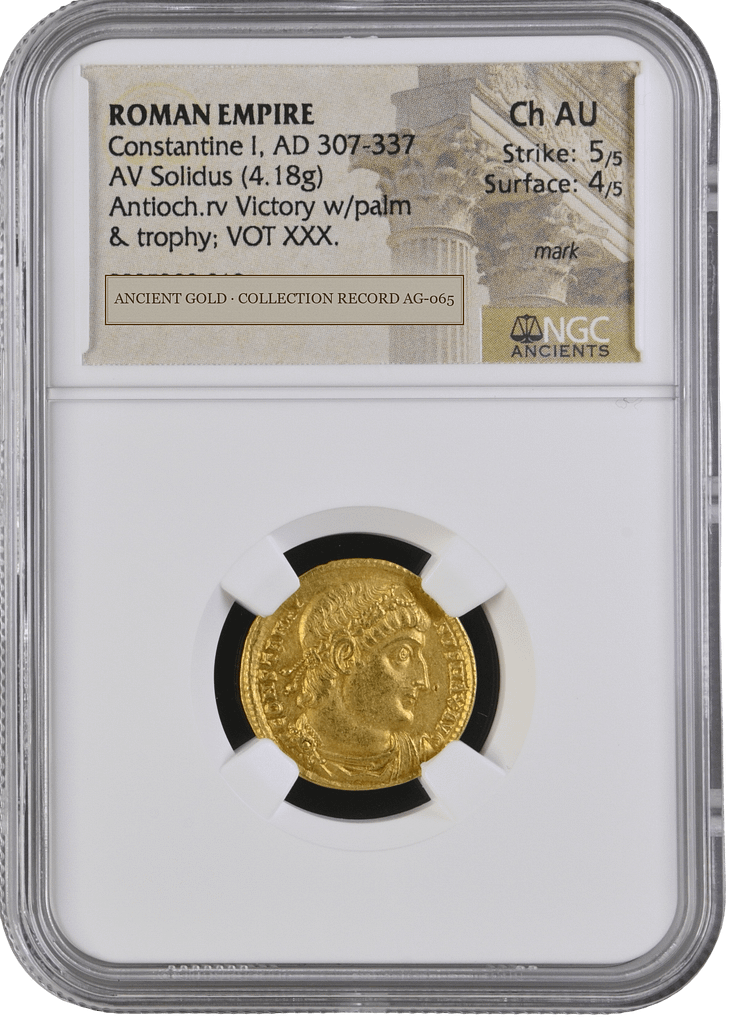
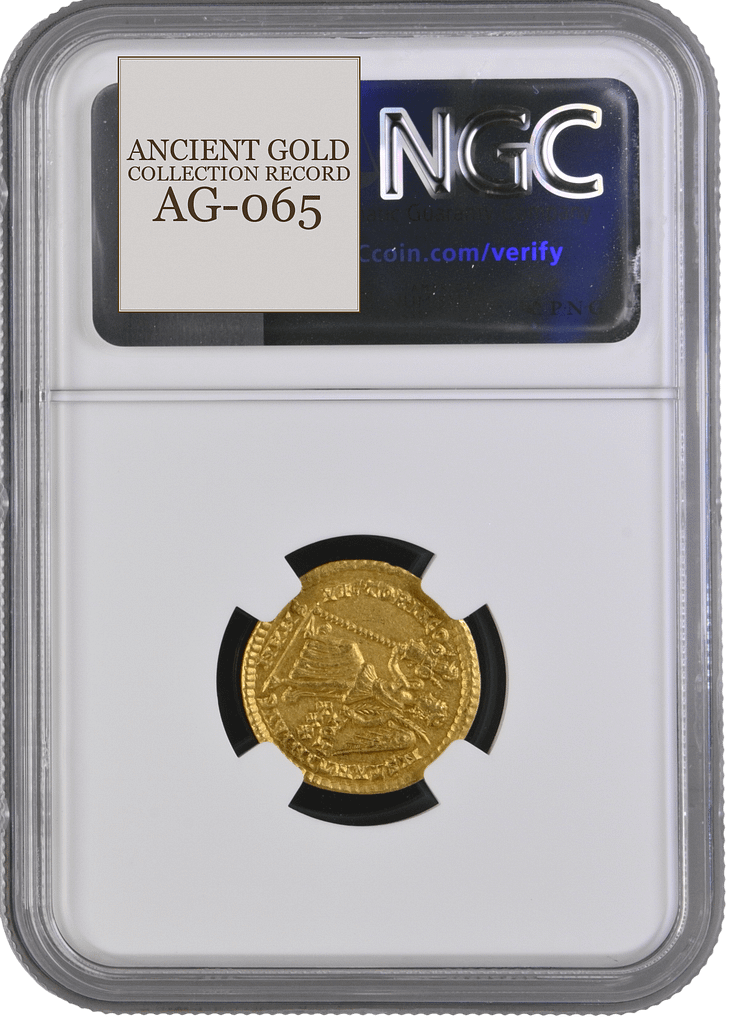
AG-065 retains the right-facing late Roman profile. Its jeweled diadem announces monarchy while cuirass and drapery join command to court ceremony. By the fifth century, frontal military busts confront the viewer with helmet, spear and shield. Symmetry becomes a claim of unshakable presence.
Portrait as icon
Sixth-century facing busts often subordinate natural likeness to attributes. This is not failed portraiture. It is a deliberate concentration on rank, vigilance and sacredly protected government. A coin had to remain legible after thousands of strikes and across the empire.
Christ and the emperor
When Christ occupies one face, as on AG-067, the emperor’s portrait becomes relational. Justinian II appears with crown, loros, crosses and a globe marked PAX. The pairing visualizes a hierarchy: the ruler governs under a higher sovereignty.
Dynastic portraits
Paired and grouped figures use scale, position and facial maturity to order succession. They can make a child heir present, keep a deceased founder politically active or stabilize a contested partnership. Portraiture is therefore evidence for official representation, not a transparent photograph of court life.
Questions readers ask
Are coin portraits realistic?
Some emphasize individual traits, but all are designed official images constrained by type, scale and production.
What does a diadem mean?
It is a principal sign of imperial rank; its form and accompanying dress help date and classify a type.
Can an image prove a ruler’s character?
No. It shows how authority was presented, not private personality.