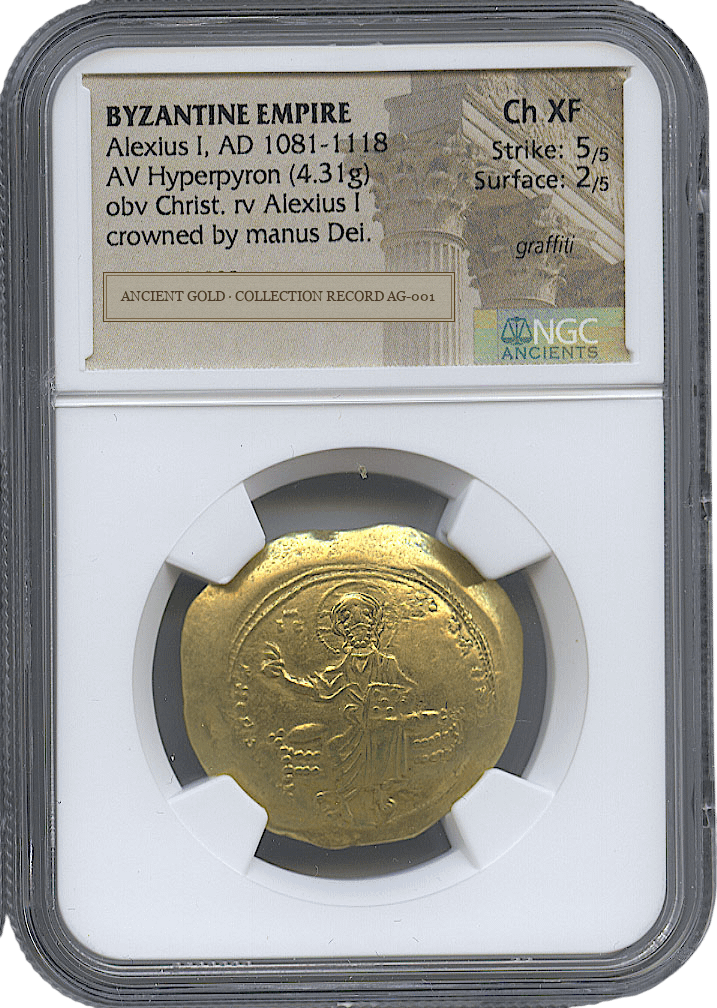
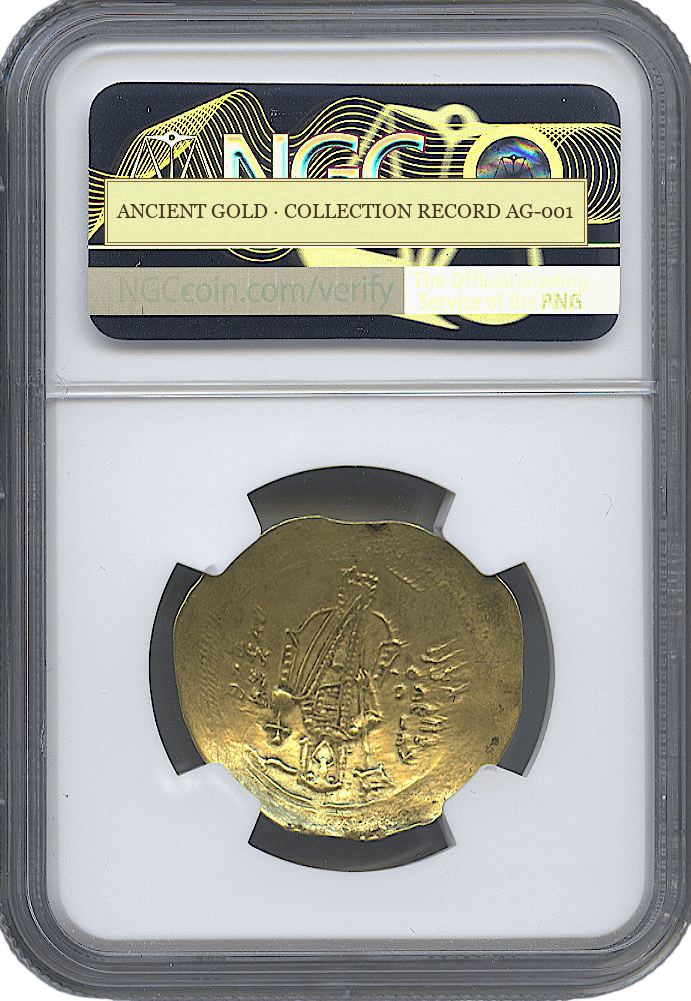
The hyperpyron was the principal reformed Byzantine gold denomination introduced under Alexius I Komnenos after the older nomisma had suffered prolonged debasement. AG-001 places the Virgin and Child on one face and the emperor on the other. Its concave fabric, sacred hierarchy and reformed monetary role belong to one political project.
Reform after instability
By the late eleventh century, the purity and credibility associated with earlier Byzantine gold had weakened. Alexius’ reform reorganized denominations and established the hyperpyron as a high-value gold coin. “Reform” does not mean a return to the early solidus unchanged. It means a new system designed to restore usable distinctions and confidence.
Why the coin is concave
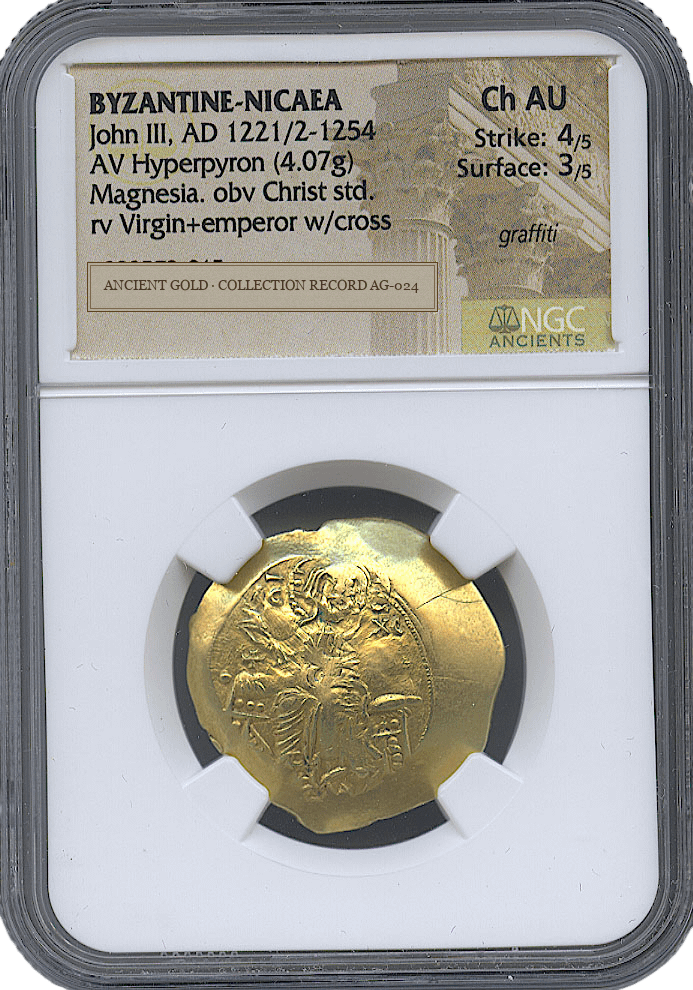
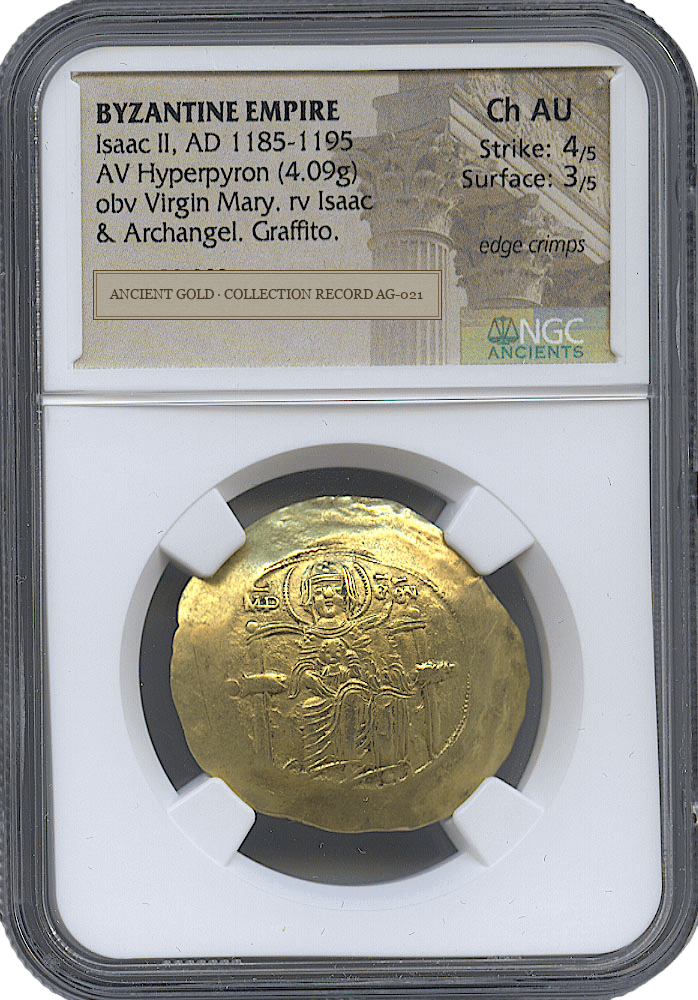
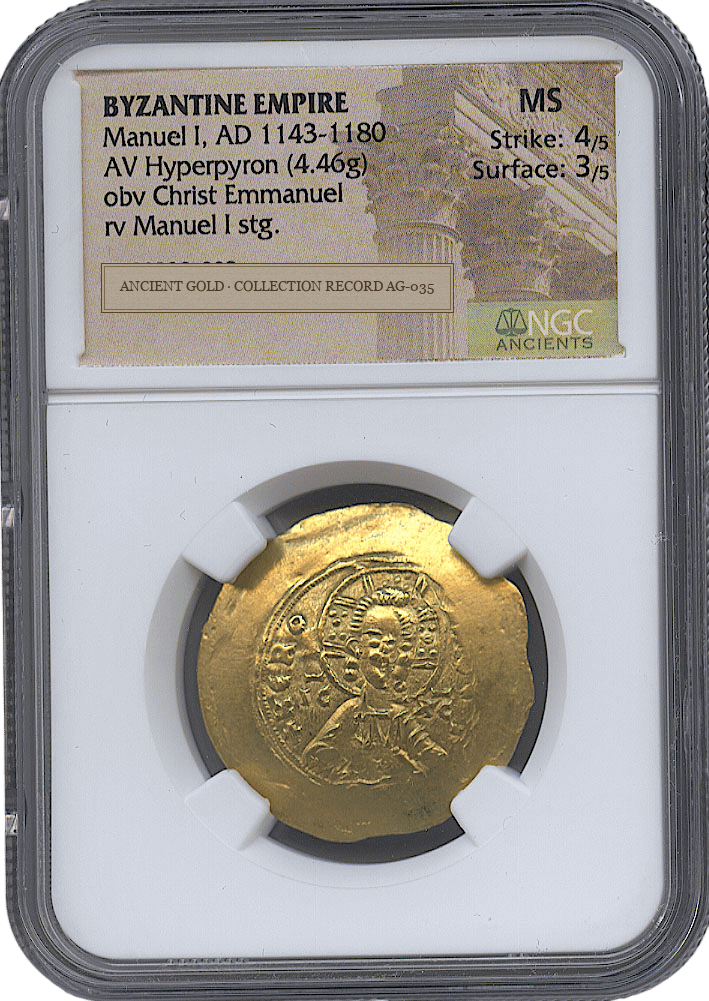
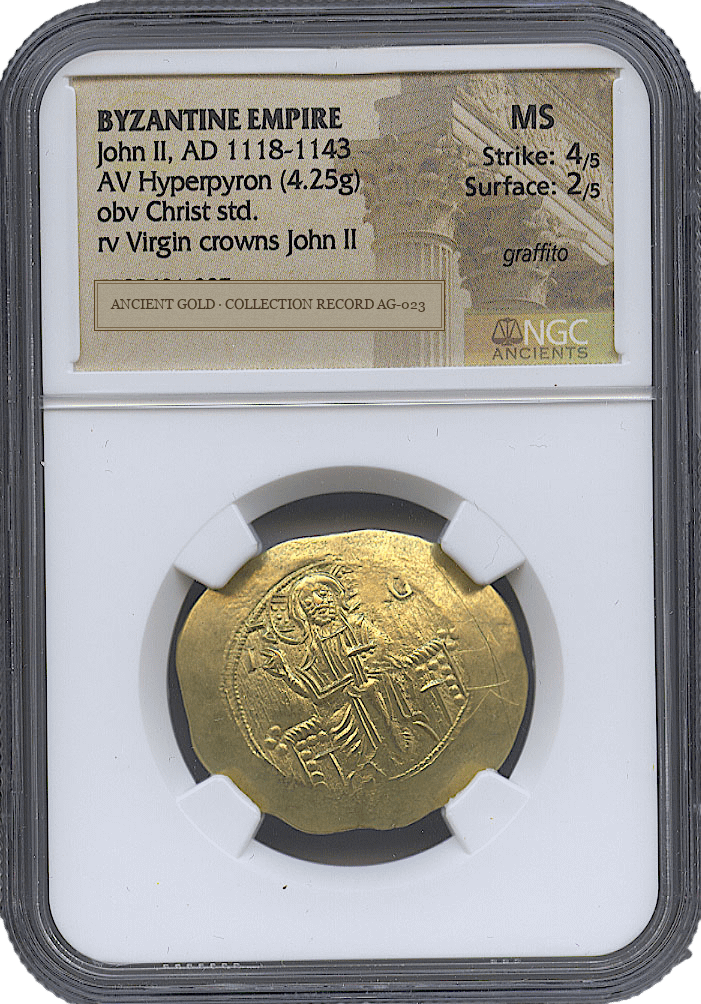
The hyperpyron belongs to the scyphate, or cup-shaped, tradition of middle and late Byzantine coinage. Curvature affects striking, wear, photography and modern display. On a slab image, light may emphasize one area while obscuring another. The shape should be documented as physical evidence rather than treated as distortion in the photograph.
Sacred protection and imperial office
The Virgin and Child supply an image of protection and intercession. The emperor’s answering portrait defines earthly office within that sacred order. The two sides create a hierarchy similar in principle to earlier Christ-and-emperor types, but the specific figures, dress and inscriptions belong to the Komnenian context.
A denomination with a long afterlife
Later rulers retained and adapted the hyperpyron. AG-023 under John II and AG-035 under Manuel I show its Komnenian continuation; AG-021 under Isaac II and AG-024 under John III demonstrate later political and regional transformations. Comparing them reveals both persistence and change in fabric, imagery and authority.
How to compare surviving examples
Begin with recorded weight, dimensions and curvature, then examine the completeness of legends and central figures. Do not equate a cleaner strike with greater historical importance. A clipped, cracked or weakly struck specimen may still preserve decisive evidence for type and monetary system.
Questions readers ask
Is a hyperpyron the same as a solidus?
No. Both are major Byzantine gold denominations, but they belong to different reforms, standards and historical systems.
Does “hyperpyron” guarantee modern assay purity?
No. The name belongs to the denomination and its claim to refined gold. The composition of an individual coin requires scientific analysis.
Why connect five objects?
A sequence prevents one reign from standing for the entire denomination. It makes continuity, regional change and the gradual evolution of imagery visible.