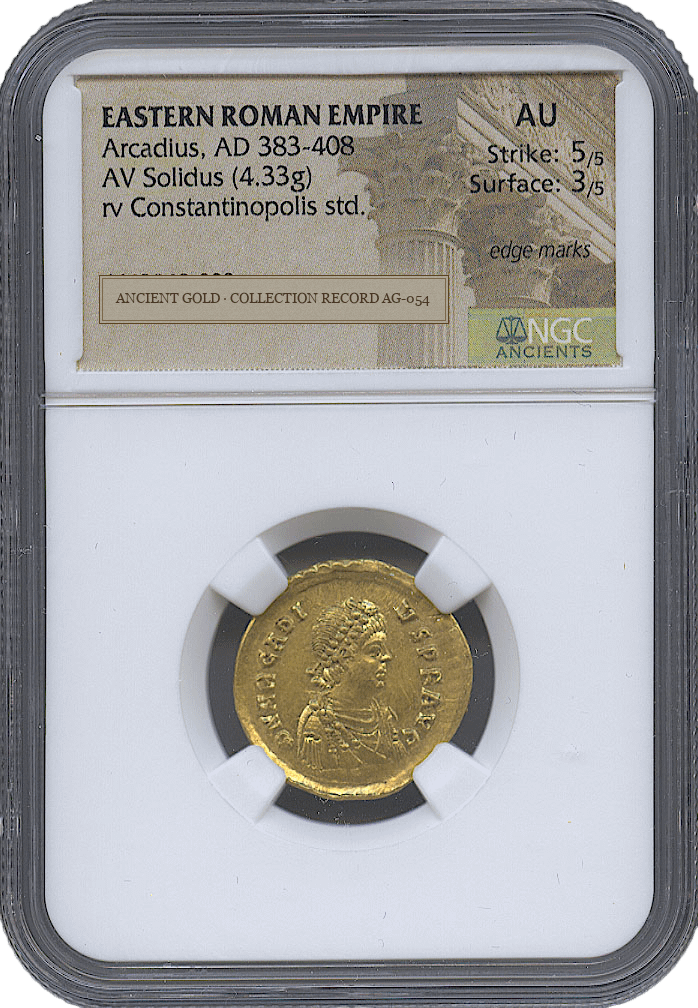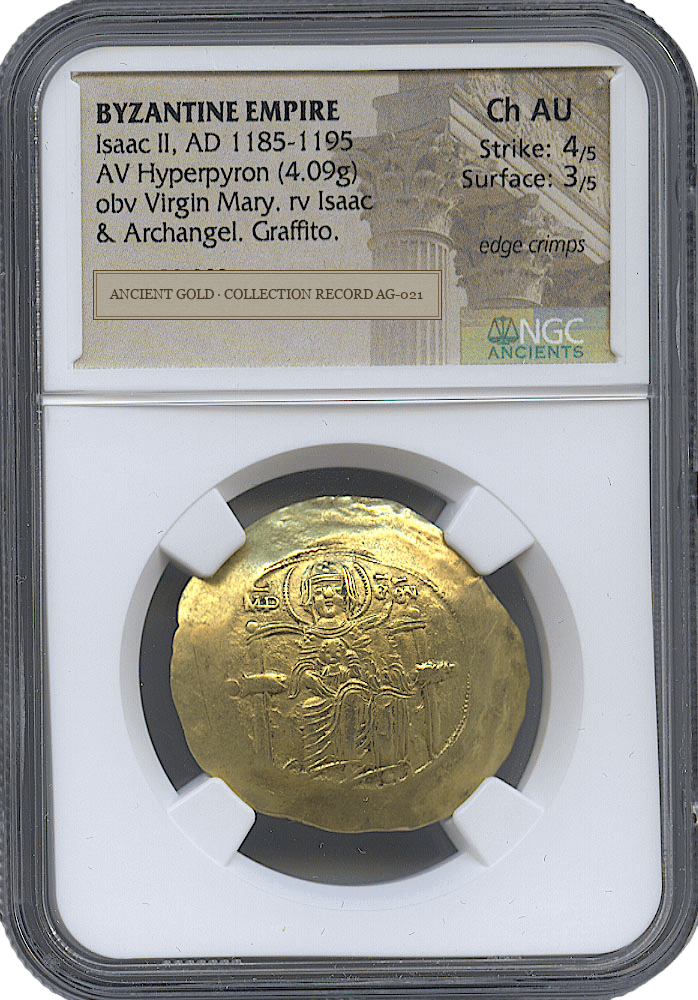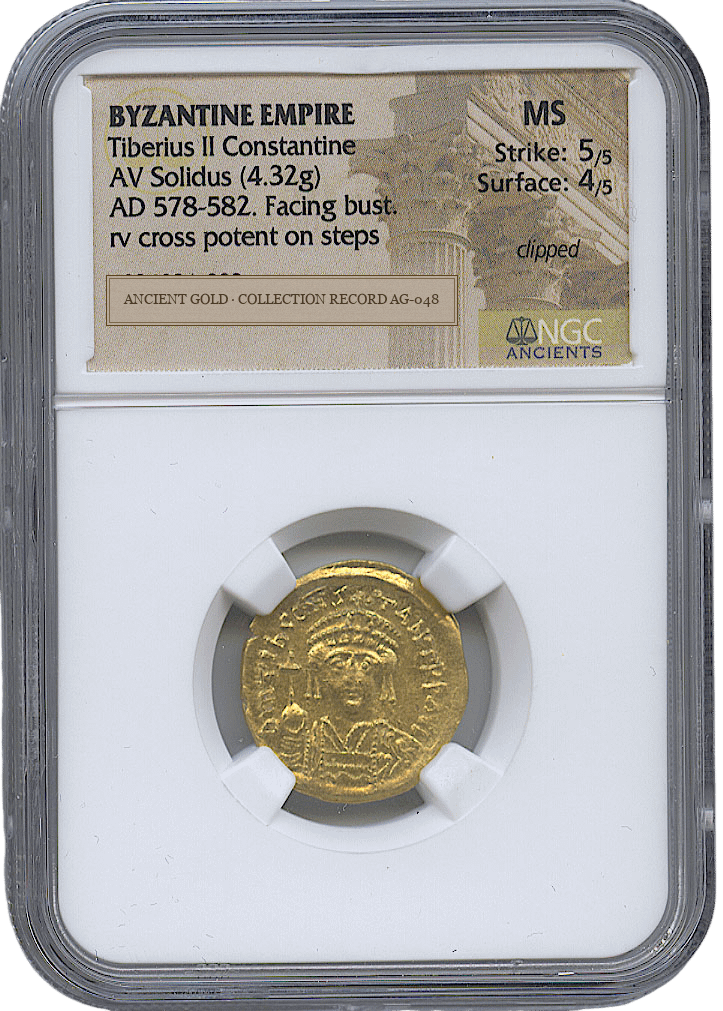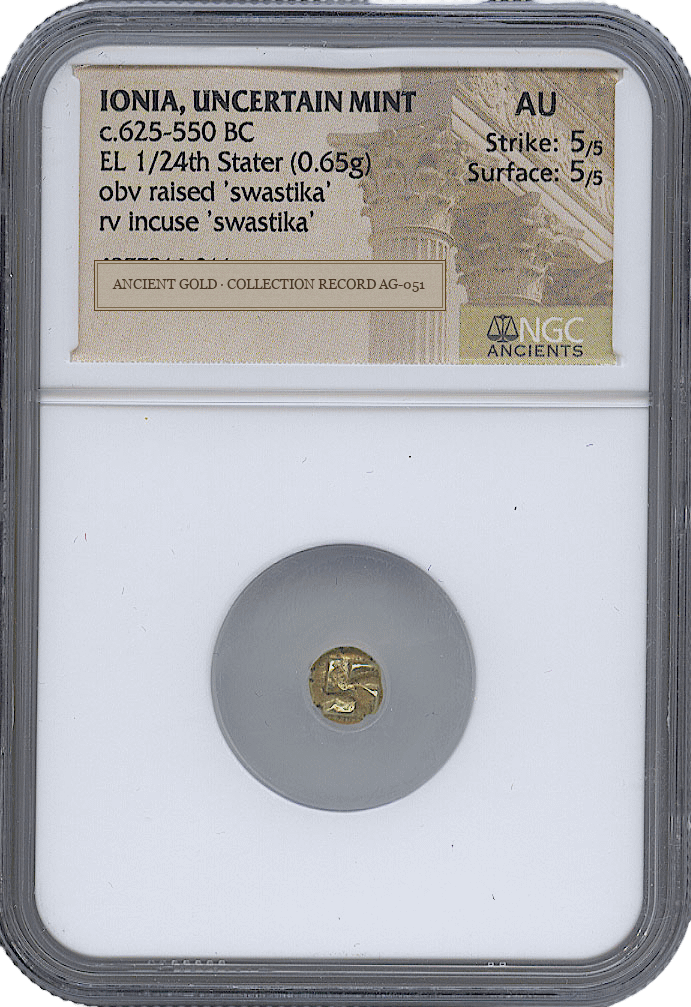
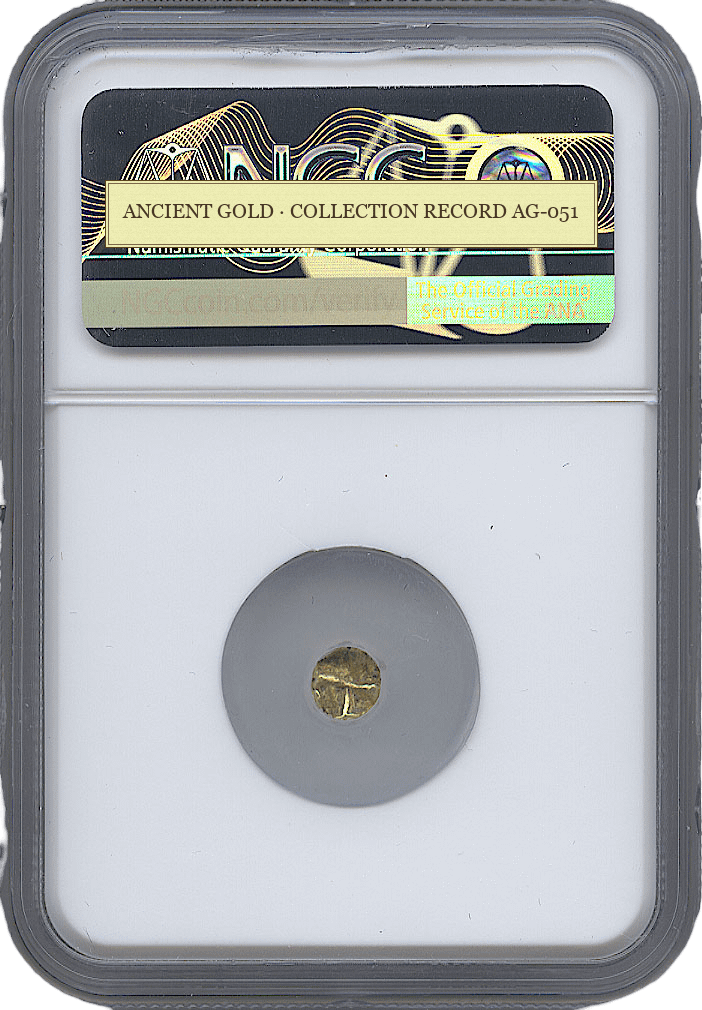
Condition grading summarizes preservation; it does not measure historical importance. A worn coin may preserve a rare type or decisive inscription, while a sharply preserved coin may belong to a common issue.
Adjectival grade
Ancient-coin services use adjectival grades to describe overall wear. That judgment should be reported as assigned, with the grading service named, rather than silently converted into another system.
Strike and surface
NGC Ancients separately evaluates Strike and Surface on five-point scales. Strike addresses how effectively the dies transferred the design, including centring and completeness. Surface considers preservation problems such as corrosion, scratches or deposits. A high grade does not guarantee that every legend is on the flan.
Read the object beyond the label
Photography can reveal weak areas, cracks, clipping, smoothing or uneven toning, but images do not replace examination in hand. For a concave hyperpyron such as AG-021, lighting and curvature can hide details. For a tiny electrum fraction such as AG-051, magnification may be essential to understand the punch.
Historical legibility
Ask which features remain usable as evidence. Can the ruler be identified? Is the mint formula present? Are field marks complete? A damaged coin can still answer some questions and not others. Catalogue notes should state that boundary rather than treating condition as one universal score.
Questions readers ask
Does grading authenticate a coin?
Authentication and grading are related services but distinct judgments; consult the service’s stated procedures and guarantees.
Can two experts grade differently?
Yes. Grading applies structured expertise to an object and retains an element of judgment.
What should a catalogue publish?
The assigned grade, service, observable condition notes, measurements and images—without implying that grade alone establishes value or significance.