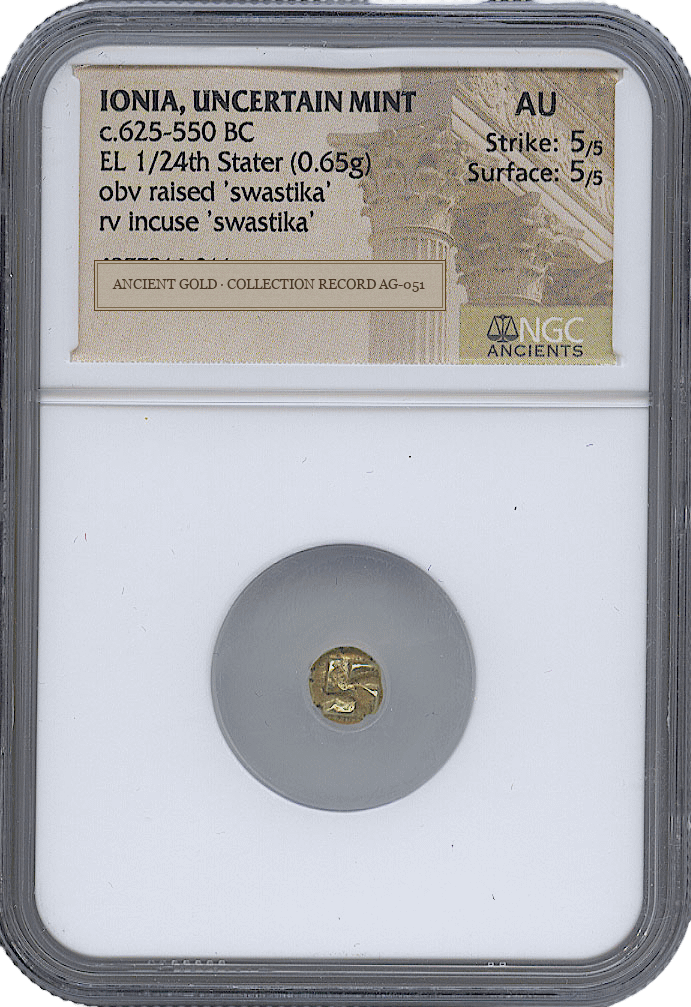
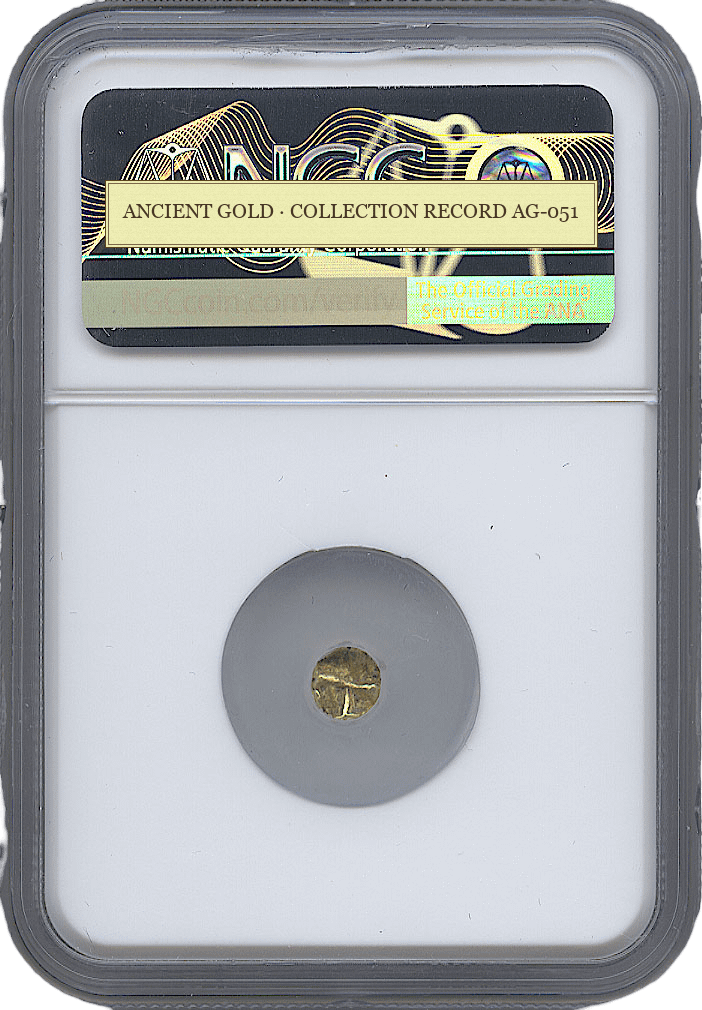
Electrum is a natural or deliberately adjusted alloy of gold and silver, and it supplied the metal for the earliest struck coinages of western Anatolia. AG-051, an Ionian electrum twenty-fourth stater dated about 625–550 BC, is only 0.65 grams. Its scale is modest; its historical claim is not. A raised geometric device and an incuse reverse convert a measured fragment of precious metal into an object marked by authority.
Before portraits and legends
The coin does not name a ruler, narrate a victory or present a recognizable deity. That absence is useful evidence. The earliest issuers did not need the full visual vocabulary of later Greek money. A repeatable mark could distinguish an accepted issue from unmarked bullion. The object should therefore be read as a controlled sign rather than as an unfinished version of a later portrait coin.
Weight made the mark practical
Early denominations depended on a weight system. The name “twenty-fourth stater” describes a fractional relationship, while 0.65 grams is the recorded weight of this surviving specimen. Those statements are not interchangeable. The first identifies a monetary unit; the second documents the individual object after more than two and a half millennia of manufacture, circulation and preservation.
What the incuse records
Ancient coins were struck between engraved dies or punches. On AG-051 the reverse incuse is not empty space: it records the force that drove metal into the obverse design. Its compact geometry belongs to the technology and visual identity of early electrum. Obverse and reverse must be considered together because the coin was created by one striking event.
From metal to civic language
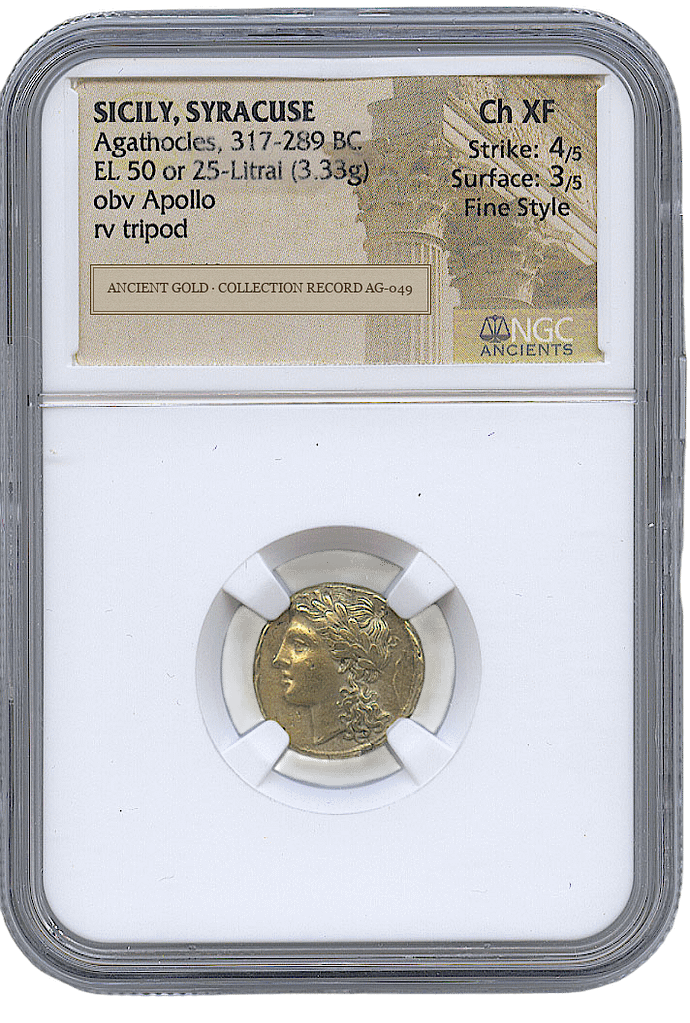
Later Greek issues expanded the system with named authorities, deities, legends and local emblems. AG-049, the electrum coin of Agathokles, shows how much that language developed: Apollo and the tripod carry religious and political associations that the earlier fraction does not attempt. The comparison reveals evolution without treating every change as a simple progression toward realism.
Questions readers ask
Is electrum always a natural alloy?
No. Electrum can occur naturally, but ancient metalworkers could also alter the relative proportions of gold and silver. Visual colour alone cannot establish an exact composition.
Does the punch identify a known city?
Not by itself. Attribution depends on weight standard, fabric, style, find evidence and comparison with published types. The collection records the authority as uncertain rather than assigning a city without sufficient evidence.
Why is such a small coin important?
It preserves the essential bargain of coinage: an issuing authority asks users to trust a standardized piece of metal because it carries a controlled mark.