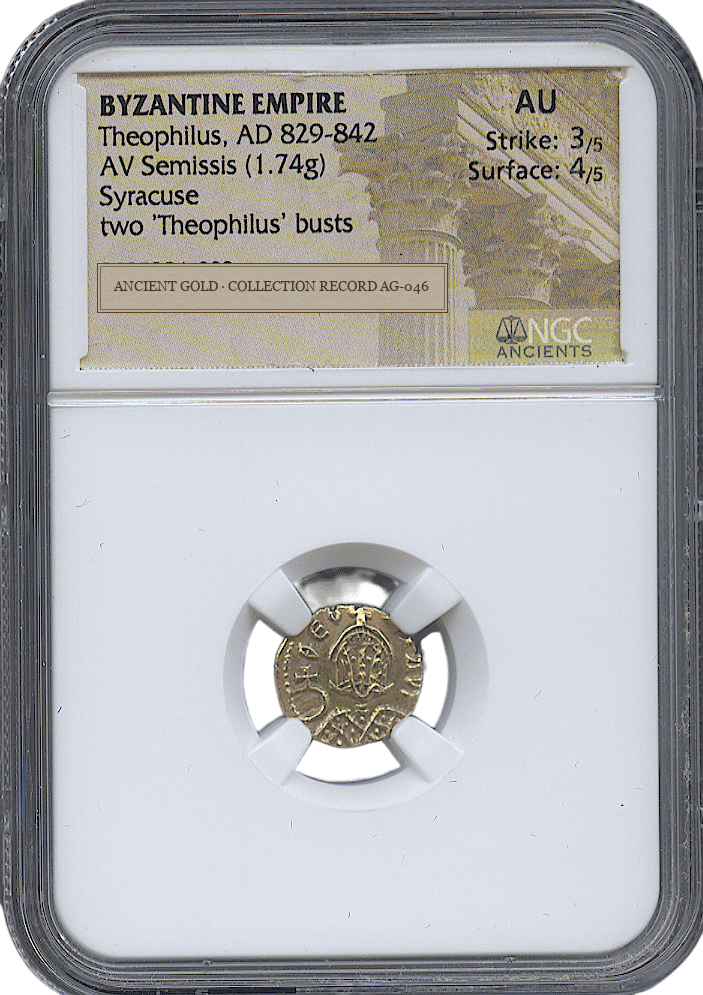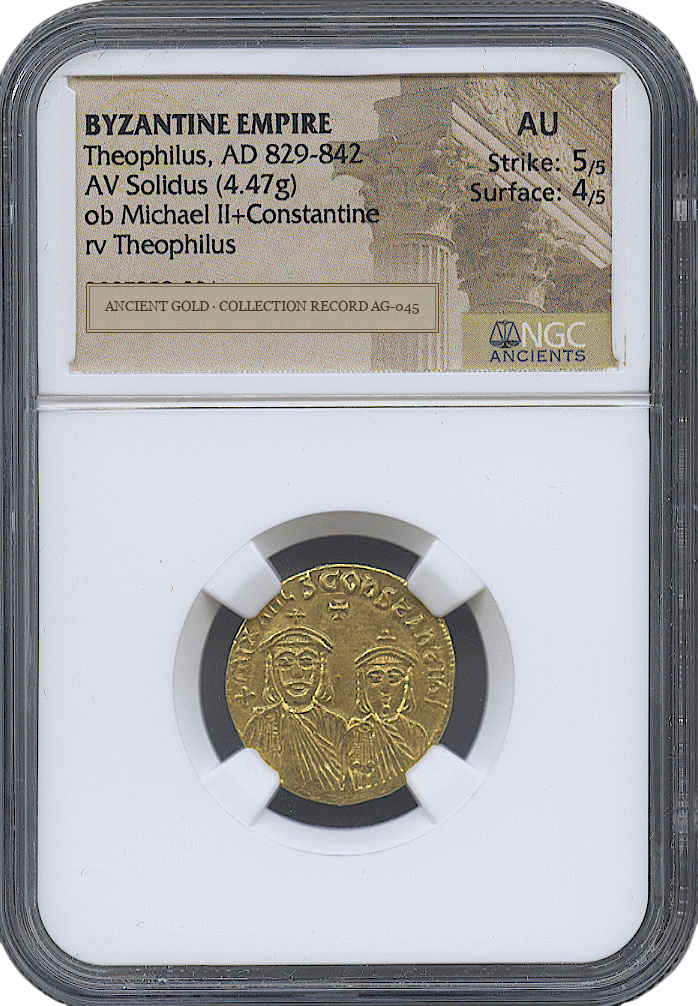
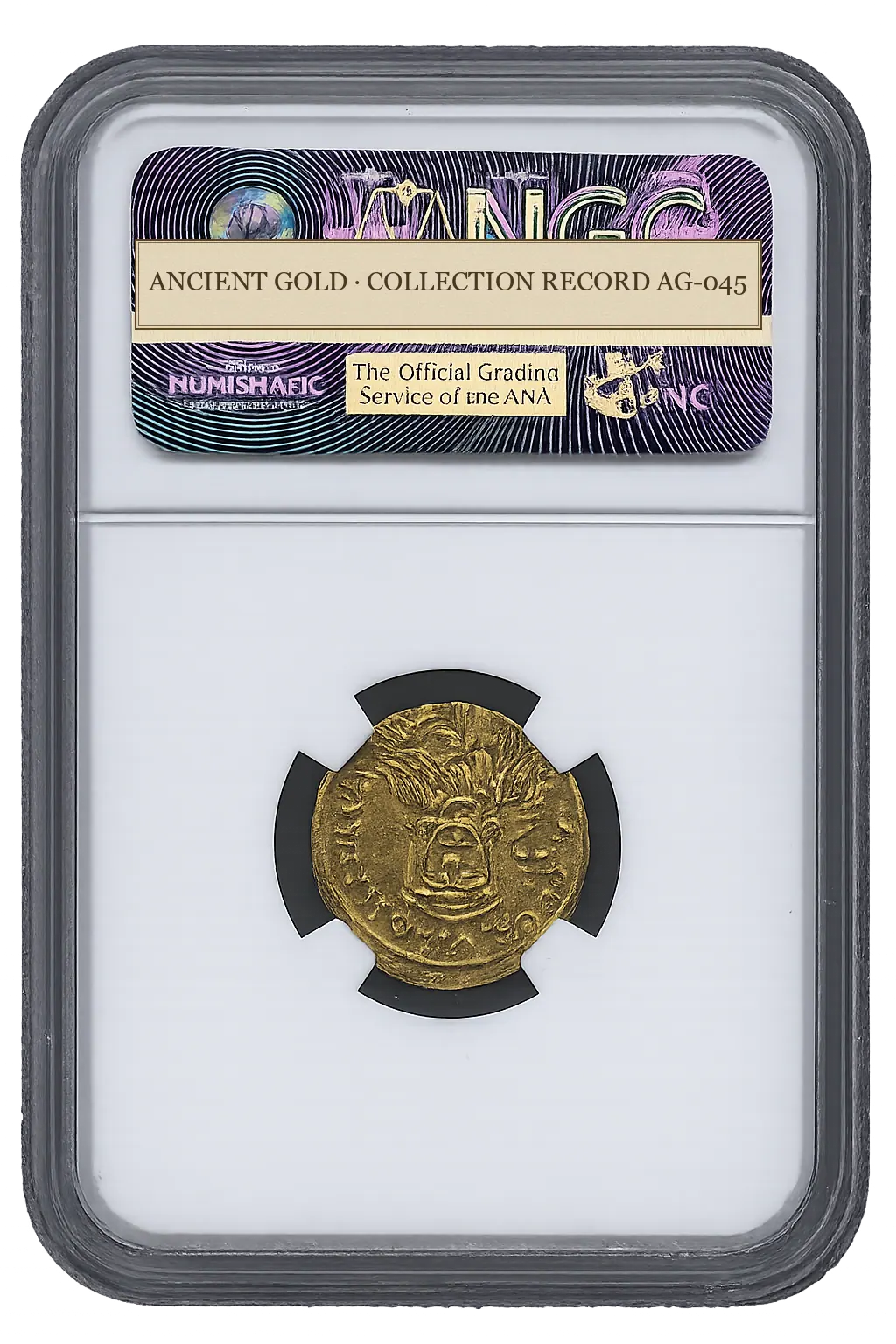
The gold of Theophilus makes imperial family and imperial presence do work that other Byzantine issues assign to sacred portraits. The emperor ruled during the final phase of official iconoclasm. AG-045 presents Michael II and Constantine opposite Theophilus; AG-046, a smaller semissis of Syracuse, repeats the emperor’s bust across both faces.
Family memory as authority
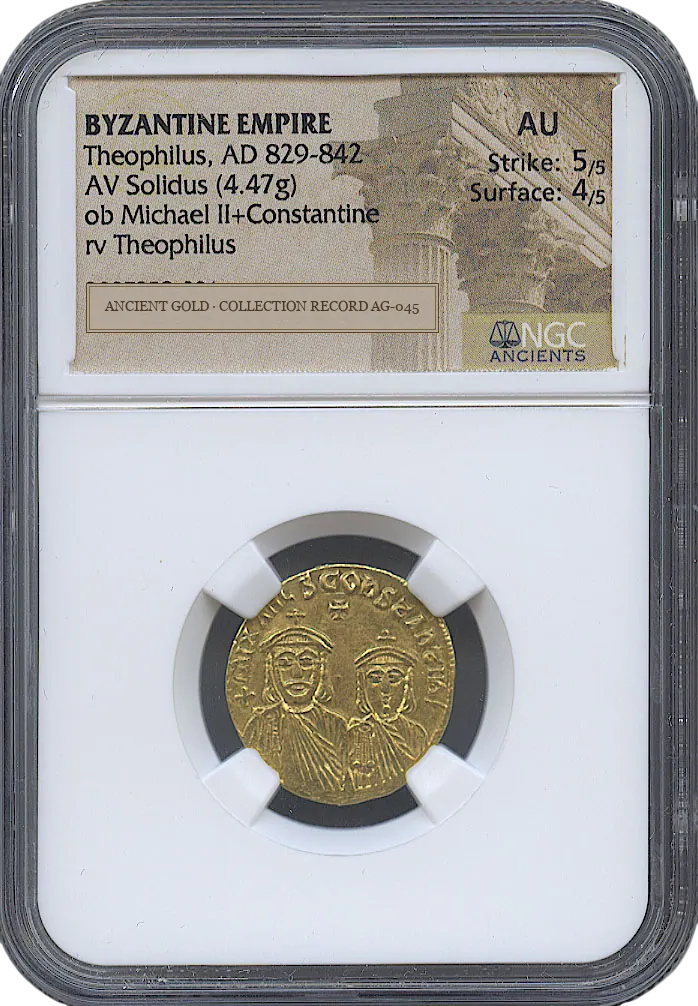
On AG-045, Michael II and the deceased Constantine supply a dynastic foundation. Including Constantine constructs a fuller lineage than the immediate political present required. Theophilus occupies the answering face as the living continuation of that house. The coin is therefore memorial, genealogy and government at once.
Absence must be read carefully
The lack of Christ or a saint on this solidus fits a court in which the legitimacy of sacred images was contested. Yet absence is not proof of every individual belief, nor does it make the coin secular. Crosses, titles, ritual and the Christian office of emperor still structured the authority the portraits claimed.
Syracuse speaks a regional language
AG-046 weighs 1.74 grams and is catalogued as a semissis. Its compact fields and regional style differ from the capital’s solidus. Repeating Theophilus on both faces makes personal sovereignty unavoidable while adapting it to the denomination and mint practice of Sicily. The object shows that Byzantine gold was not visually uniform across the empire.
Two denominations, one claim
The solidus uses ancestry; the semissis uses repetition. Both insist on legitimate rule, but they address that problem through different compositions. Comparison prevents a single spectacular type from standing for the whole reign and makes regional production part of the historical story.
Questions readers ask
Was Theophilus the last iconoclast emperor?
He was the last emperor to sustain official iconoclast policy; the restoration of icons followed under the regency after his death.
Why show a deceased relative?
A remembered family member could strengthen the appearance of continuity and present the ruling house as deeper than one living generation.
Does the Syracuse style mean the coin is unofficial?
No. Regional engraving and a smaller denomination can look different while still expressing imperial authority through an official mint.