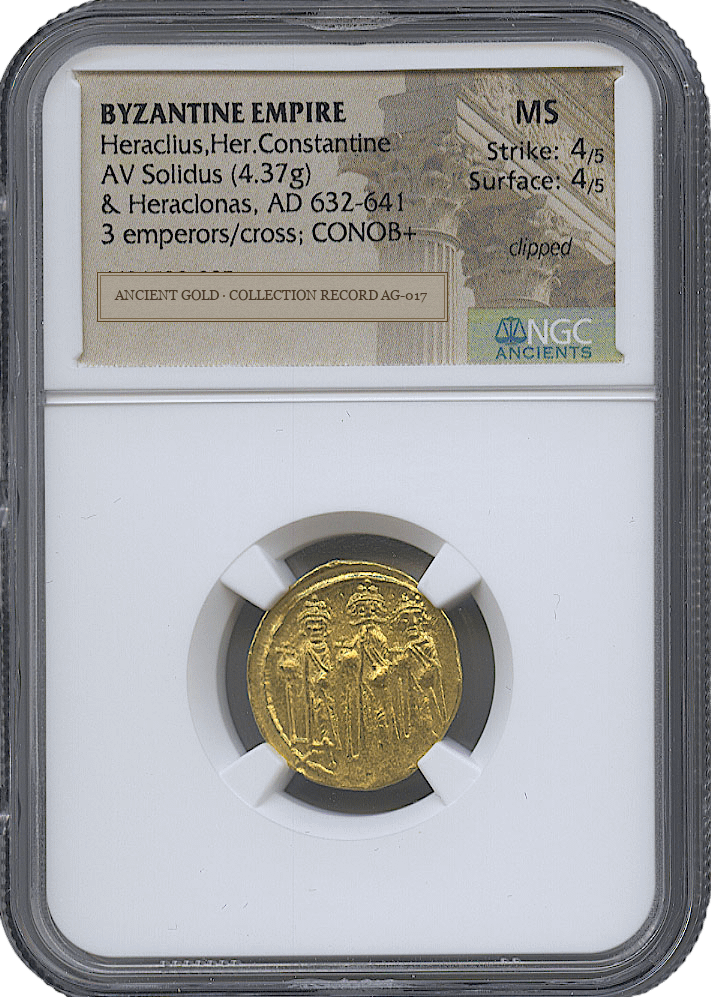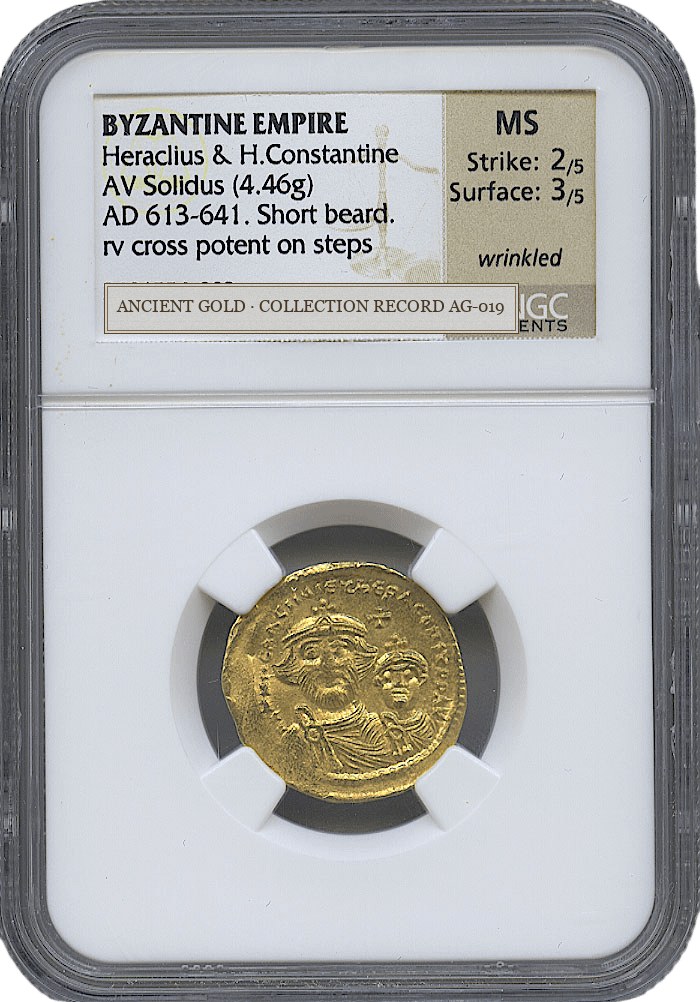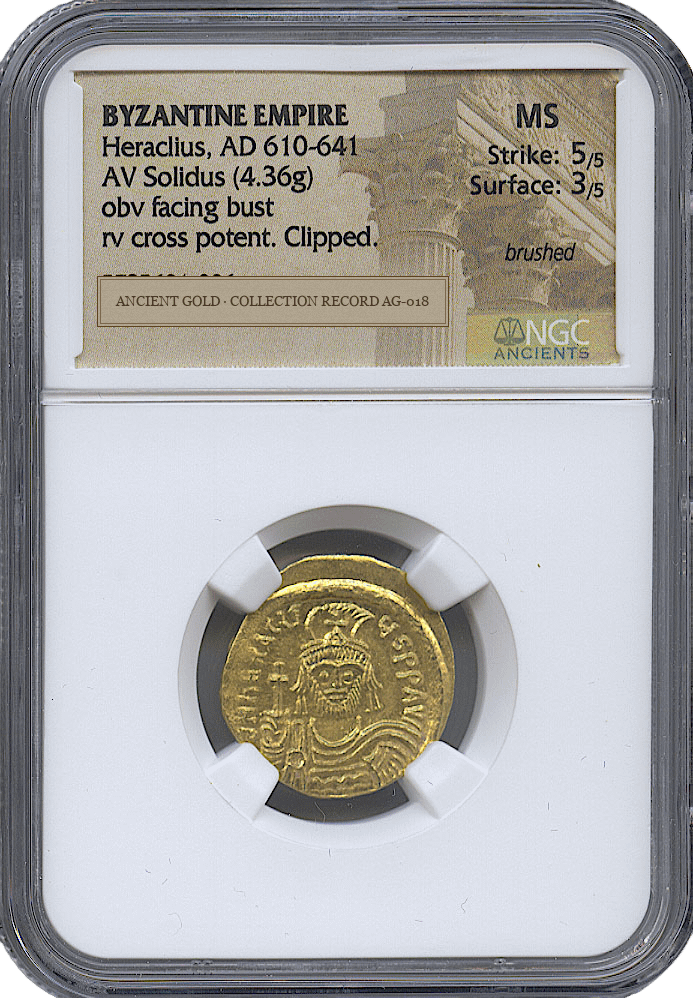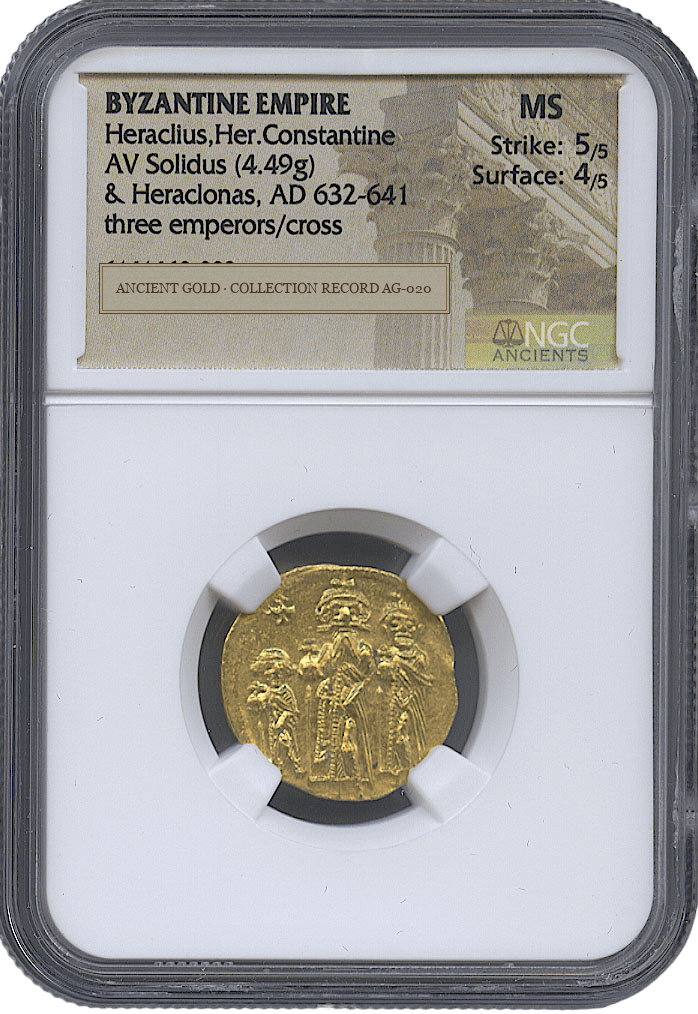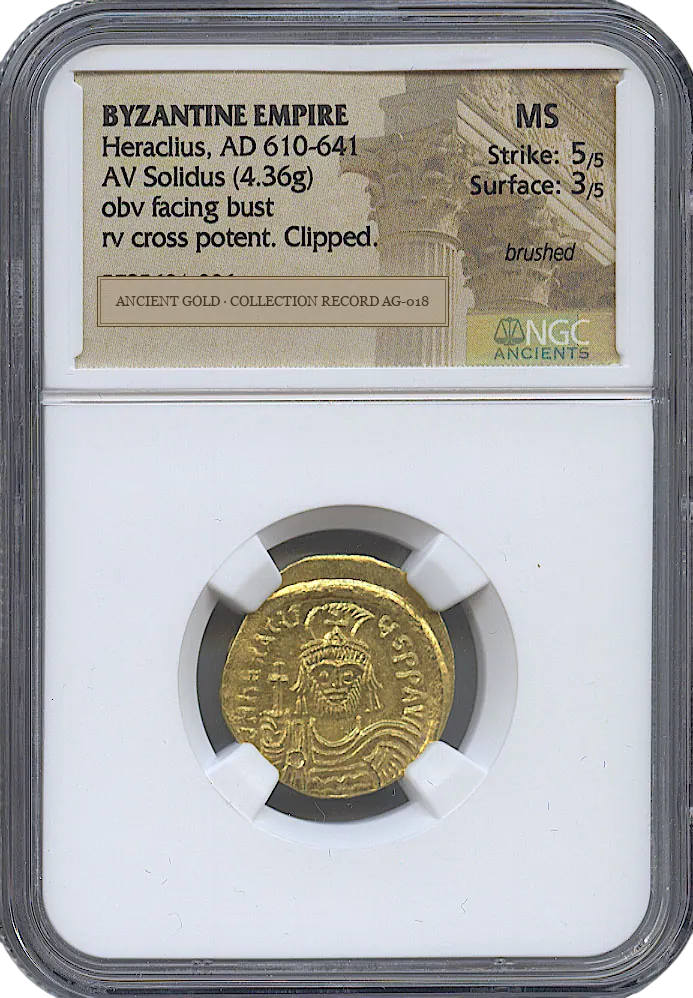
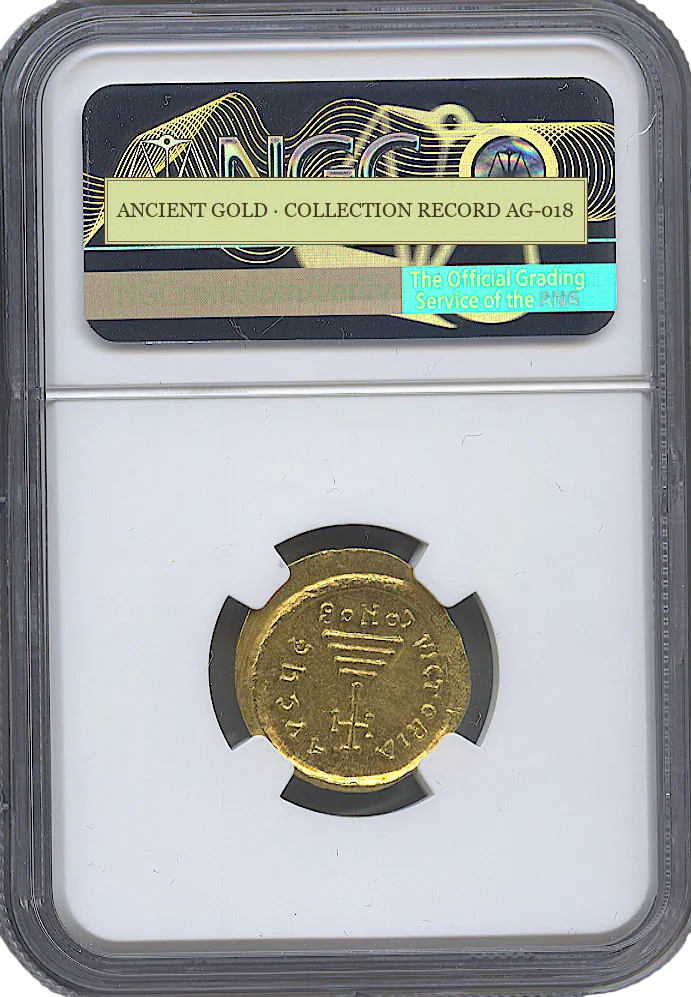
On the gold of Heraclius, human succession changes while the cross remains fixed. AG-018 presents the emperor alone; AG-019 adds Heraclius Constantine; AG-017 and AG-020 display Heraclius with two sons. Across those changing obverses, the cross potent on steps provides a stable reverse. The sequence turns four objects into a study of dynasty, faith and survival.
A reverse stripped to essentials
The cross rises above graduated steps without attendants or narrative action. Its clarity made it legible at coin scale and powerful beyond the mint. The type had precedents before Heraclius, but during his reign it became a characteristic gold reverse. A complex theology is reduced to a sign that could be recognized wherever the coin travelled.
One emperor becomes a dynasty
AG-018 centres authority on Heraclius. In AG-019 the senior emperor’s maturity distinguishes him from his son. The three-figure types go further: scale, beard and position organize Heraclius, Heraclius Constantine and Heraclonas as a ranked household. These are not private family portraits. They make succession a public constitutional claim.
Coins and the pressure of events
Heraclius ruled through war with Persia, recovery of the True Cross and the subsequent loss of major eastern provinces to Arab armies. A coin cannot narrate that sequence on its own. It can show how the government answered instability: the dynasty is multiplied on one face, while sacred order is made singular on the other.
Images travel beyond their first use
Heraclian solidi travelled widely and their types were adapted by neighbouring and successor polities. A solidus could even become jewellery: the British Museum’s Wilton Cross sets a Heraclius coin inside a gold and garnet cross. Such reuse changes an object’s function and proves that viewers could value the sacred imagery as more than monetary decoration.
Questions readers ask
Do three portraits mean equal rule?
No. Differences in position, scale and maturity establish hierarchy while proclaiming dynastic continuity.
Did Heraclius introduce the cross on steps?
The motif had earlier use, but it became a dominant gold reverse during and after his reign.
Why study two examples of the same three-emperor type?
AG-017 and AG-020 preserve different strikes, surfaces and object histories. Repetition helps separate the official type from the individuality of each specimen.